Scepter or Sceptre are two spellings of the same word. The only real difference is where you use them. Scepter is the preferred spelling in American English. Sceptre is the standard spelling in British English and many other English-speaking countries. Both words refer to a decorated staff carried by a king, queen, or other ruler as a symbol of authority and power. However, many writers feel unsure about which spelling fits their audience. This guide explains the difference in simple terms. You will also learn their meaning, pronunciation, history, examples, common mistakes, and the best way to choose the correct spelling for your writing.
Quick Summary
- Scepter is the American English spelling.
- Sceptre is the British English spelling.
- Both words have the same meaning.
- Both refer to a royal staff that represents power.
- The pronunciation stays the same.
- Choose the spelling based on your audience.
- Neither spelling is more correct than the other.
Scepter or Sceptre Meaning
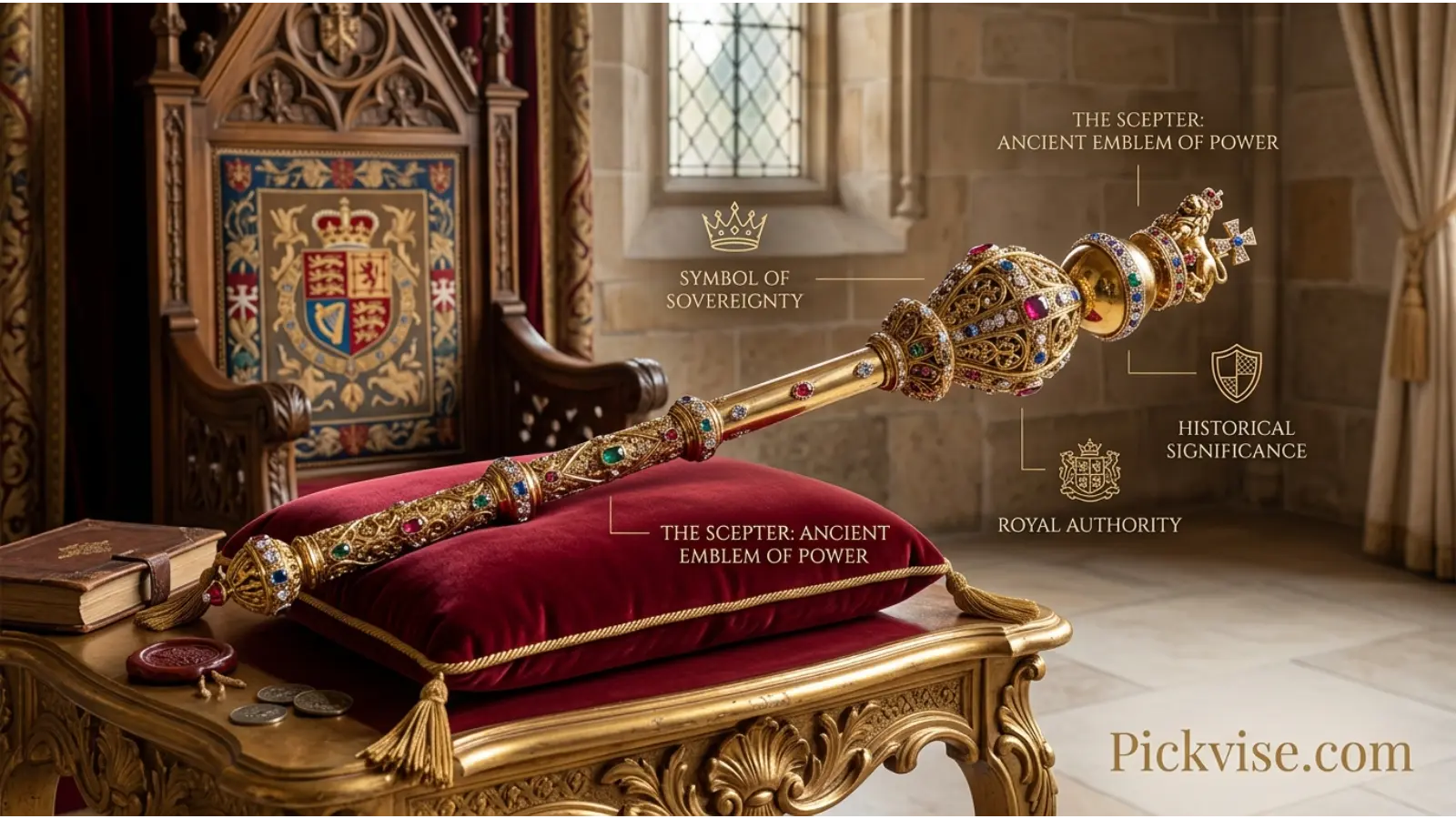
A scepter or sceptre is a decorated rod or staff carried by a king, queen, emperor, or other ruler. It symbolizes authority, leadership, and royal power.
Simple Definition
Scepter (US) / Sceptre (UK): A ceremonial staff that represents royal authority.
Is There Any Difference Between Scepter and Sceptre?
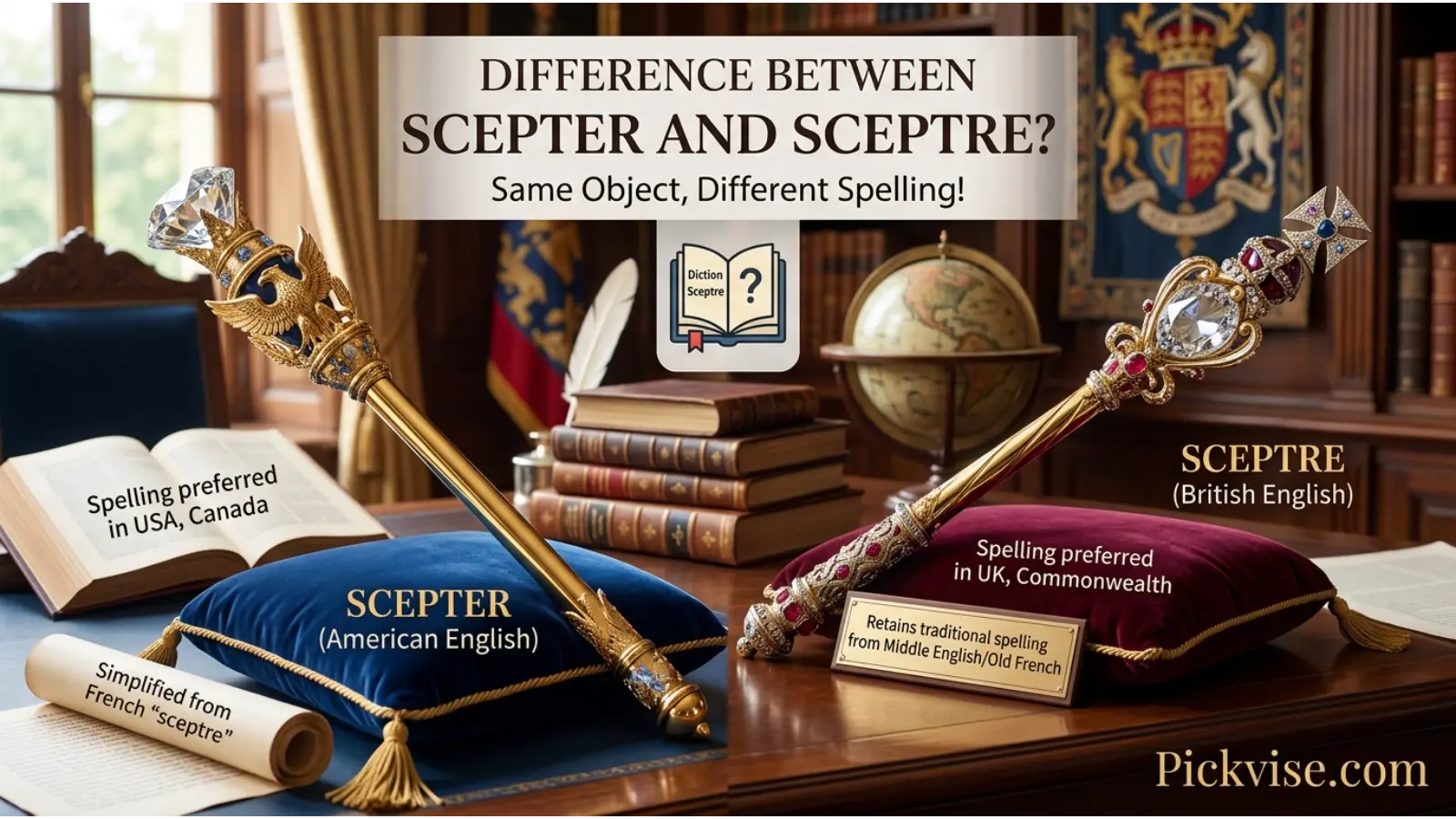
No. The only difference is spelling.
| Feature | Scepter | Sceptre |
|---|---|---|
| Meaning | Royal staff | Royal staff |
| Pronunciation | Same | Same |
| American English | ✅ Preferred | Rare |
| British English | Rare | ✅ Preferred |
| Canadian English | Often Sceptre | Common |
| Australian English | Rare | Preferred |
Quick Answer:
- Write Scepter for American readers.
- Write Sceptre for British readers.
Why Are There Two Spellings?
English has many words with American and British spellings.
Examples include:
| American English | British English |
|---|---|
| Color | Colour |
| Theater | Theatre |
| Center | Centre |
| Meter | Metre |
| Scepter | Sceptre |
American English removed several silent letters to simplify spelling. British English kept many traditional spellings.
Pronunciation of Scepter and Sceptre
Both spellings sound exactly the same.
Pronunciation:
SEP-ter
The extra “c” in sceptre does not change how the word sounds.
What Does a Scepter Represent?
A scepter is more than a decorative object.
It often symbolizes:
- Authority
- Leadership
- Royal power
- Justice
- Responsibility
- Government
- Tradition
Many royal ceremonies still include a scepter today.
Real-Life Examples
Here are simple examples.
American English
- The king held a scepter during the ceremony.
- The museum displayed an ancient scepter.
- The golden scepter represented royal authority.
British English
- The Queen carried the sceptre at the coronation.
- The royal sceptre contains valuable jewels.
- The sceptre remains an important symbol of the monarchy.
Famous Royal Scepters
Many countries have ceremonial scepters.
Some famous examples include:
- The Sovereign’s Sceptre with Cross (United Kingdom)
- The Imperial Scepter (Holy Roman Empire)
- The Scepter of Charles V
- Ancient Egyptian ceremonial staffs
These objects symbolize centuries of royal tradition.
Scepter in Literature and Figurative Meaning
The word does not always describe a physical object.
Writers also use it figuratively.
Examples:
- The nation passed the scepter to a new generation.
- The company handed the scepter of leadership to its new CEO.
- She took the scepter of responsibility after the election.
Here, scepter means power or control.
Common Mistakes
Many writers confuse these spellings.
Mistake 1
Using Sceptre in American English.
✔ Better:
- The king carried a scepter.
Mistake 2
Using Scepter in British publications.
✔ Better:
- The king carried a sceptre.
Mistake 3
Thinking they have different meanings.
They do not.
Both words mean exactly the same thing.
Tips to Remember the Difference
These tricks make the spelling easier.
Remember This
- Scepter = USA
- Sceptre = UK
Another trick:
The “re” ending appears in several British spellings.
Examples:
- Centre
- Theatre
- Metre
- Sceptre
Scepter or Sceptre in Daily Writing

Choose the spelling that matches your audience.
Use Scepter if you write for:
- American readers
- U.S. schools
- American businesses
- U.S. websites
Use Sceptre if you write for:
- British readers
- UK publications
- Australian audiences
- Canadian publications
- International organizations using British English
Consistency matters more than the choice itself.
Synonyms
Here are words related to scepter and sceptre.
Synonyms
- Royal staff
- Ceremonial staff
- Rod of authority
- Regal staff
- Baton (in some contexts)
- Staff of office
Expert Insight
Professional writers always match spelling with their audience.
American readers expect scepter.
British readers expect sceptre.
Search engines also recognize regional spelling preferences. Using the correct version improves readability and creates a better user experience. Most importantly, stay consistent throughout your article. Switching between both spellings without a reason can confuse readers and weaken your writing.
Frequently Asked Questions
Is scepter or sceptre correct?
Both are correct. Scepter is American English, while sceptre is British English.
Which spelling should I use?
Use the spelling that matches your audience’s language style.
Do scepter and sceptre have different meanings?
No. They have exactly the same meaning.
How do you pronounce scepter and sceptre?
Both are pronounced SEP-ter.
Why does British English use sceptre?
British English keeps the traditional spelling from older forms of English and French.
Is scepter used in modern English?
Yes. It appears in history books, literature, museums, news articles, and discussions about royalty.
Can scepter be used figuratively?
Yes. It often represents leadership, authority, or control.
Conclusion
Scepter or Sceptre are simply two regional spellings of the same word. Scepter is the standard choice in American English, while Sceptre is preferred in British English and many Commonwealth countries. Both refer to a ceremonial staff that symbolizes royal authority, leadership, and power. The pronunciation and meaning never change. The best choice depends on who will read your content. If you write for an American audience, use scepter. If you write for a British or international audience that follows British English, use sceptre. Keeping your spelling consistent helps your writing look professional and makes it easier for readers to understand.