Anticlimactic or Anticlimatic is a common spelling confusion in English writing. The correct word is “anticlimactic.” Many people mistakenly write “anticlimatic,” but it is incorrect. In simple terms, anticlimactic means something that feels disappointing after strong excitement. It happens when the ending is weaker than expected. This word is often used in movies, stories, sports, and real-life events. People search this keyword to learn spelling, meaning, and usage. This guide explains everything in very simple English. You will also learn examples, mistakes, and correct usage. The goal is to help you understand the word clearly and use it with confidence. By the end, you will know the correct spelling, meaning, and real-life use of anticlimactic.
Quick Summary Box (Featured Snippet)
- Correct word: Anticlimactic
- Wrong spelling: Anticlimatic
- Meaning: A disappointing ending after excitement
- Used in: Movies, events, sports, stories
- Part of speech: Adjective
- Root word: Climax
- Common issue: Weak or dull ending after buildup
What Does Anticlimactic or Anticlimatic Mean?
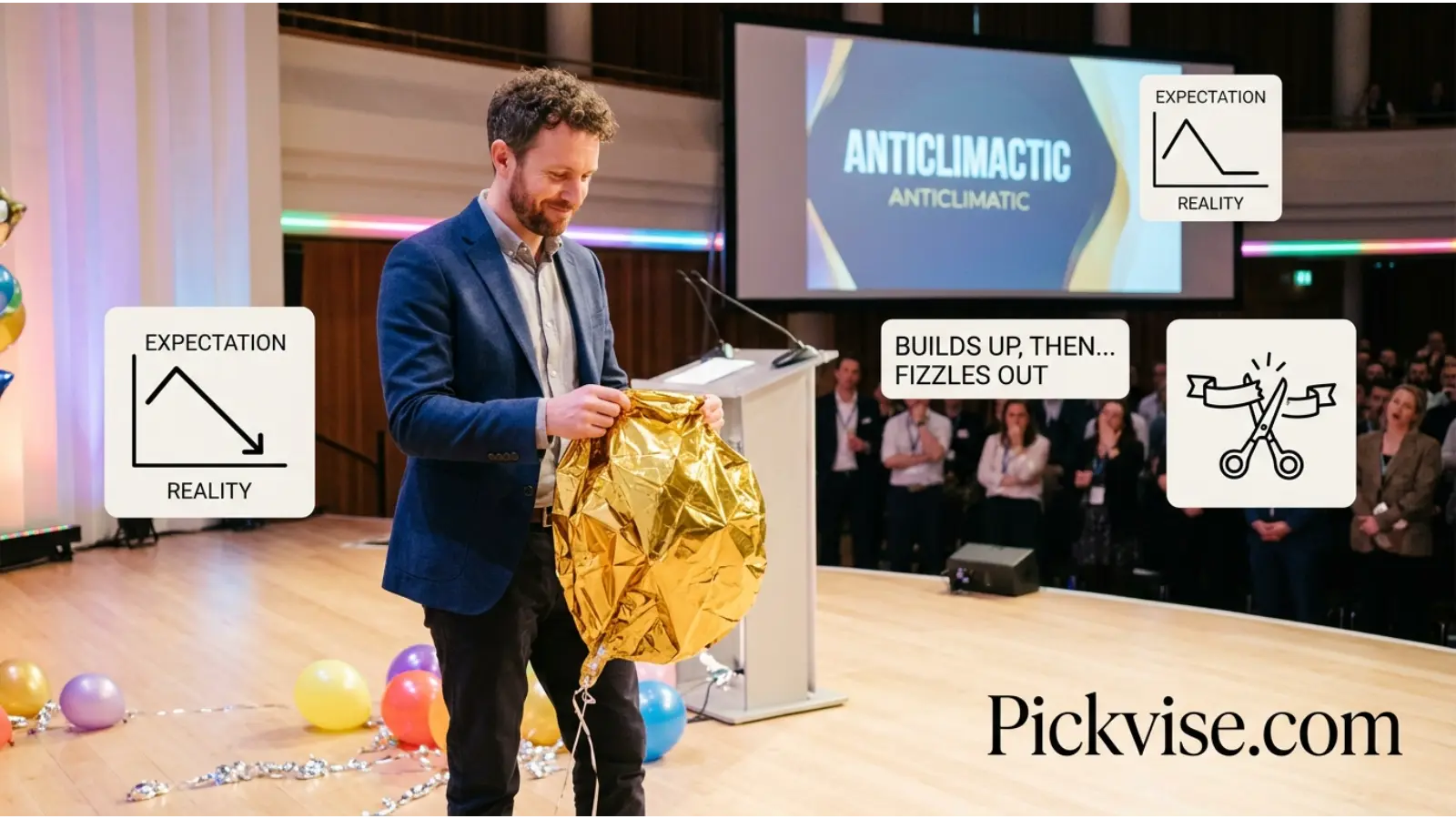
The word anticlimactic describes a situation that does not meet expectations. It happens when something builds excitement but ends in a dull or weak way.
For example:
- A movie with a big action build-up but a boring ending.
- A match that ends too quickly without excitement.
So, anticlimactic means a letdown after strong anticipation.
Correct Spelling: Anticlimactic or Anticlimatic?
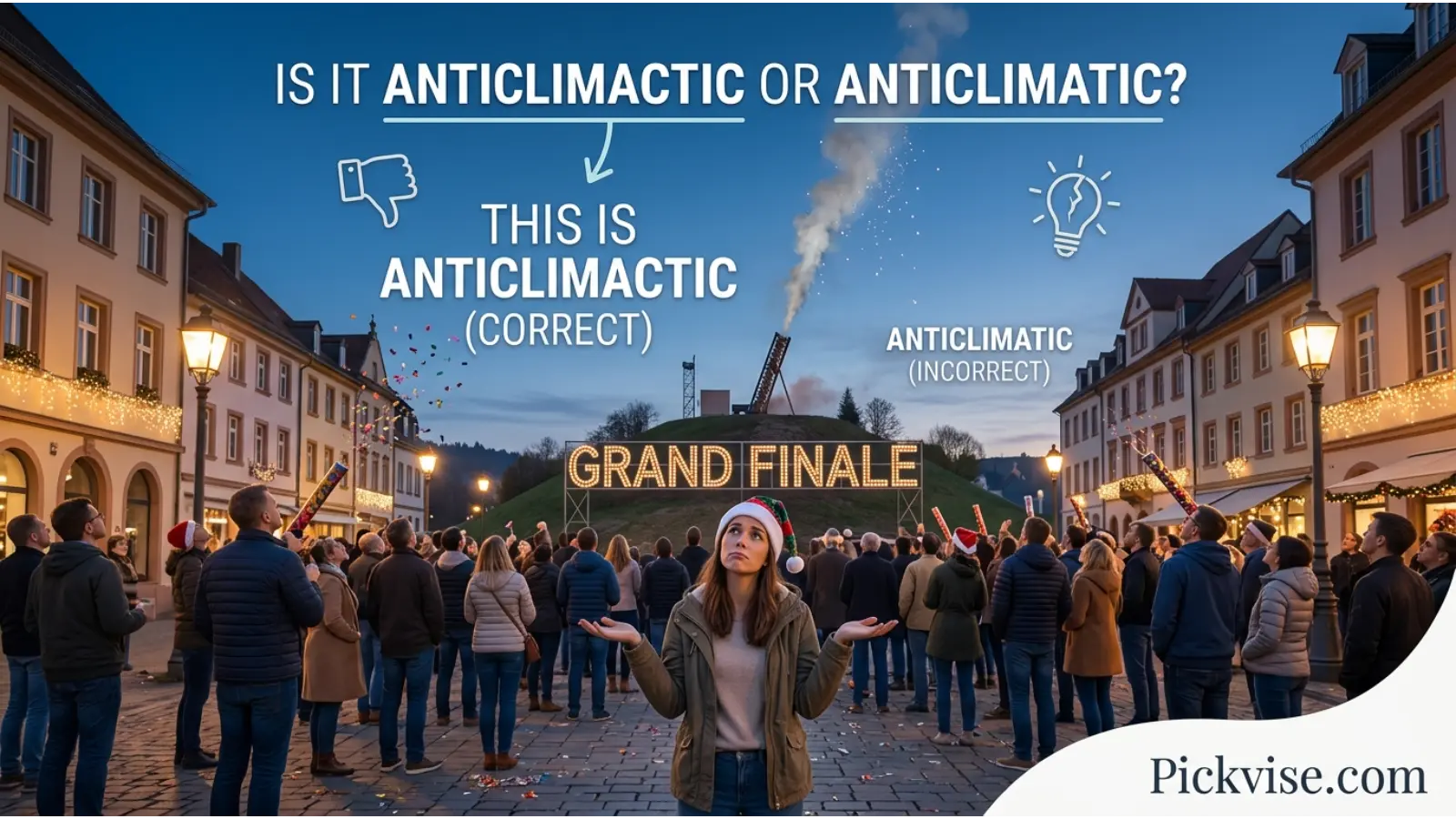
The correct spelling is anticlimactic.
❌ Anticlimatic → Wrong
✅ Anticlimactic → Correct
Many people remove the “c” by mistake. But the correct word comes from “climax.” That is why “climactic” keeps the “c.”
Remember:
- Climax → Climactic → Anticlimactic
This spelling rule helps you avoid mistakes in writing and exams.
Word Breakdown (Easy Understanding)
Let’s break the word into parts:
- Anti = against or opposite
- Climax = highest or most exciting point
- -ic = adjective ending
So, anticlimactic means:
👉 “Opposite of the climax”
It shows something that goes down instead of going up in excitement.
Simple Explanation in Easy English
Anticlimactic means something starts exciting but ends boring.
It is like expecting a big surprise, but getting nothing special.
Example:
You wait all day for a surprise party.
But it is very simple and quiet.
That feels anticlimactic.
Real-Life Examples of Anticlimactic Situations

Here are simple real-life examples:
- A football match ends with no goals.
- A movie ends without explanation.
- A joke that does not make people laugh.
- A fireworks show that stops early.
- A story with a weak ending.
These situations feel disappointing after expectation.
Comparison Table: Anticlimactic vs Anticlimatic
| Feature | Anticlimactic (Correct) | Anticlimatic (Wrong) |
|---|---|---|
| Spelling | Correct | Incorrect |
| Usage in English | Standard word | Not accepted |
| Dictionary support | Yes | No |
| Meaning | Weak ending feeling | No meaning officially |
| Writing use | Academic + SEO | Avoid |
This table shows clearly why “anticlimactic” is correct.
Common Mistakes People Make
Many learners make these mistakes:
- Dropping the “c” in spelling
- Confusing pronunciation
- Using it as a noun (wrong usage)
- Overusing in casual writing
Correct usage is important for SEO and exams.
Tip:
Always remember the root word “climax.”
Synonyms
Here are related words you can use:
- Disappointing
- Underwhelming
- Unsatisfying
- Letdown
- Flat ending
- Weak finish
- Boring ending
These help improve search visibility.
Usage in Daily Life
The word anticlimactic is used in many situations:
Movies
A strong story with a weak ending.
Sports
A match that ends too quickly or without action.
Events
A party that ends without celebration.
Stories
A book that builds tension but ends simply.
This word helps describe emotional disappointment.
Tips to Use the Word Correctly
- Always spell it “anticlimactic”
- Use it as an adjective
- Use it for disappointing endings
- Avoid using in formal nouns
- Connect it with expectations
Example sentence:
“The ending of the movie was anticlimactic.”
Expert Insight (EEAT Section)
From a linguistic perspective, “anticlimactic” is a descriptive adjective used in English narrative structure. It reflects emotional contrast between expectation and outcome.
Writers use this word to improve storytelling analysis. It helps readers understand pacing and emotional flow in content.
Why it matters:
- Improves writing clarity
- Helps in content review
- Useful in literature and media analysis
- Important for SEO writing and storytelling blogs
Correct spelling also builds authority and trust in your content.
FAQs
1. What is the correct spelling, anticlimactic or anticlimatic?
The correct spelling is anticlimactic.
2. What does anticlimactic mean?
It means a disappointing or weak ending after excitement.
3. Is anticlimatic a real word?
No, it is a common spelling mistake.
4. Where is anticlimactic used?
It is used in movies, sports, stories, and events.
5. Is anticlimactic positive or negative?
It is usually negative.
6. Can I use anticlimactic in essays?
Yes, it is a correct academic word.
7. What is a synonym for anticlimactic?
Underwhelming or disappointing.
8. Why do people confuse the spelling?
Because they miss the “c” from “climax.”
Conclusion
The word anticlimactic describes a situation that feels disappointing after excitement. Many people mistakenly write “anticlimatic,” but that is incorrect. The correct spelling always includes the letter “c.” This word is useful in daily English, especially in storytelling, movies, sports, and writing. It helps explain weak or dull endings clearly. Understanding the correct spelling improves your grammar and SEO writing skills. Always remember its connection with the word “climax.” In simple terms, anticlimactic means: strong start, weak ending. That is the core idea you should remember.