
Saber or Sabre are two spellings of the same word. Both refer to a curved sword with a single sharp edge. However, the correct spelling depends on the type of English you use. Saber is the preferred spelling in American English. Sabre is the standard spelling in British English and many other English-speaking countries.
Many writers confuse these spellings because they have the same meaning and pronunciation. The good news is that both are correct in the right context. This guide explains the difference in simple words. You will also learn when to use each spelling, see real-life examples, avoid common mistakes, and discover helpful tips for writing with confidence.
Quick Summary
- Saber is the American English spelling.
- Sabre is the British English spelling.
- Both words mean the same type of curved sword.
- The pronunciation is the same for both spellings.
- Choose the spelling based on your audience.
- Use one spelling consistently throughout your writing.
What Does Saber or Sabre Mean?
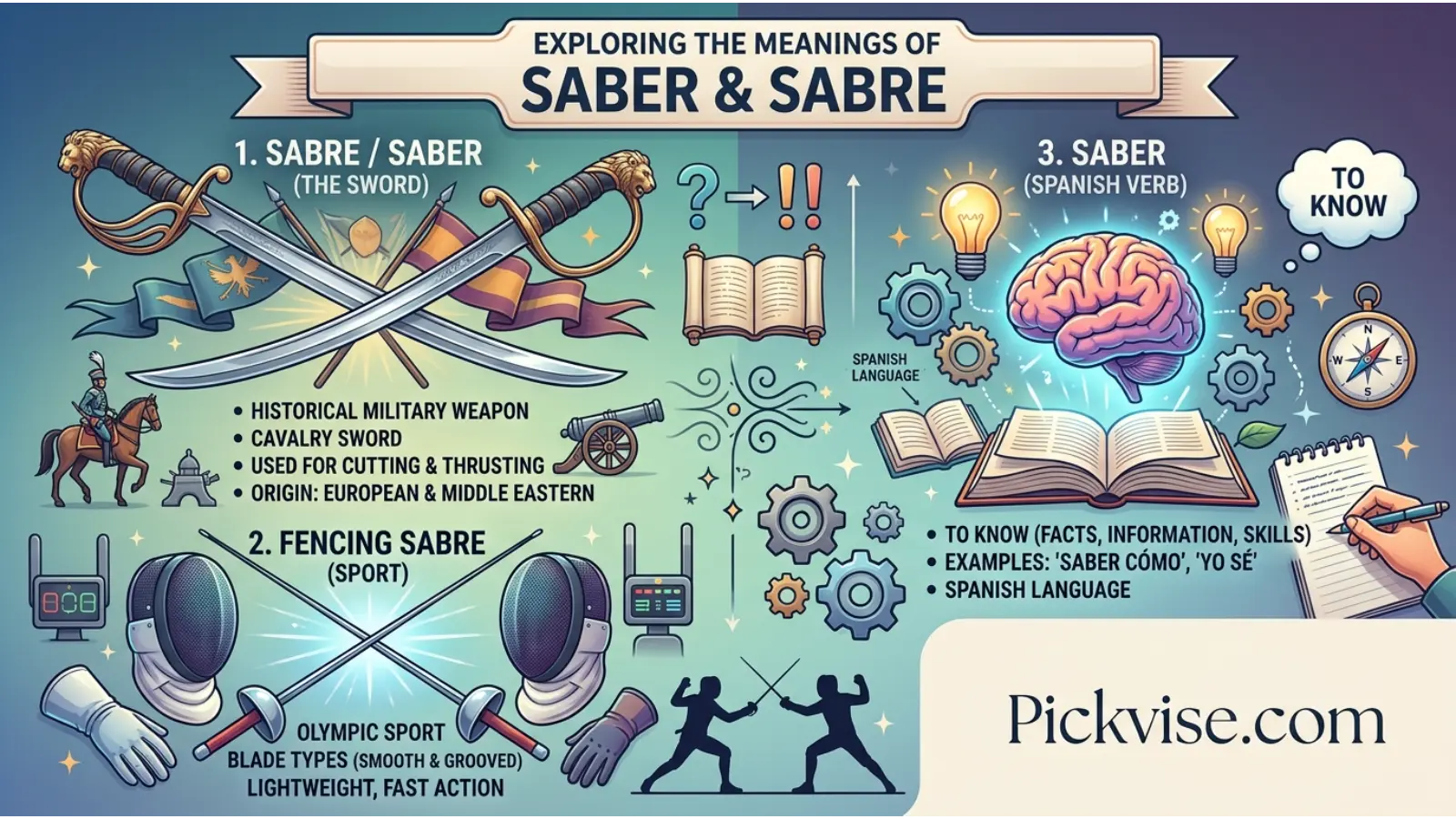
A saber or sabre is a military sword with a curved blade and one sharp edge. Soldiers and cavalry troops used it in battle for centuries. Today, the word also refers to the sword used in the sport of fencing.
Although the spelling changes, the meaning stays exactly the same.
Simple Definition
Saber (US) or Sabre (UK) means:
A curved sword with a single cutting edge, commonly used by cavalry soldiers and in modern fencing.
Saber vs Sabre: What’s the Difference?
The only real difference is the spelling.
| Feature | Saber | Sabre |
|---|---|---|
| Meaning | Curved sword | Curved sword |
| Pronunciation | Same | Same |
| American English | ✅ Preferred | ❌ Rare |
| British English | ❌ Rare | ✅ Preferred |
| Canadian English | Usually Sabre | Common |
| Australian English | Rare | Preferred |
Key Point
There is no difference in meaning between saber and sabre.
Why Are There Two Spellings?
English has many words with American and British spelling differences.
For example:
- Color → Colour
- Honor → Honour
- Center → Centre
- Saber → Sabre
American English often removes silent letters to simplify spelling. British English keeps the traditional form.
When Should You Use “Saber”?
Use saber if you write for:
- American readers
- US businesses
- American schools
- US publications
- American websites
Examples
- The soldier carried a saber into battle.
- The museum displayed an old cavalry saber.
- She practices saber fencing every weekend.
When Should You Use “Sabre”?
Use sabre if your audience is:
- British
- Canadian
- Australian
- New Zealand
- International readers following British English
Examples
- The officer drew his sabre.
- The army preserved the ancient sabre.
- She won the sabre fencing championship.
Real-Life Examples of Saber and Sabre
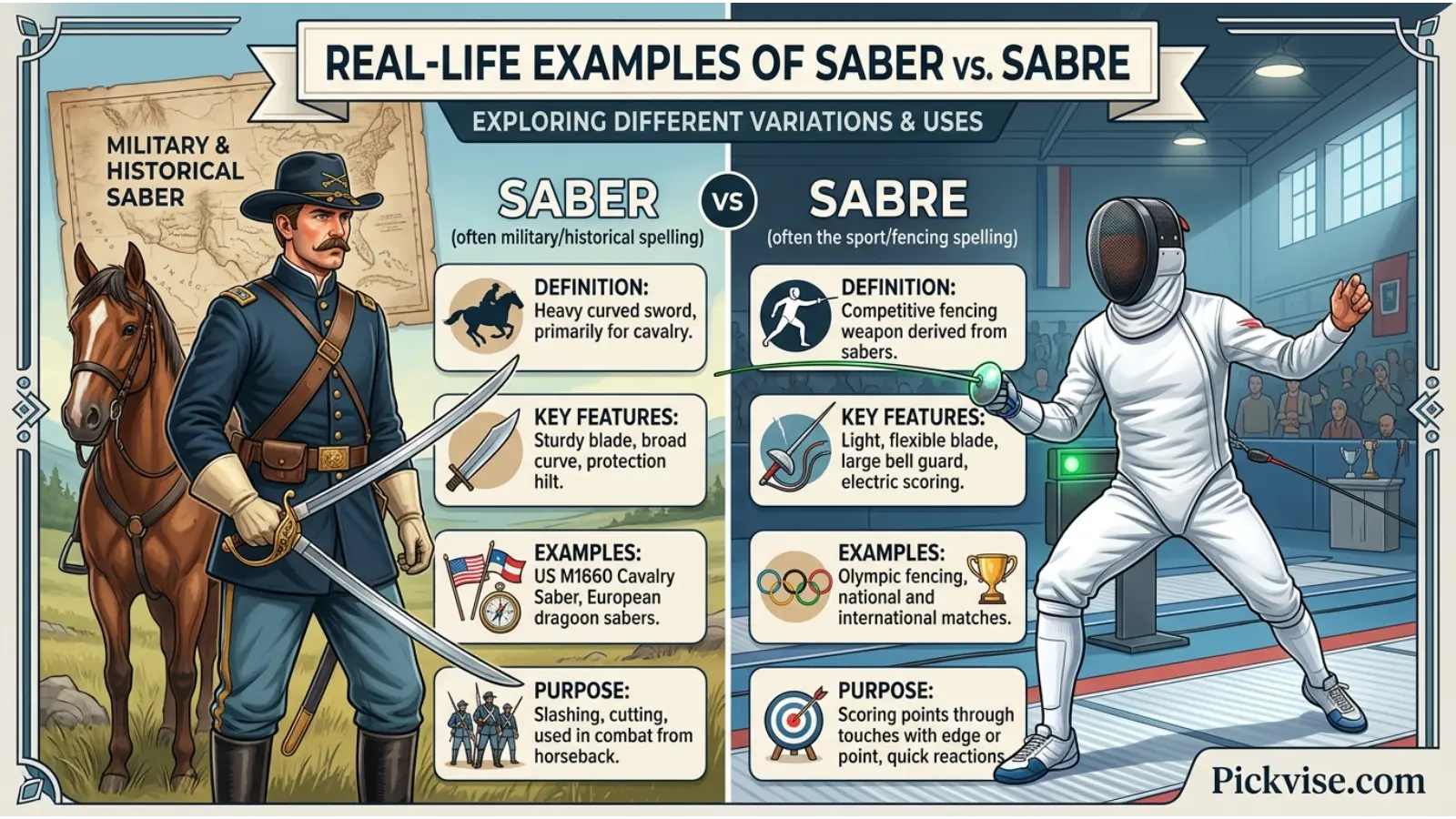
Example 1
American newspaper:
The officer wore a ceremonial saber.
Example 2
British history book:
Every cavalry soldier carried a sabre.
Example 3
Sports article
American website:
The athlete competed in saber fencing.
British website:
The athlete competed in sabre fencing.
Saber in Modern Sports
Today, saber or sabre is one of the three fencing disciplines.
The others are:
- Foil
- Épée
- Saber (US) / Sabre (UK)
In this sport, players score points using both the edge and the tip of the blade.
Common Mistakes People Make
Many writers make these simple mistakes.
1. Mixing Spellings
❌ The soldier carried a saber while polishing his sabre.
✅ Choose one spelling and stay consistent.
2. Assuming One Is Wrong
Both spellings are correct.
The choice depends on your English style.
3. Changing Spellings Mid-Article
Consistency improves readability and professionalism.
Tips for Remembering the Difference
Here are easy tricks.
- Saber = USA
- Sabre = Britain and Commonwealth countries
- Pick one spelling before you begin writing.
- Follow your style guide.
- Stay consistent from start to finish.
Everyday Usage
You may see these words in:
- History books
- Military articles
- Museums
- Movies
- Video games
- Fencing competitions
- Historical novels
Synonyms
Synonyms
- Sword
- Blade
- Weapon
- Cavalry sword
- Fencing sword
Expert Insight
Professional writers know that spelling matters. Search engines also value consistency. If your audience is American, use saber throughout the article. If your readers use British English, choose sabre instead.
Neither spelling is more correct. Both appear in respected dictionaries and style guides. Matching your audience helps improve trust, readability, and user experience. This also supports better SEO because readers find your content easier to follow.
Frequently Asked Questions
Is saber or sabre correct?
Both are correct. Saber is American English, while sabre is British English.
Is there a difference in meaning?
No. They both refer to the same curved sword.
Which spelling should I use?
Use saber for American audiences and sabre for British or Commonwealth audiences.
How do you pronounce saber and sabre?
Both spellings are pronounced the same: SAY-bər.
Is sabre used in fencing?
Yes. British English uses sabre, while American English usually uses saber.
Why does American English use saber?
American English simplified many spellings over time. That is why saber became the standard spelling.
Can I use both spellings in one article?
No. Choose one spelling and use it consistently.
These related articles help readers understand more American and British spelling differences while improving your site’s internal linking structure.
Featured Snippet Answer
Saber and sabre are two correct spellings of the same word. Saber is the American English spelling, while sabre is the British English spelling. Both refer to a curved sword used by cavalry soldiers and in modern fencing. The meaning and pronunciation are identical.
Conclusion
Understanding Saber or Sabre is simple once you know the difference. The words have the same meaning and pronunciation. The only change is the regional spelling. Saber fits American English, while Sabre suits British English and many Commonwealth countries. Always think about your audience before choosing a spelling. Then use that spelling consistently throughout your writing. This small choice improves clarity, builds credibility, and creates a better reading experience. Whether you write about history, fencing, or military topics, selecting the correct regional spelling helps your content look polished and professional.