
Inexcusable or Unexcusable is a common question for English learners and writers. Both words describe something that cannot be forgiven or justified. However, one word appears far more often in modern English.
Many people wonder if these words have different meanings. The answer is simple. Both words mean nearly the same thing, but one is much more common in everyday writing.
This guide explains the meaning of each word in clear language. You will learn when to use them, how they compare, and which one sounds more natural. You will also see real-life examples, common mistakes, expert tips, and a helpful comparison table. By the end, you will know exactly which word fits your sentence.
Quick Summary
- Inexcusable means impossible to forgive or justify.
- Unexcusable has the same meaning but is much less common.
- Inexcusable is the preferred word in modern English.
- Both words are grammatically correct.
- Use inexcusable in formal and everyday writing.
What Does Inexcusable Mean?
Inexcusable describes an action, mistake, or behavior that has no acceptable excuse.
Simple definition
Inexcusable means something so wrong that no excuse can justify it.
People often use this word when talking about serious mistakes or bad behavior.
Examples
- His rude behavior was inexcusable.
- Leaving a child alone was inexcusable.
- The team’s poor effort was inexcusable.
What Does Unexcusable Mean?
Unexcusable also means impossible to excuse or forgive.
Although it is correct, it appears much less often than inexcusable. Many modern dictionaries list it as a less common variant.
Examples
- His actions were unexcusable.
- The mistake was unexcusable.
Most editors would replace unexcusable with inexcusable for smoother writing.
Inexcusable or Unexcusable: What’s the Difference?
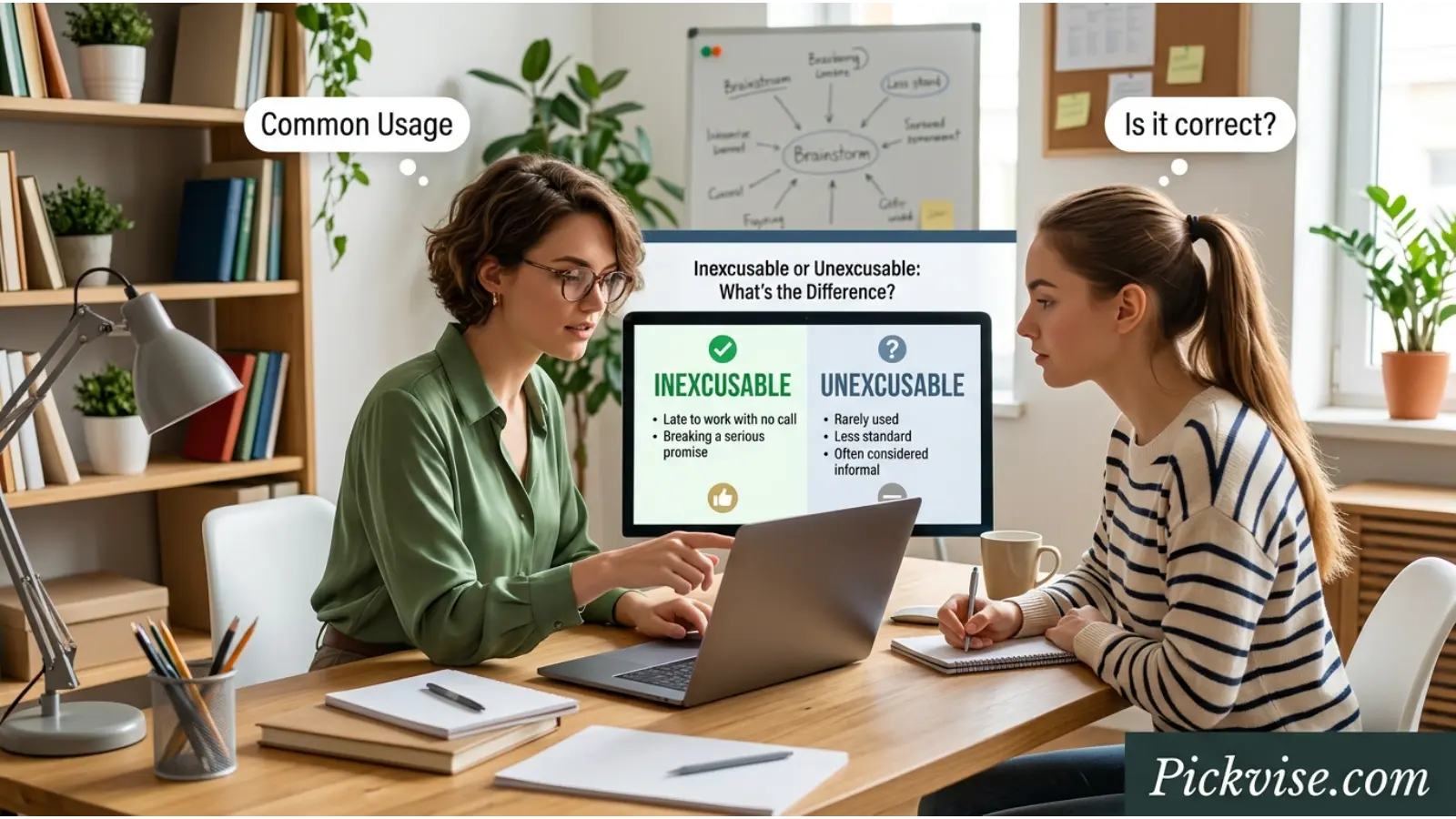
The biggest difference is usage, not meaning.
| Feature | Inexcusable | Unexcusable |
|---|---|---|
| Meaning | Cannot be excused | Cannot be excused |
| Grammar | Correct | Correct |
| Modern usage | Very common | Rare |
| Formal writing | Preferred | Less preferred |
| Everyday English | Widely used | Rarely used |
Winner
✅ Inexcusable is the better choice in almost every situation.
Why Is Inexcusable More Common?
English often forms negative words with the prefix in-.
Examples include:
- Inaccurate
- Incomplete
- Inactive
- Inappropriate
- Inexcusable
Although un- also creates negatives, English speakers have naturally favored inexcusable over time.
As a result, newspapers, books, schools, and professional writers almost always choose inexcusable.
Real-Life Examples
Here are common situations where inexcusable fits naturally.
At work
Missing an important meeting without notice is inexcusable.
At school
Cheating on an exam is inexcusable.
In sports
Ignoring the rules can be inexcusable.
In relationships
Breaking someone’s trust without reason may be inexcusable.
In customer service
Treating customers poorly is inexcusable.
Common Mistakes
Many learners confuse these words.
Mistake 1
❌ The delay was unexcusable.
✅ The delay was inexcusable.
Mistake 2
Thinking unexcusable is wrong.
It is actually correct. It is simply uncommon.
Mistake 3
Using the rare form in formal writing.
Professional writing usually prefers inexcusable.
Tips to Remember
These simple tricks make the choice easy.
- Choose inexcusable for almost every sentence.
- Remember that books and newspapers mostly use inexcusable.
- If you want natural English, avoid unexcusable.
- Read quality articles to see how native writers use the word.
How to Use Inexcusable in Daily Life
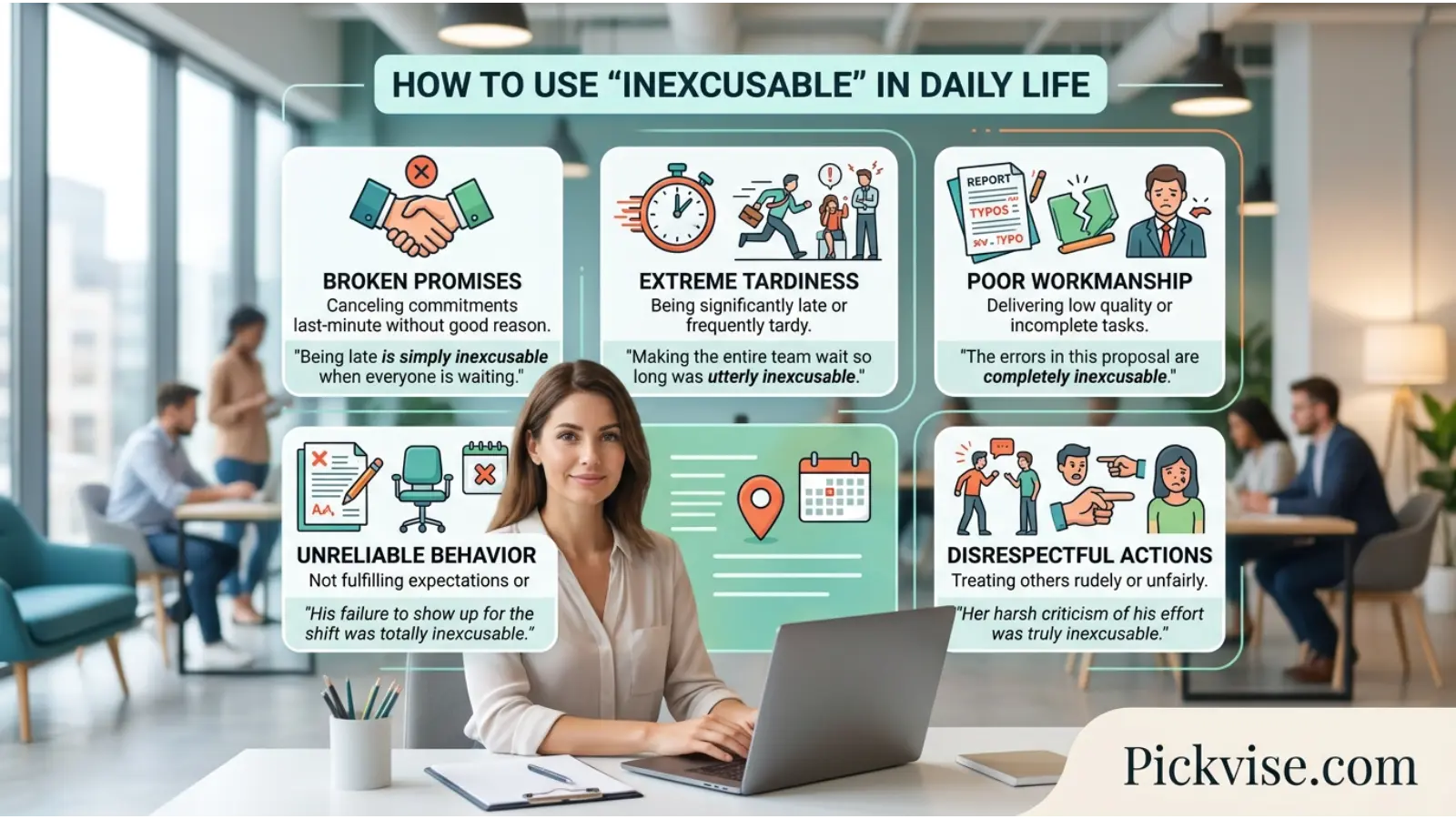
You can use inexcusable in many conversations.
Examples
- That mistake was inexcusable.
- His language was inexcusable.
- Their behavior was inexcusable.
- The damage was inexcusable.
- The company’s response was inexcusable.
Because the word is common, readers understand it immediately.
Synonyms
These words have similar meanings.
Synonyms
- Unforgivable
- Indefensible
- Unjustifiable
- Shameful
- Outrageous
- Wrong
- Offensive
- Intolerable
- Appalling
- Unacceptable
Common Phrases with Inexcusable
You will often hear these combinations.
- Inexcusable behavior
- Inexcusable mistake
- Inexcusable conduct
- Inexcusable delay
- Inexcusable error
- Inexcusable actions
- Inexcusable failure
- Inexcusable attitude
These phrases appear often in news reports and professional writing.
Expert Insight
Professional writers choose words that readers instantly recognize.
Although unexcusable is technically correct, it sounds unusual today. Search engines, dictionaries, and published books overwhelmingly favor inexcusable.
If you write blog posts, school papers, business emails, or web content, inexcusable is the safer and more natural option.
Using common vocabulary also improves readability and helps readers trust your writing.
Frequently Asked Questions
Is unexcusable a real word?
Yes. It is a correct English word, but people use it much less often than inexcusable.
Which is correct: inexcusable or unexcusable?
Both are correct. However, inexcusable is the preferred choice in modern English.
Do they have different meanings?
No. Both words mean something that cannot be excused or justified.
Why is inexcusable more popular?
Native speakers and professional writers have favored it for many years.
Can I use unexcusable in formal writing?
You can, but most editors recommend inexcusable instead.
Which word should English learners use?
Use inexcusable. It sounds more natural and appears much more often.
Is inexcusable stronger than unexcusable?
No. Both express the same level of seriousness.
Conclusion
When choosing between Inexcusable or Unexcusable, the best option is usually inexcusable. Both words mean that something cannot be forgiven or justified. However, inexcusable is the standard choice in modern English. It appears more often in books, newspapers, websites, and everyday conversations. While unexcusable is not incorrect, it sounds old-fashioned and uncommon to many readers. If you want your writing to feel natural and professional, use inexcusable in almost every situation. Keeping this simple rule in mind will help you write with confidence and avoid unnecessary confusion.