
Knelt or kneeled are both correct past tense forms of the verb kneel. Many English learners wonder which one they should use. The good news is that both words are accepted in modern English. However, each form is more common in different regions.
This guide explains the meaning of knelt and kneeled in simple words. You will learn when to use each one. You will also see easy examples and grammar tips. By the end, you will know which form fits your writing or speech. Whether you write for school, work, or daily life, this guide will help you use these words with confidence.
Quick Summary
- Knelt and kneeled are both correct.
- Both are the past tense of kneel.
- Knelt is more common in British English.
- Kneeled is more common in American English.
- Both words mean to go down onto one or both knees.
- Choose one style and stay consistent in your writing.
What Does “Kneel” Mean?
Kneel means to lower your body so that one or both knees touch the ground. People kneel for many reasons. They may pray, show respect, propose marriage, or pick something up.
Simple Definition
Kneel means to move from standing to resting on one or both knees.
Examples
- Please kneel before entering the prayer room.
- The player had to kneel after the match.
- She decided to kneel beside the child.
Knelt or Kneeled: What Is the Difference?
There is almost no difference in meaning between knelt and kneeled. The main difference is regional preference.
| Feature | Knelt | Kneeled |
|---|---|---|
| Meaning | Past tense of kneel | Past tense of kneel |
| British English | Very common | Less common |
| American English | Common | More common |
| Formal Writing | Widely accepted | Widely accepted |
Both forms are grammatically correct. Native speakers use both every day.
Is “Knelt” Correct?
Yes. Knelt is completely correct. It is the traditional past tense and past participle of kneel. Many dictionaries list it first.
People in the United Kingdom often prefer knelt. Many books, newspapers, and formal documents also use this form.
Examples
- She knelt beside her grandmother.
- The soldier knelt in silence.
- They knelt during the ceremony.
Is “Kneeled” Correct?
Yes. Kneeled is also correct. It follows the regular English pattern by adding -ed to the base verb.
Many American speakers use kneeled, especially in everyday conversation.
Examples
- He kneeled to tie his shoe.
- The firefighter kneeled beside the injured man.
- She kneeled to speak with the child.
Why Are There Two Past Tense Forms?
English contains many verbs with more than one accepted past tense. Language changes over time, and different regions develop different preferences.
Knelt is an irregular form that has existed for centuries.
Kneeled is a regular form created by adding -ed.
Because both forms became common, modern dictionaries accept both.
When Should You Use “Knelt”?
Use knelt if you:
- Write for a British audience.
- Prefer traditional grammar.
- Want a slightly more formal style.
- Follow British spelling rules.
Examples
- The king knelt before the altar.
- Everyone knelt during the prayer.
- She knelt quietly beside the bed.
Tip
If your article uses British English spellings like colour, favour, and centre, then knelt is usually the better choice.
When Should You Use “Kneeled”?
Use kneeled if you:
- Write mainly for an American audience.
- Prefer regular verb forms.
- Want consistency with other -ed verbs.
- Follow American English style.
Examples
- The coach kneeled next to the player.
- He kneeled on the floor to search for the ring.
- The teacher kneeled to help the student.
Tip
If your writing uses American spellings like color, favor, and center, kneeled often sounds more natural.
Real-Life Examples of Knelt and Kneeled
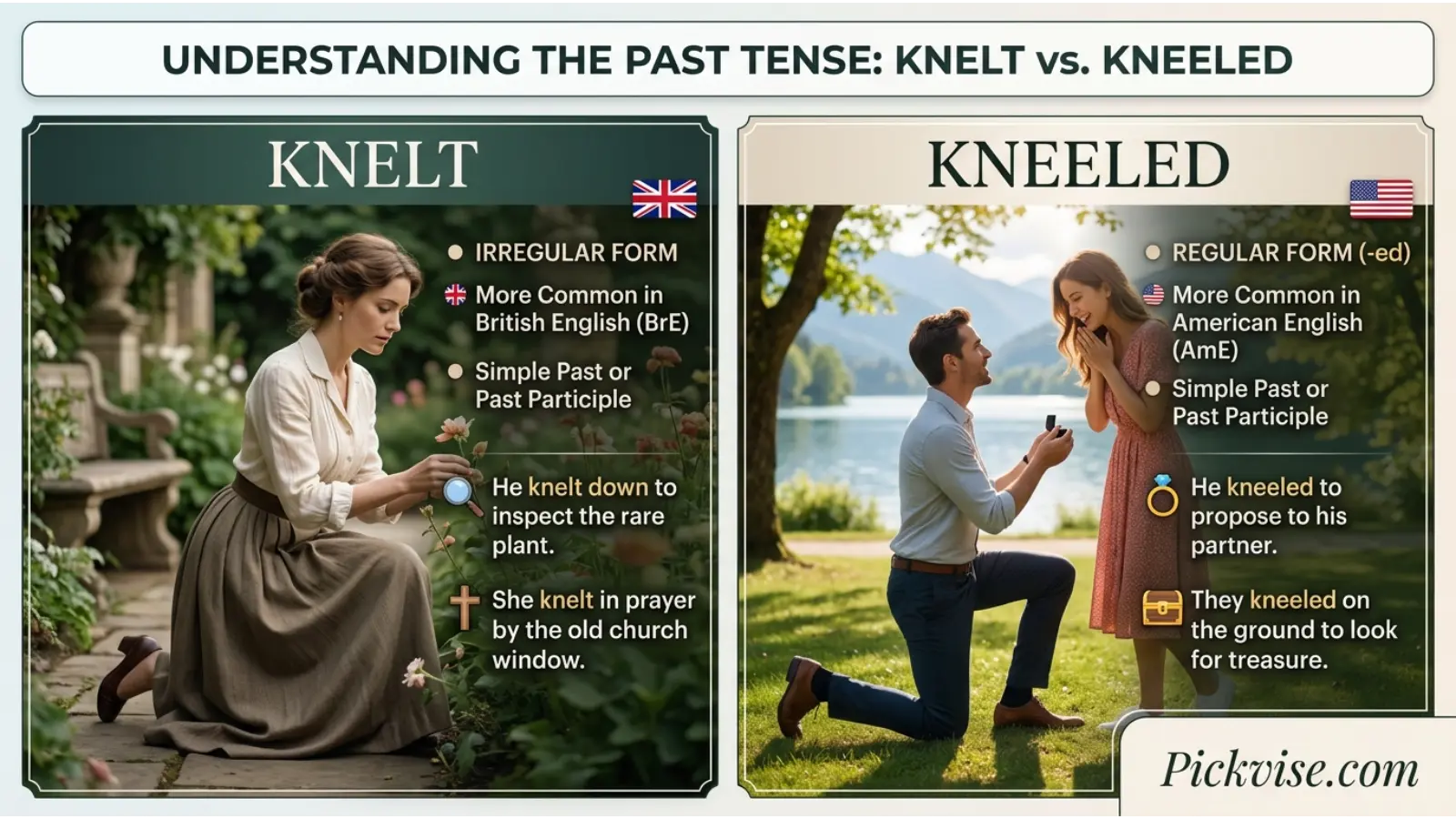
Both words appear in everyday situations.
Prayer
- Everyone knelt during the church service.
- The family kneeled together before dinner.
Marriage Proposal
- He knelt and asked her to marry him.
- He kneeled with a ring in his hand.
Sports
- Players knelt before the match.
- Some athletes kneeled during the national anthem.
Helping Someone
- She knelt beside the injured dog.
- The doctor kneeled to comfort the frightened child.
Common Mistakes When Using Knelt or Kneeled
Many learners know that both forms are correct. However, they still make mistakes when using them.
1. Mixing Both Forms
Do not switch between knelt and kneeled in the same article unless you are explaining the difference.
Correct
- She knelt before the altar.
- He knelt to pick up the book.
Or
- She kneeled before the altar.
- He kneeled to pick up the book.
2. Using the Present Tense by Mistake
Incorrect: Yesterday, she kneel before the statue.
Correct: Yesterday, she knelt before the statue.
Correct: Yesterday, she kneeled before the statue.
3. Choosing the Wrong Style
If you write in British English, use knelt consistently.
If you write in American English, kneeled often sounds more natural.
Tips to Remember the Difference
Learning the correct form is easy with a few tricks.
- Knelt is more common in British English.
- Kneeled is more common in American English.
- Both words have the same meaning.
- Match your choice with your audience.
- Stay consistent throughout your writing.
Memory Trick
Think of it this way:
- British English → Knelt
- American English → Kneeled
How to Use Knelt or Kneeled in Daily Life

These words appear in many everyday situations.
During Prayer
- The family knelt together.
- The family kneeled together.
At School
- The teacher knelt beside the student.
- The teacher kneeled to explain the lesson.
During Sports
- Several players knelt before the game.
- Several players kneeled during the ceremony.
While Helping Someone
- She knelt beside the injured child.
- She kneeled beside the injured child.
Synonyms for Kneel
If you want to avoid repetition, these words may help. Some have slightly different meanings.
| Word | Meaning |
|---|---|
| Bow | Bend forward as a sign of respect |
| Crouch | Bend low with bent knees |
| Squat | Lower your body by bending the knees |
| Genuflect | Kneel briefly as a sign of respect |
| Bend | Move into a lower position |
Expert Insight
Professional writers agree that knelt and kneeled are both correct. The best choice depends on your audience.
If you write for readers in the United Kingdom, knelt is usually the better option.
If your audience is mainly in the United States, kneeled often feels more familiar.
Consistency matters more than choosing one form over the other. Pick the version that matches your writing style and use it throughout your content.
Frequently Asked Questions
Is it knelt or kneeled?
Both are correct. They are accepted past tense forms of kneel
Which is more common, knelt or kneeled?
Knelt is more common in British English, while kneeled is more common in American English.
Is kneeled grammatically correct?
Yes. Modern English dictionaries recognize kneeled as a correct past tense of kneel.
Is knelt old-fashioned?
No. Knelt is still widely used in books, newspapers, and everyday English.
Can I use both words in the same article?
It is better to choose one form and stay consistent unless you are comparing them.
What is the past participle of kneel?
Both knelt and kneeled can serve as the past participle.
Example:
- She has knelt before.
- She has kneeled before.
Which form should students use?
Students should follow the style required by their school, teacher, or target audience.
Conclusion
Both knelt and kneeled are correct past tense forms of kneel. They have the same meaning and are accepted by modern English dictionaries. The main difference is regional preference. Knelt appears more often in British English, while kneeled is more common in American English.
When choosing between knelt or kneeled, think about who will read your writing. Then use the same form consistently from beginning to end. This simple habit makes your writing clearer and more professional.
Now that you understand the difference, you can use either word with confidence in conversations, school assignments, and professional writing.