
Spinned or Spun is a common grammar question that confuses many English learners and writers. Many people wonder if spinned is a real word or if spun is the correct past tense of spin. The answer is simple, but understanding why helps you avoid common writing mistakes.
In English, many verbs do not follow regular spelling rules. The verb spin is one of them. Instead of adding -ed, it changes to spun in the past tense and past participle. Learning this difference makes your writing sound more natural and correct.
This guide explains the meaning, shows real-life examples, compares both words, highlights common mistakes, and shares helpful tips. By the end, you will know exactly when to use spun and why spinned is incorrect.
Quick Summary
- Spun is the correct past tense and past participle of spin.
- Spinned is not a standard English word.
- Use spun in speaking and writing.
- Spin → Spun → Spun
- Remember: Spin is an irregular verb.
What Does “Spin” Mean?

The verb spin means to:
- Turn around quickly.
- Twist fibers into thread.
- Rotate something.
- Create or present information in a particular way.
Examples
- The wheel spins very fast.
- The child likes to spin around.
- The reporter tried to spin the story positively.
Is It Spinned or Spun?
The correct word is spun.
| Word | Correct? | Reason |
|---|---|---|
| Spun | ✅ Yes | Correct past tense of spin |
| Spinned | ❌ No | Not accepted in standard English |
Correct Examples
- She spun the wheel.
- He spun the basketball on his finger.
- The washing machine spun the clothes.
Incorrect Examples
- ❌ She spinned the wheel.
- ❌ He spinned the ball.
- ❌ The machine spinned the clothes.
Why Is “Spun” Correct?
English has many irregular verbs. These verbs do not simply add -ed.
For example:
| Base Verb | Past Tense | Past Participle |
|---|---|---|
| Begin | Began | Begun |
| Sing | Sang | Sung |
| Drink | Drank | Drunk |
| Spin | Spun | Spun |
Because spin is irregular, its past tense becomes spun, not spinned.
Meaning of “Spun”
Spun is used when talking about something that already happened.
Examples
- She spun the bottle.
- The Earth spun on its axis.
- Grandma spun wool into yarn.
- The dancer spun gracefully.
- The company spun the news in its favor.
Can You Ever Use “Spinned”?
No.
Modern dictionaries and grammar guides do not recognize spinned as the standard past tense of spin.
If you use spinned in school assignments, business writing, or professional content, it will usually be marked as a grammar mistake.
Always choose spun instead.
Spinned vs Spun Comparison Table
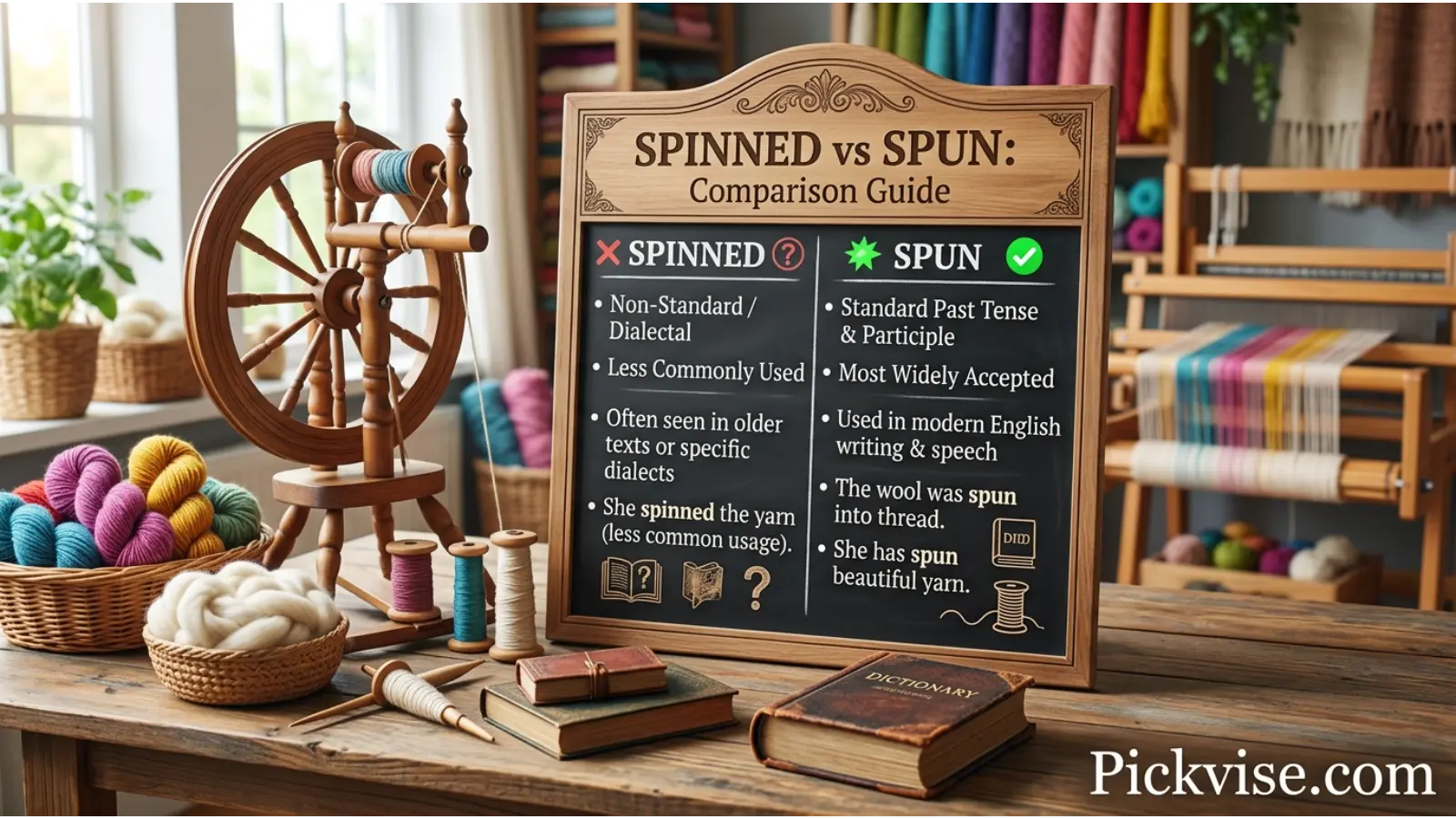
| Feature | Spinned | Spun |
|---|---|---|
| Correct English | ❌ No | ✅ Yes |
| Dictionary Word | ❌ No | ✅ Yes |
| Past Tense of Spin | ❌ No | ✅ Yes |
| Past Participle | ❌ No | ✅ Yes |
| Used in Professional Writing | ❌ No | ✅ Yes |
| Recommended for Exams | ❌ No | ✅ Yes |
Real-Life Examples
At Home
✅ The washing machine spun the clothes dry.
In Sports
✅ He spun the basketball on one finger.
In Dance
✅ The ballerina spun across the stage.
In Nature
✅ The windmill spun in the wind.
In Business
✅ The company spun the bad news into a positive story.
Common Mistakes
Many learners make these mistakes.
Mistake 1
❌ She spinned the bottle.
✅ She spun the bottle.
Mistake 2
❌ The Earth spinned all day.
✅ The Earth spun all day.
Mistake 3
❌ He has spinned the wheel.
✅ He has spun the wheel.
Mistake 4
❌ The machine has spinned the clothes.
✅ The machine has spun the clothes.
How to Remember the Correct Word
Use these simple tricks.
- Think: Spin → Spun
- Remember similar verbs:
- Sing → Sung
- Ring → Rung
- Drink → Drunk
- Never add -ed to spin.
Practice saying:
“Yesterday I spun the wheel.”
The more you repeat it, the easier it becomes.
Using “Spun” in Daily Life
You may hear or use spun in many situations.
Household
- The dryer spun the clothes.
Travel
- The Ferris wheel spun slowly.
Games
- We spun the prize wheel.
Science
- The planet spun around its axis.
News
- Politicians sometimes spin information.
- Yesterday they spun the story differently.
Synonyms
For Physical Movement
- Rotated
- Twirled
- Turned
- Whirled
- Revolved
Yarn
- Twisted
- Wove
- Threaded
For Information
- Presented
- Framed
- Interpreted
- Explained
- Shaped
Expert Insight
Grammar experts recommend learning irregular verbs as complete verb forms instead of memorizing rules.
For spin, remember:
- Spin
- Spun
- Spun
This method improves speaking, writing, and exam performance. It also helps you avoid common grammar mistakes that reduce writing quality.
Using the correct verb form makes your communication more professional and easier to understand.
Featured Snippet Answer
Is it “Spinned” or “Spun”?
Spun is the correct past tense and past participle of spin. Spinned is not accepted in standard English. Always use spun when talking about something that already happened.
Frequently Asked Questions
Is “spinned” a real English word?
No. Standard English uses spun instead.
What is the past tense of “spin”?
The past tense of spin is spun.
Is “spun” the past participle?
Yes. Spun is both the past tense and past participle of spin.
Why isn’t it “spinned”?
Because spin is an irregular verb. It does not follow the regular -ed pattern.
How do I remember the correct form?
Remember the pattern:
Spin → Spun → Spun
Can I use “spun” in formal writing?
Yes. Spun is correct in academic, business, and everyday English.
What does “spin a story” mean?
It means to present information in a way that influences how people see it.
Conclusion
The answer to Spinned or Spun is clear: spun is the only correct form in standard English. Since spin is an irregular verb, it changes to spun instead of adding -ed. Whether you are talking about a spinning wheel, a washing machine, a dancer, or even presenting information, spun is the correct choice. Avoid using spinned, as it is considered incorrect in modern English. Remember the simple pattern—Spin → Spun → Spun—and you will use this verb correctly every time. Mastering small grammar differences like this improves your writing, boosts confidence, and helps you communicate more clearly.