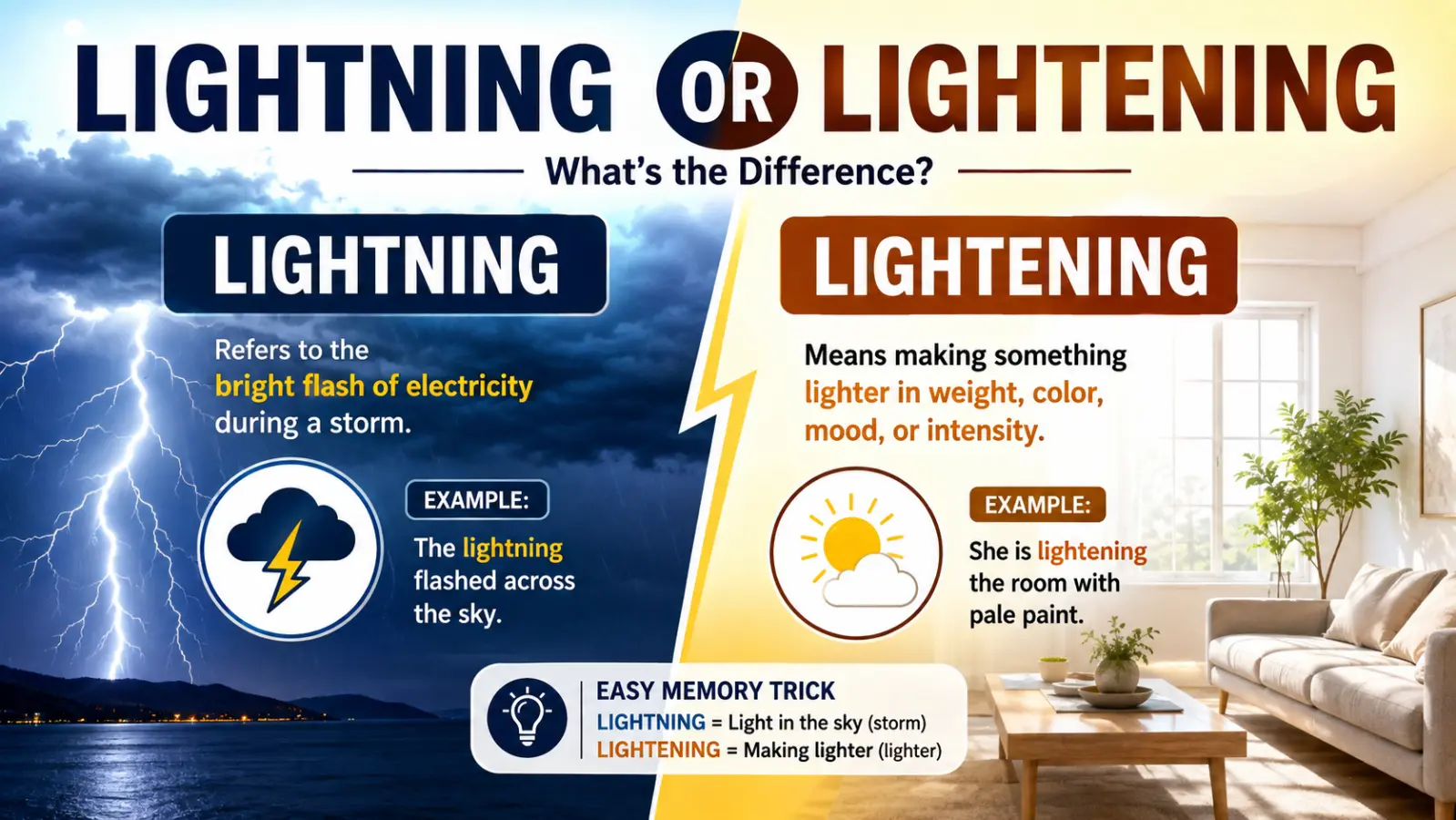
Lightning or Lightening can be confusing because both words are spelled correctly. However, they have different meanings and uses. Lightning usually refers to the bright flash of electricity during a storm. Lightening means making something lighter in weight, color, mood, or intensity. The extra “e” changes the meaning completely.
This small spelling difference can cause mistakes in writing. For example, you might write, “The storm produced bright lightning.” But you would write, “She is lightening the room with pale paint.” Understanding the difference helps you choose the right word every time. In this guide, we explain both words in simple English. You will learn their meanings, grammar, examples, common mistakes, and easy memory tricks.
Quick Summary: Lightning or Lightening?
- Lightning is the flash of electricity seen during a thunderstorm.
- Lightening means making something lighter.
- Lightning is usually a noun.
- Lightening comes from the verb lighten.
- Use lightning for storms, flashes, and electrical discharges.
- Use lightening for reducing weight, color, mood, or intensity.
- The extra “e” in lightening helps distinguish the two words.
What Does Lightning Mean?
Lightning is a powerful electrical discharge that happens in the atmosphere.
It often appears during thunderstorms. You may see a bright flash before hearing thunder.
For example:
- Lightning flashed across the sky.
- The lightning was very bright.
- We stayed indoors because of the lightning.
- A bolt of lightning struck the tree.
In these examples, lightning refers to the electrical event or flash.
Lightning as a Noun
Lightning is mainly used as a noun.
It names the natural electrical phenomenon.
For example:
The lightning lit up the night sky.
Here, lightning names the bright electrical flash.
What Does Lightening Mean?
Lightening means making something lighter.
It comes from the verb lighten.
The word can describe several types of change. Something may become lighter in weight, color, mood, or intensity.
For example:
- She is lightening the load.
- The clouds are lightening.
- He is lightening the room with brighter paint.
- Her joke helped with lightening the mood.
In each case, lightening describes a process of becoming lighter.
Lightning vs. Lightening: The Main Difference
The easiest way to understand these words is to focus on their meanings.
| Word | Meaning | Part of Speech | Example |
|---|---|---|---|
| Lightning | Electrical flash during a storm | Noun | Lightning flashed above us. |
| Lightening | Making something lighter | Verb form | She is lightening her workload. |
The key difference is simple.
Lightning = storm flash.
Lightening = making lighter.
Lightning Explained in Simple Words
Think about a stormy night.
Dark clouds fill the sky. Suddenly, a bright flash appears. That flash is lightning.
You may hear thunder shortly afterward.
For example:
We saw lightning during the storm.
The word does not describe the act of making something lighter.
Instead, it describes a natural electrical event.
Common Lightning Examples
- Lightning struck near the house.
- I saw lightning through the window.
- The lightning was followed by loud thunder.
- The storm produced frequent lightning.
- Lightning can be dangerous during storms.
These sentences all use lightning correctly.
Lightening Explained in Simple Words
Now imagine carrying a heavy bag.
You remove some books from it. The bag becomes lighter.
You are lightening the load.
The same idea applies to other situations.
For example:
- Lightening your workload means reducing your work.
- Lightening the color means making it less dark.
- Lightening the mood means making the atmosphere more cheerful.
- Lightening the pressure means reducing pressure.
So, lightening describes a change toward something less heavy, dark, serious, or intense.
Real-Life Examples of Lightning
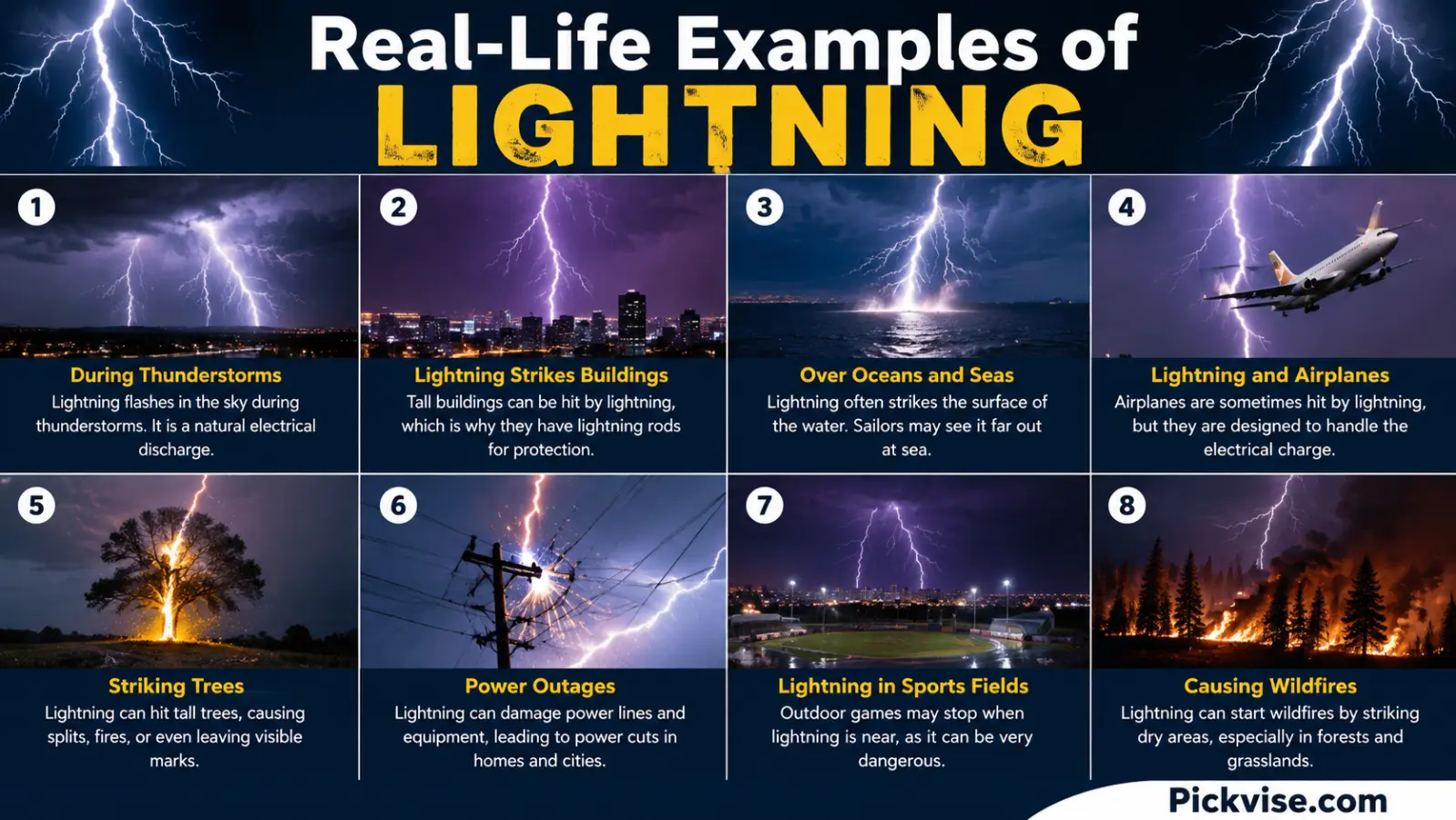
Here are some everyday examples.
Example 1: Weather
Bright lightning appeared over the mountains.
The word refers to the electrical flash.
Example 2: Storm Warning
We went inside because the lightning became stronger.
Again, the word describes the electrical activity.
Example 3: Photography
The photographer captured lightning in the night sky.
The photographer captured a natural electrical flash.
Example 4: Conversation
Lightning flashed while we were driving home.
The word refers to the storm.
Real-Life Examples of Lightening
Now consider these examples.
Example 1: Weight
I am lightening my backpack by removing extra books.
The backpack becomes less heavy.
Example 2: Work
The manager is lightening the team’s workload.
The amount of work is being reduced.
Example 3: Color
She is lightening her hair with a new color treatment.
The hair becomes lighter in color.
Example 4: Mood
His funny story helped with lightening the mood.
The atmosphere becomes less serious.
When Should You Use Lightning?
Use lightning when you mean the electrical flash from a storm.
Common phrases include:
- lightning strike
- lightning bolt
- lightning flash
- lightning storm
- lightning safety
- lightning strike
- lightning protection
- lightning detector
Example Sentences
The lightning strike damaged the tree.
We watched the lightning from inside the house.
The storm produced several flashes of lightning.
A useful clue is thunderstorm. If your sentence relates to a storm, lightning is usually the correct word.
When Should You Use Lightening?
Use lightening when something becomes lighter.
It can refer to physical weight, color, mood, pressure, or intensity.
Common phrases include:
- lightening the load
- lightening the workload
- lightening the mood
- lightening the color
- lightening the pressure
- lightening the burden
Example Sentences
She is lightening the load by removing unnecessary items.
The teacher used humor for lightening the mood.
The designer is lightening the color of the walls.
Here, lightening means making something less heavy, dark, serious, or intense.
Lightning or Lightening in a Sentence
Choosing the correct word becomes easier when you look at the surrounding words.
Correct Uses of Lightning
- The lightning was frightening.
- A flash of lightning filled the sky.
- We heard thunder after the lightning.
- The lightning struck a nearby tree.
Correct Uses of Lightening
- She is lightening her workload.
- He is lightening the mood.
- They are lightening the color.
- We are lightening the heavy load.
The meaning tells you which spelling to choose.
Common Mistakes With Lightning and Lightening
Many writers confuse these words because they look almost identical.
Mistake 1: Using Lightening for a Storm
Incorrect:
The lightening was bright last night.
Correct:
The lightning was bright last night.
The sentence discusses a storm. Therefore, use lightning.
Mistake 2: Using Lightning for Reducing Weight
Incorrect:
I am lightning my backpack.
Correct:
I am lightening my backpack.
The action makes the backpack less heavy.
Mistake 3: Confusing Lighten With Lightening
Lighten is the base verb.
Lightening is its present participle or gerund form.
For example:
I want to lighten my workload.
I am lightening my workload.
Both can be correct, depending on the sentence.
Easy Memory Trick for Lightning or Lightening
Here is a simple trick.
Remember:
Lightning = light in the sky.
The word lightning has no extra e.
Think of a storm:
Lightning → sky → thunderstorm
Now remember:
Lightening = making lighter.
The extra e can remind you of lighter.
Lightening → lighter → less heavy
This trick makes the spelling easier to remember.
Lightning and Lightening: Grammar Tips
Understanding grammar can also help.
Lightning
Lightning is generally an uncountable noun when referring to the natural phenomenon.
For example:
Lightning is dangerous.
We saw lightning.
You normally do not say “a lightning” when discussing the phenomenon.
However, phrases such as a lightning strike are correct because strike is countable.
Lightening
Lightening is the -ing form of the verb lighten.
For example:
She is lightening the color.
They are lightening the load.
The word describes an action or process.
Synonyms and Related Words
Knowing related words can improve your vocabulary.
Words Related to Lightning
- electrical discharge
- flash
- spark
- bolt
- storm flash
- thunderstorm
- electric flash
These words relate to the weather phenomenon.
Words Related to Lightening
Depending on the context, related words include:
- reducing
- easing
- brightening
- weakening
- softening
- relieving
- decreasing
For example, lightening the workload can mean reducing the workload.
Lightning or Lightening in Daily Writing
These words appear in many forms of writing.
You may see lightning in:
- weather reports
- news articles
- safety guides
- school science lessons
- novels
- storm warnings
You may see lightening in:
- workplace writing
- health and fitness content
- fashion writing
- interior design
- personal writing
- everyday conversations
Because the meanings differ, spelling matters.
Lightning or Lightening: Quick Test
Try this simple test.
Ask yourself:
Am I talking about a storm?
If yes, use:
Lightning
Ask yourself:
Am I talking about making something lighter?
If yes, use:
Lightening
Test Examples
The ___ flashed across the sky.
Answer: Lightning
She is ___ the workload.
Answer: Lightening
The storm produced ___ and thunder.
Answer: Lightning
He is ___ the mood with a joke.
Answer: Lightening
This test works in most everyday situations.
Expert Insight: Why This Difference Matters
Correct word choice improves both clarity and credibility.
Lightning and lightening have different meanings. A single letter can change the entire sentence.
For example:
The lightning mood improved.
This sentence is confusing because lightning does not mean making a mood happier.
A clearer sentence is:
Lightening the mood improved the atmosphere.
Likewise, writing “lightening” for a storm creates a spelling error.
For professional writing, always check the meaning before choosing the spelling.
FAQs About Lightning or Lightening
Is it lightning or lightening in a storm?
Use lightning for a storm. It means the bright electrical flash in the sky.
What is the difference between lightning and lightening?
Lightning is an electrical storm phenomenon. Lightening means making something lighter.
Is lightening a correct word?
Yes. Lightening is a correct word. It comes from the verb lighten.
Is lightning an adjective or noun?
Lightning is mainly used as a noun when referring to the electrical phenomenon.
What does lightening the mood mean?
Lightening the mood means making a serious or tense atmosphere more cheerful.
How do I remember lightning spelling?
Remember lightning = storm flash. The word has no extra e.
How do I use lightening in a sentence?
You can say, “She is lightening the workload by removing unnecessary tasks.”
Is “lightening” the same as “lightning”?
No. They are different words with different meanings and uses.
Lightning or Lightening: Final Comparison
| Feature | Lightning | Lightening |
|---|---|---|
| Meaning | Electrical flash | Making something lighter |
| Common use | Weather | Actions and changes |
| Grammar | Usually a noun | Verb form |
| Extra “e” | No | Yes |
| Related word | Thunderstorm | Lighten |
| Example | Lightning flashed. | She is lightening the load. |
| Memory clue | Storm | Lighter |
Conclusion
Lightning or Lightening is a common word-choice question. Both spellings are correct, but they have different meanings. Lightning refers to the bright electrical flash that happens during a storm. Lightening means making something lighter in weight, color, mood, pressure, or intensity. The easiest memory trick is simple. Think lightning = storm and lightening = lighter. When you see thunder, clouds, or an electrical flash, choose lightning. When something becomes less heavy, dark, serious, or intense, choose lightening. Understanding this small spelling difference can make your writing clearer. It can also help you avoid common grammar and spelling mistakes. When in doubt, focus on the meaning first. The correct word will then become much easier to choose.