Leasor or Lessor is a common spelling question, especially when reading or signing rental agreements. Many people write leasor, But the correct legal and standard English spelling is lessor. Knowing the right word helps you avoid mistakes in contracts, emails, and business documents.This guide explains the difference in simple English. You will learn what lessor means, why leasor is incorrect, and how to use the word with confidence. You will also find real-life examples, a comparison table, common mistakes, FAQs, and expert tips. By the end, you will know exactly which spelling to use in every situation.
Quick Summary Box
- Correct spelling: Lessor
- Incorrect spelling: Leasor
- A lessor owns property and rents it to another person.
- The person renting the property is called the lessee.
- Leasor is a common misspelling and is not standard English.
- Use lessor in legal, business, and rental documents.
What Does Lessor Mean?

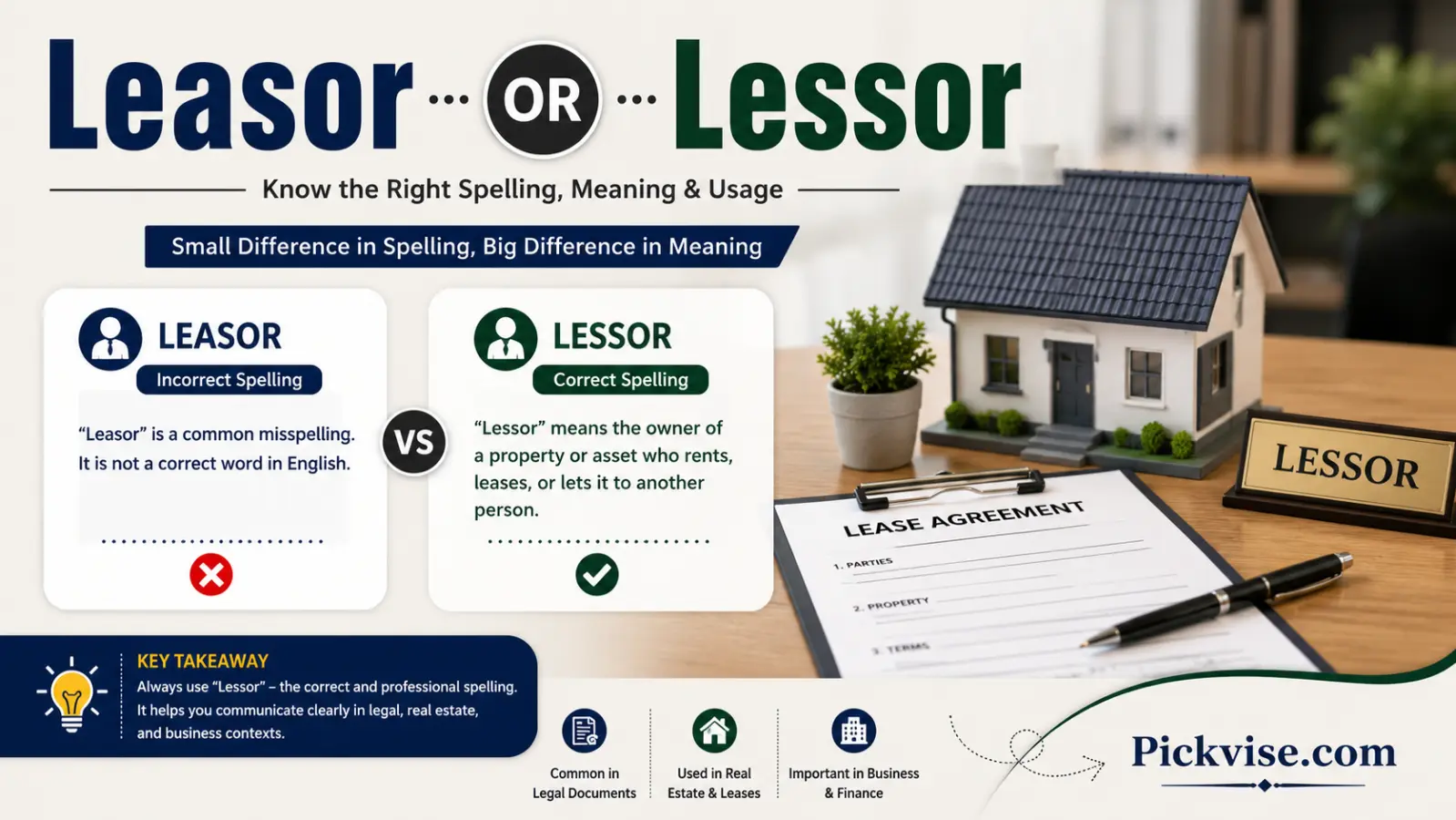
A lessor is a person or company that owns property and allows someone else to use it in exchange for payment.
The payment is usually called rent or a lease payment.
Simple definition
A lessor is the owner who rents out property, land, equipment, or vehicles.
Examples include:
- A landlord renting an apartment.
- A company leasing office equipment.
- A business renting machinery.
- A car leasing company.
Is Leasor or Lessor Correct?
The correct spelling is lessor.
Leasor is a misspelling. Although many people assume it comes from the word lease, standard dictionaries and legal documents use lessor.
| Word | Correct? | Meaning |
|---|---|---|
| Lessor | ✅ Yes | Person or company leasing property to someone else |
| Leasor | ❌ No | Incorrect spelling of lessor |
Always use lessor in contracts, legal writing, and professional communication.
Why Do People Write Leasor?
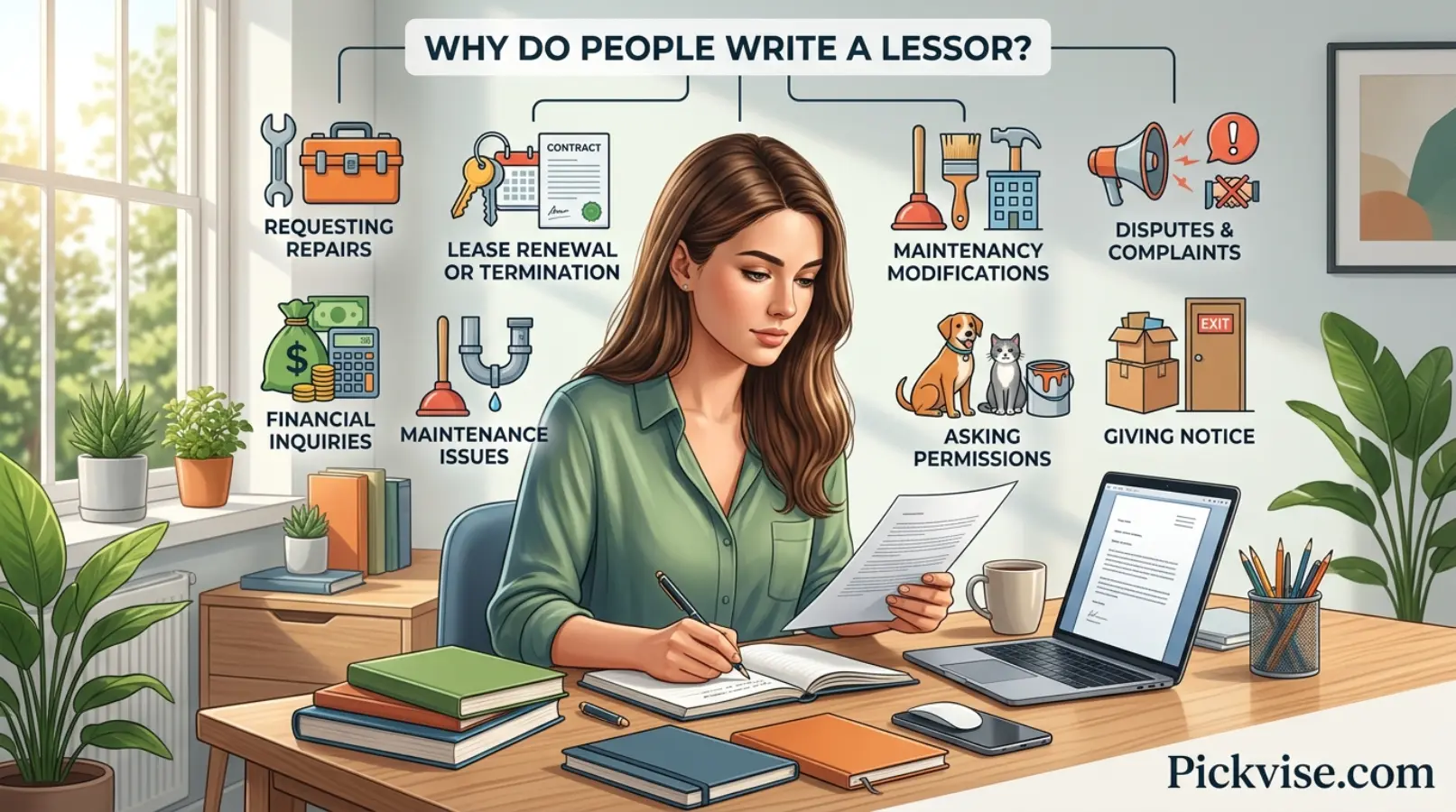
Many people spell it as leasor because it looks similar to lease.
However, English legal vocabulary follows traditional spelling.
Think of these words:
- Lease
- Lessee
- Lessor
Although they belong to the same legal relationship, their spellings differ.
Lessor vs Lessee
People often confuse these two words.
| Lessor | Lessee |
|---|---|
| Owns the property | Rents the property |
| Receives rent | Pays rent |
| Landlord | Tenant |
| Gives the lease | Receives the lease |
Easy memory trick
Lessor = Landlord
Both start with the letter L.
Real-Life Examples of Lessor
Here are common situations where the word lessor is used.
Apartment Rental
Sarah owns an apartment.
She rents it to John.
Sarah is the lessor.
John is the lessee.
Car Lease
A car company leases a vehicle to a customer.
The company is the lessor.
The customer is the lessee.
Office Space
A business rents office space to another company.
The building owner is the lessor.
The renting company is the lessee.
Equipment Lease
A construction company leases heavy machinery.
The equipment owner is the lessor.
The construction company becomes the lessee.
Example Sentences Using Lessor
Here are correct examples.
- The lessor signed the lease agreement.
- The lessor owns the commercial building.
- The lessor receives monthly rent.
- The lessor approved the lease renewal.
- The agreement protects both the lessor and the lessee.
Incorrect example:
❌ The leasor signed the contract.
Correct version:
✅ The lessor signed the contract.
Common Mistakes People Make
Many writers make these errors.
Writing “Leasor”
This is the most common mistake.
Always write lessor.
Confusing Lessor and Lessee
Remember:
- Lessor gives the lease.
- Lessee receives the lease.
Using Landlord and Lessor Incorrectly
A landlord is usually a lessor.
However, lessor is the legal term.
It also applies to vehicles, equipment, machinery, and commercial property.
When Should You Use the Word Lessor?
Use lessor whenever discussing:
- Rental agreements
- Lease contracts
- Property law
- Real estate
- Vehicle leasing
- Equipment leasing
- Commercial leases
- Business contracts
Lessor in Legal Documents
Lawyers and businesses almost always use lessor.
For example:
The lessor agrees to lease the property for twelve months.
Legal contracts define the rights of:
- The lessor
- The lessee
Using the correct spelling is important because legal documents require accuracy.
Tips to Remember the Correct Spelling
These simple tricks can help.
Think of Landlord
Lessor starts with L.
Landlord also starts with L.
Both refer to the property owner.
Learn the Pair
Remember these together:
- Lessor
- Lessee
You will rarely see one without the other.
Read Lease Agreements
Most rental contracts use lessor several times.
Seeing it often helps you remember the spelling.
Synonyms
Synonyms
- Landlord
- Property owner
- Owner
- Leasing company
- Rental provider
Why Using the Correct Spelling Matters
Correct spelling improves communication.
It also:
- Makes documents look professional.
- Prevents confusion.
- Builds trust.
- Helps in legal writing.
- Improves business communication.
- Supports SEO when writing about legal terms.
A single spelling mistake can reduce credibility.
Expert Insight
Legal and real estate professionals always use lessor because it is the accepted legal spelling. Using the correct term makes contracts clearer and avoids misunderstandings. If you write about leases, property, or business agreements, learning this distinction is essential. Accurate language also helps search engines understand your content better, improving SEO and user trust.
Frequently Asked Questions
Is leasor a real word?
No. Leasor is considered a misspelling. The correct spelling is lessor.
What is a lessor?
A lessor is the owner who leases property or equipment to another person.
Who is the lessee?
The lessee is the person or business renting the property.
Is a landlord the same as a lessor?
Usually yes. In legal documents, lessor is the preferred term.
Why is it spelled lessor instead of leasor?
The spelling follows traditional legal English and is the accepted standard.
Can a company be a lessor?
Yes. Businesses often act as lessors when leasing vehicles, equipment, or office space.
Is lessor used outside real estate?
Yes. It is also used for cars, machinery, electronics, aircraft, and commercial equipment.
Conclusion
When comparing Leasor or Lessor, the answer is simple. Lessor is the correct spelling, while leasor is a common mistake. A lessor is the owner who leases property, equipment, or vehicles to another person, known as the lessee. Using the correct spelling is important in legal documents, business writing, and everyday communication. It helps your writing look professional and avoids confusion. Whenever you discuss rental agreements or lease contracts, remember to use lessor. Keeping this simple rule in mind will improve both your grammar and your confidence.