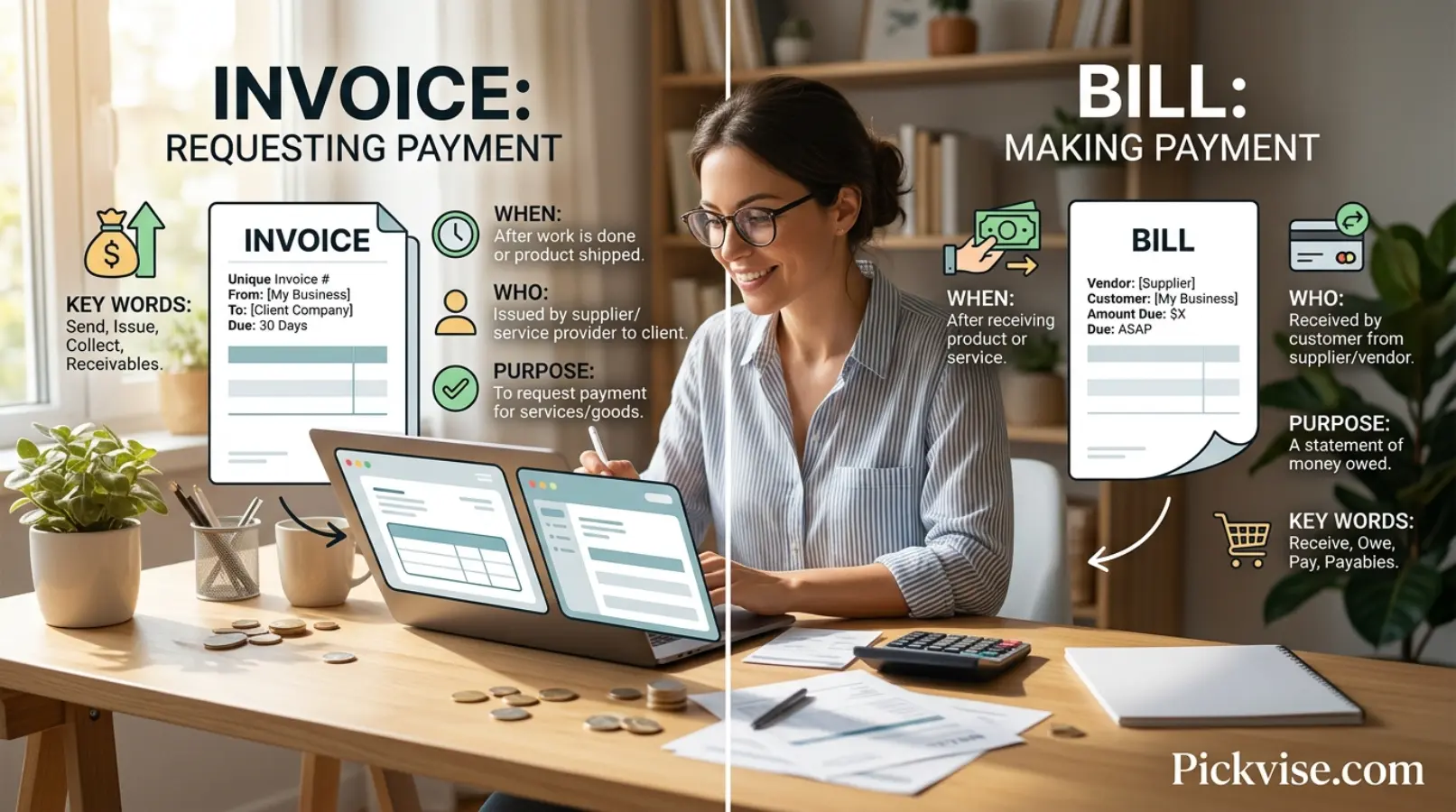
Invoice or Bill is a common comparison that confuses many people. Both ask for payment, but they are not the same. Knowing the difference helps you avoid mistakes in business and daily life. An invoice is a document that requests payment after goods or services are provided. A bill is also a payment request, but people often receive it for immediate payment. Businesses, freelancers, restaurants, hospitals, and utility companies all use these documents. This guide explains Invoice or Bill in simple words. You will learn their meanings, key differences, real-life examples, and when to use each one. By the end, you will know which term fits every situation.
Quick Summary Box
- Invoice is a formal request for payment.
- Bill is a payment statement, often due immediately.
- Businesses usually send invoices to customers.
- Restaurants and stores usually give bills.
- Invoices include payment terms.
- Bills often require quick or instant payment.
- Both documents help record financial transactions.
What Does Invoice Mean?
An invoice is a document sent by a seller to a buyer. It lists products or services, prices, taxes, payment terms, and the total amount due.
Businesses often send invoices after completing work.
An invoice usually includes:
- Invoice number
- Seller and buyer details
- Date
- List of products or services
- Quantity
- Price
- Tax
- Total amount
- Payment due date
Example
A graphic designer finishes a logo project. They send an invoice asking the client to pay within 30 days.
What Does Bill Mean?
A bill is a request for payment. It is usually given when payment is expected immediately or very soon.
People receive bills every day.
Common examples include:
- Restaurant bill
- Electricity bill
- Water bill
- Internet bill
- Hospital bill
- Grocery bill
Example
You finish dinner at a restaurant. The waiter brings your bill, and you pay before leaving.
Invoice or Bill: Key Differences
| Feature | Invoice | Bill |
|---|---|---|
| Purpose | Request payment | Ask for payment |
| Used By | Businesses and freelancers | Stores, restaurants, utility companies |
| Payment Time | Usually later | Usually immediate |
| Payment Terms | Often included | Rarely included |
| Document Detail | More detailed | Usually shorter |
| Business Records | Common | Sometimes |
| Customer Type | Business or client | Consumer |
When Should You Use an Invoice?
Use an invoice when:
- Selling products to another business
- Completing freelance work
- Offering professional services
- Payment is due later
- Keeping accounting records
Examples
- Web design project
- Marketing services
- Consulting work
- Wholesale product sales
When Should You Use a Bill?
Use a bill when:
- Payment is due now
- Buying food
- Paying monthly utilities
- Shopping in a store
- Receiving medical services
Examples
- Restaurant bill
- Gas bill
- Phone bill
- Grocery bill
- Electricity bill
Real-Life Examples of Invoice and Bill
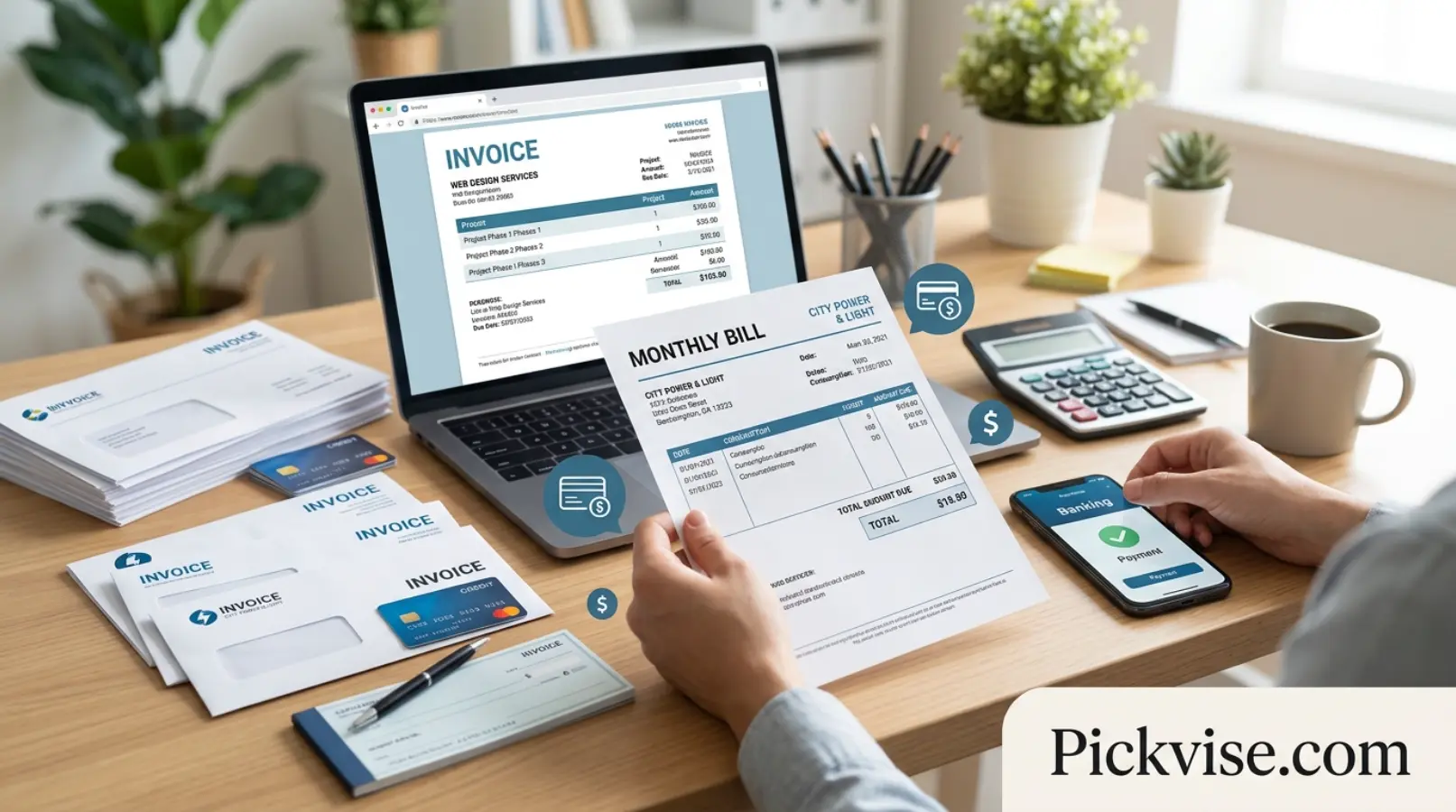
Example 1
A plumber repairs a sink.
- The plumber sends an invoice.
- The customer pays within 15 days.
Example 2
You eat at a café.
- The waiter gives you the bill.
- You pay before leaving.
Example 3
A software company completes a project.
- It sends an invoice with payment terms.
Example 4
Your internet provider sends your monthly bill.
- You pay before the due date.
Common Mistakes People Make
Many people use invoice and bill as if they mean exactly the same thing.
Here are common mistakes.
Calling every payment request an invoice
Not every payment request is an invoice. Restaurants usually provide bills.
Using bill for business contracts
Businesses often prefer invoices because they include payment terms.
Ignoring payment dates
Invoices often have future due dates.
Bills may require payment immediately.
Forgetting invoice numbers
Invoice numbers help businesses track payments.
Why Businesses Prefer Invoices

Invoices offer many advantages.
- Better financial records
- Easy tax reporting
- Professional appearance
- Clear payment terms
- Easier payment tracking
- Reduced confusion
Businesses also use invoices to manage cash flow.
Why Consumers Usually Receive Bills
Bills are simple.
They help customers know how much to pay.
Common consumer bills include:
- Utility bills
- Restaurant bills
- Medical bills
- Credit card bills
- Shopping bills
Bills make everyday payments easy.
Invoice vs Bill in Accounting
Accounting professionals treat invoices and bills differently.
Invoice
- Sent by the seller
- Records money to receive
- Helps track accounts receivable
Bill
- Received by the buyer
- Records money to pay
- Helps track accounts payable
This distinction keeps financial records accurate.
Synonyms
Invoice Synonyms
- Payment request
- Sales invoice
- Billing statement
- Commercial invoice
- Tax invoice
Bill Synonyms
- Charge
- Statement
- Receipt (in some contexts)
- Payment notice
- Utility statement
Tips for Using Invoice and Bill Correctly
- Use invoice for business transactions.
- Use bill for everyday payments.
- Always include payment details.
- Check payment due dates.
- Keep copies for your records.
- Use invoice numbers for tracking.
- Read bills before paying.
Expert Insight
Understanding Invoice or Bill improves financial communication.
Businesses rely on invoices to manage payments and accounting. Consumers interact with bills almost every day. Knowing the difference helps avoid confusion and creates more professional financial records.
Whether you own a company or simply manage household expenses, choosing the correct term improves clarity and trust.
Frequently Asked Questions (FAQs)
Is an invoice the same as a bill?
No. Both request payment, but invoices usually include payment terms, while bills often require immediate payment.
Which comes first, an invoice or a bill?
It depends on the situation. Businesses usually send invoices. Retail stores and restaurants usually provide bills.
Can an invoice become a bill?
Yes. Once payment becomes due, people may casually refer to the unpaid invoice as a bill.
Why do businesses use invoices?
Invoices help businesses track payments, taxes, customers, and accounting records.
Do restaurants give invoices?
Usually no. Restaurants normally provide bills unless a business requests an invoice.
Is a utility payment an invoice?
Most people call it a utility bill, although some companies use invoice-like formats.
Does an invoice always have a due date?
Most business invoices include a payment deadline.
Conclusion
Understanding Invoice or Bill is simple once you know their purpose. An invoice is a detailed payment request that businesses use when payment is due later. A bill is commonly used when payment is expected immediately, such as at restaurants or for monthly utilities. Although the two terms sometimes overlap, using the correct one makes communication clearer. Businesses benefit from invoices because they support accounting and payment tracking. Consumers see bills more often in daily life. Learning the difference helps you manage payments with confidence and avoid misunderstandings.