Somber or Sombre are two correct spellings of the same word. The only real difference is where they are used. Somber is the preferred spelling in American English, while Sombre is more common in British English and other English-speaking countries.
Many writers feel confused when choosing between these spellings. The good news is that both mean exactly the same thing. They describe something that is dark, serious, sad, or gloomy. Whether you are writing a blog, school paper, business email, or social media post, knowing which spelling fits your audience helps you write more naturally. This guide explains the meaning, differences, examples, and common mistakes in simple English. By the end, you will know when to use somber and when sombre is the better choice.
Quick Summary
- Somber is the American English spelling.
- Sombre is the British English spelling.
- Both words have the same meaning.
- They describe sadness, seriousness, darkness, or gloom.
- Choose the spelling based on your target audience.
- Never mix both spellings in the same document.
What Does Somber or Sombre Mean?
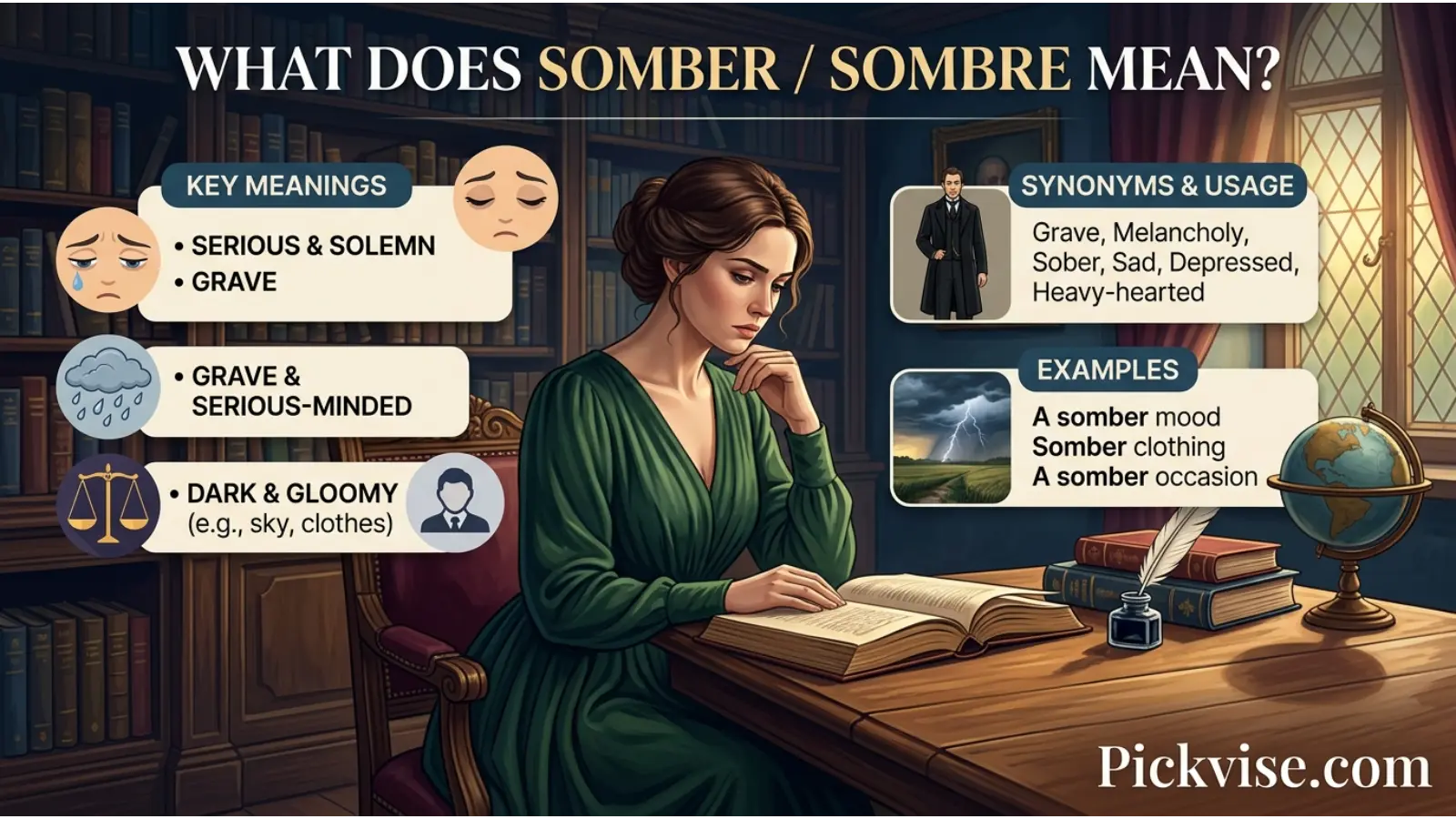
Somber or sombre means dark, serious, sad, gloomy, or without bright colors or cheerful feelings.
The word can describe:
- A person’s mood
- A facial expression
- Clothing
- Weather
- Music
- Paintings
- Buildings
- Events
Simple definition
Somber or sombre means feeling or showing sadness, seriousness, or darkness.
Somber vs Sombre: What’s the Difference?
There is no difference in meaning.
The only difference is spelling.
| Feature | Somber | Sombre |
|---|---|---|
| Meaning | Dark, serious, gloomy | Dark, serious, gloomy |
| American English | ✅ Preferred | Rare |
| British English | Less common | ✅ Preferred |
| Canadian English | Often Sombre | Common |
| Australian English | Less common | Preferred |
| Correct? | Yes | Yes |
Rule:
- Writing for the US? Use somber.
- Writing for the UK, Australia, or many Commonwealth countries? Use sombre.
Why Are There Two Spellings?
Many English words have American and British spellings.
Examples include:
| American | British |
|---|---|
| Color | Colour |
| Favorite | Favourite |
| Theater | Theatre |
| Humor | Humour |
| Somber | Sombre |
American English often removes silent letters. British English usually keeps the older spelling.
How to Use Somber in American English
Americans almost always write somber.
Examples
- She wore a somber black dress.
- The news created a somber mood.
- Everyone stayed somber after the accident.
- His voice sounded somber.
- The movie ended on a somber note.
How to Use Sombre in British English
British English prefers sombre.
Examples
- The church had a sombre atmosphere.
- He gave a sombre speech.
- She looked sombre during the meeting.
- The painting uses sombre colours.
- The sky became sombre before the storm.
Real-Life Examples
Here are situations where these words appear naturally.
News
“The nation observed a somber memorial ceremony.”
Weather
“The sky looked sombre before heavy rain.”
Fashion
“She chose a somber suit for the funeral.”
Movies
“The film ends with a sombre message.”
Music
“The piano created a somber mood.”
When Should You Use Somber or Sombre?
Choose based on your readers.
Use Somber when writing for:
- United States
- American businesses
- US websites
- American schools
Use Sombre when writing for:
- United Kingdom
- Australia
- New Zealand
- Ireland
- Many Canadian publications
Consistency matters more than the spelling itself.
Common Mistakes to Avoid
Many writers make these errors.
Mixing spellings
❌ The article begins with somber and ends with sombre.
Choose one spelling.
Thinking the meanings differ
They do not.
Both words mean exactly the same thing.
Using the wrong regional spelling
American readers expect somber.
British readers usually expect sombre.
Overusing the word
Instead of repeating it many times, use similar words.
Synonyms of Somber or Sombre
These words have similar meanings.
- Gloomy
- Serious
- Dark
- Sad
- Grim
- Melancholy
- Solemn
- Dreary
- Bleak
- Mournful
- Downcast
- Joyless
- Depressing
- Cheerless
- Grave
Tips to Remember the Difference
Remember these easy tricks.
Tip 1
Think of America = Somber.
Both are slightly shorter.
Tip 2
Think of Britain = Sombre.
British English often keeps extra letters.
Tip 3
Choose one spelling for the entire article.
Never switch halfway through.
Somber or Sombre in Daily Life

You may hear or read these words in many places.
Examples include:
- Funeral speeches
- Newspaper articles
- Weather reports
- Book reviews
- Movie reviews
- History books
- Church services
- News broadcasts
- Music reviews
They help describe serious or emotional situations.
Expert Insight
Professional editors do not choose between somber and sombre based on meaning. They choose based on style guides and the target audience.
If your website serves American readers, use somber throughout the article. If your audience is mainly British or Australian, use sombre consistently. Search engines also prefer consistent spelling because it improves readability and user experience.
Good SEO writing focuses on clarity, natural language, and audience expectations rather than repeating the keyword excessively.
Frequently Asked Questions
Is somber or sombre correct?
Yes. Both spellings are correct. The choice depends on regional English.
Is somber American or British?
Somber is the preferred American English spelling.
Is sombre British English?
Yes. Sombre is the standard British English spelling.
Do somber and sombre have different meanings?
No. They have exactly the same meaning.
Which spelling should I use?
Use somber for American audiences and sombre for British audiences.
Can I use both spellings in one article?
No. Pick one spelling and stay consistent.
What is an example of somber?
“The family remained somber after hearing the news.”
What does sombre mood mean?
A sombre mood means people feel serious, quiet, or sad.
Conclusion
Somber or sombre are both correct spellings of the same word. The only difference is regional preference. American English uses somber, while British English prefers sombre. Their meaning never changes. They both describe sadness, seriousness, darkness, or a gloomy atmosphere. Choosing the correct spelling helps your writing match your audience and keeps your content consistent. Whether you write blog posts, emails, school assignments, or professional documents, remember to use one spelling throughout your work. Following this simple rule improves readability, builds trust with readers, and creates more polished writing.