
Led or Lead is a common English grammar confusion for many learners. Lead and Led look similar but have different meanings and uses.Lead is a present tense word. It means to guide, direct, or be in front. Led is the past tense of lead. It shows something that already happened. Many people mix these words in writing and speaking. This creates grammar mistakes and confusion. But once you learn the rule, it becomes very easy. In this guide, you will learn the simple difference between lead and led. You will see real examples, usage rules, and common mistakes. The explanation uses very simple English. It helps beginners understand fast. By the end, you will clearly know when to use lead and when to use led in daily writing and speaking.
Quick Summary Box (Featured Snippet)
- Lead = present tense (now or future)
- Led = past tense (already happened)
- Lead means to guide or go first
- Led means guided or went first in the past
- Example: She leads the team now
- Example: She led the team yesterday
Meaning of Led or Lead
The words lead and led come from the same root verb.
- Lead means to guide, direct, or show the way.
- Led means the action already happened in the past.
These words are used in communication, teamwork, and direction.
Lead is active in the present. Led is completed in the past.
Simple Explanation of Lead vs Led
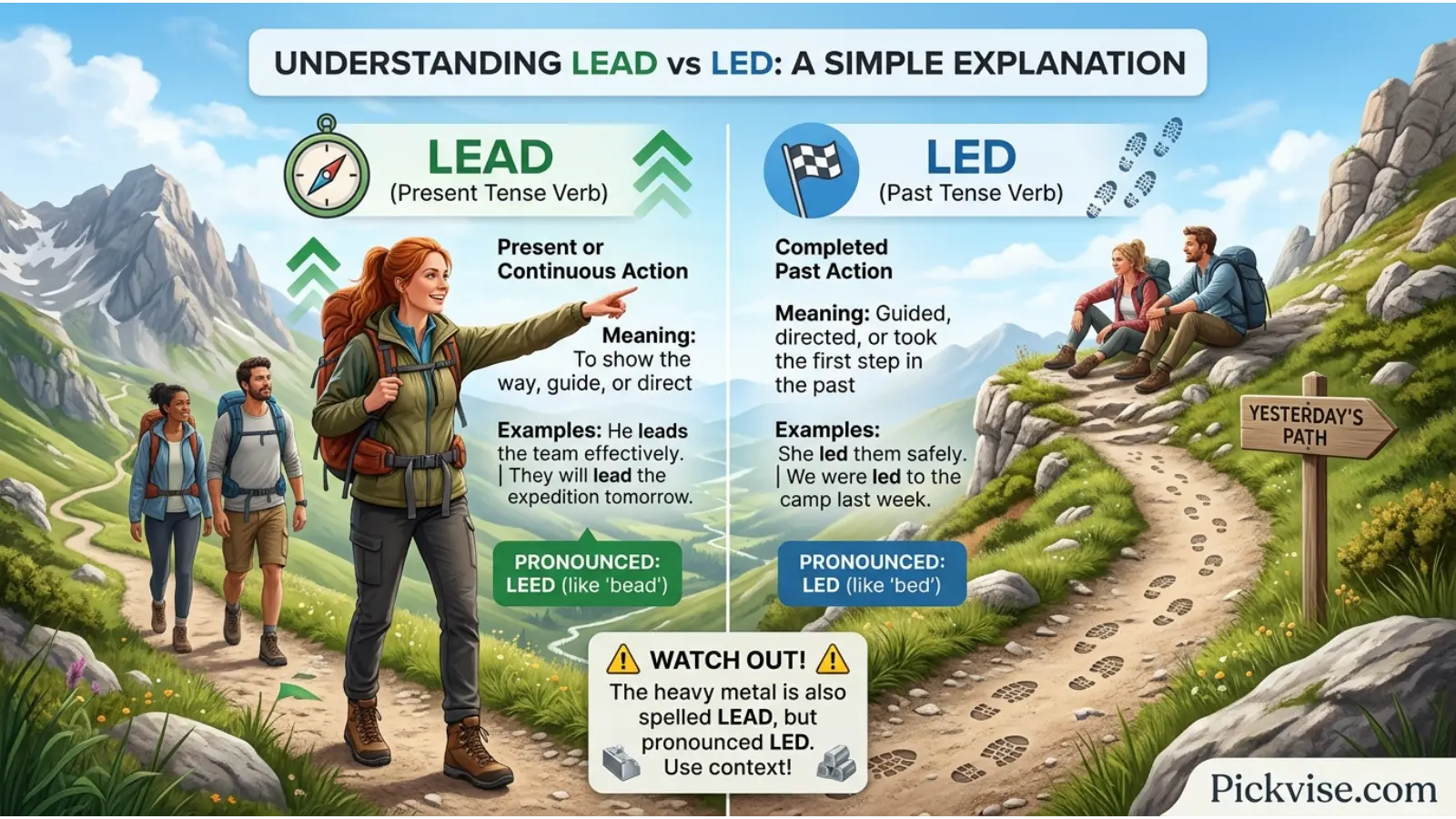
Lead is used when something is happening now. It can also talk about the future.
Led is used when something already happened.
Example:
- I lead my team every day.
- I led my team yesterday.
This difference helps you avoid grammar mistakes.
Grammar Rules of Lead and Led
English verbs change form based on time.
- Present tense: lead
- Past tense: led
- Past participle: led
So, “lead” changes to “led” in the past form.
This is an irregular verb. It does not follow “-ed” rules.
How to Use “Lead” in Sentences
Use “lead” when talking about:
- Present actions
- Habits
- Future plans
Examples:
- She leads the class.
- They lead the project.
- I will lead the meeting tomorrow.
“Lead” shows current or future action.
How to Use “Led” in Sentences
Use “led” when talking about:
- Past events
- Completed actions
Examples:
- He led the team yesterday.
- She led the discussion.
- They led us to safety.
“Led” always shows finished actions.
Real Life Examples of Led or Lead

Here are simple real-life uses:
- Teacher leads the class every day.
- Teacher led the class yesterday.
- Captain leads the team.
- Captain led the team to victory.
These examples show clear time differences.
Comparison Table (Lead vs Led)
| Feature | Lead (Present) | Led (Past) |
|---|---|---|
| Time | Now / Future | Past |
| Meaning | To guide | Guided |
| Usage | Ongoing action | Completed action |
| Example | She leads the group | She led the group |
Common Mistakes with Led or Lead
Many learners make these mistakes:
- Using “lead” for past actions
- Writing “leded” (wrong form)
- Confusing pronunciation
Wrong: He lead the team yesterday
Correct: He led the team yesterday
Practice helps avoid these errors.
Tips and Tricks to Remember
- Think “Lead = Now”
- Think “Led = Done”
- Link “Led” with “red” (past feeling)
- Practice daily sentences
- Read simple English texts
These tricks help you remember easily.
Synonyms
Related words help and understanding:
- guide
- direct
- show the way
- head
- manage
- command
- supervise
- past tense of lead
These improve search relevance.
Usage in Daily Life
You will see lead and led in:
- School classrooms
- Business meetings
- Sports teams
- Leadership roles
- News reports
Examples:
- The coach leads the team.
- The coach led the team to win.
FAQs About Led or Lead
1. What is the difference between lead and led?
Lead is present. Led is past.
2. Is led the past tense of lead?
Yes, led is the past tense of lead.
3. How do I pronounce lead?
Lead (present) sounds like “leed.”
4. Can we use lead in past tense?
No, use led for past actions.
5. Is lead a regular verb?
No, it is an irregular verb.
6. What is the past participle of lead?
It is also “led.”
7. Can lead be used in future tense?
Yes, use “will lead.”
Expert Insights (EEAT Section)
Understanding “lead vs led” improves grammar accuracy.
This topic is important for students, writers, and professionals.
Correct verb usage builds trust in writing. It also improves SEO content quality.
Search engines prefer clear, correct grammar. So learning simple rules like this helps content rank better.
Experts suggest practicing with daily sentences. Repetition builds strong memory.
Conclusion
The difference between led or lead is simple once you learn the rule. Lead is used for present and future actions. Led is used for past actions. Many learners confuse these two words, but practice makes it easy. You can remember it with a simple idea: lead means now, led means done. We covered meanings, examples, rules, and common mistakes. We also saw a comparison table and real-life usage. If you use these rules daily, your grammar will improve fast. You will write and speak more confidently. Always check the time of action before choosing lead or led. This small habit will make your English correct and clear.