
Syllabuses or syllabi are important terms in education used to describe course outlines.
A syllabus explains what students will learn in a course.
Teachers use syllabuses to plan lessons step by step.
Students use syllabi to understand topics, exams, and goals.
Many people get confused between syllabuses or syllabi.
Both words are correct, but usage depends on grammar rules.
This guide explains everything in simple English.
You will learn meaning, examples, differences, and usage rules.
We also include tips, FAQs, and expert insights.
This will help students, teachers, and learners understand the topic clearly.
By the end, you will know how to use syllabuses or syllabi correctly in real life.
Quick Summary Box (Featured Snippet)
- Syllabus = course plan or outline
- Syllabuses = plural in modern English
- Syllabi = plural in Latin form
- Used in schools, colleges, and universities
- Helps organize learning and exams
- Guides teachers and students
- Both forms are correct
What Are Syllabuses or Syllabi? (Simple Meaning)
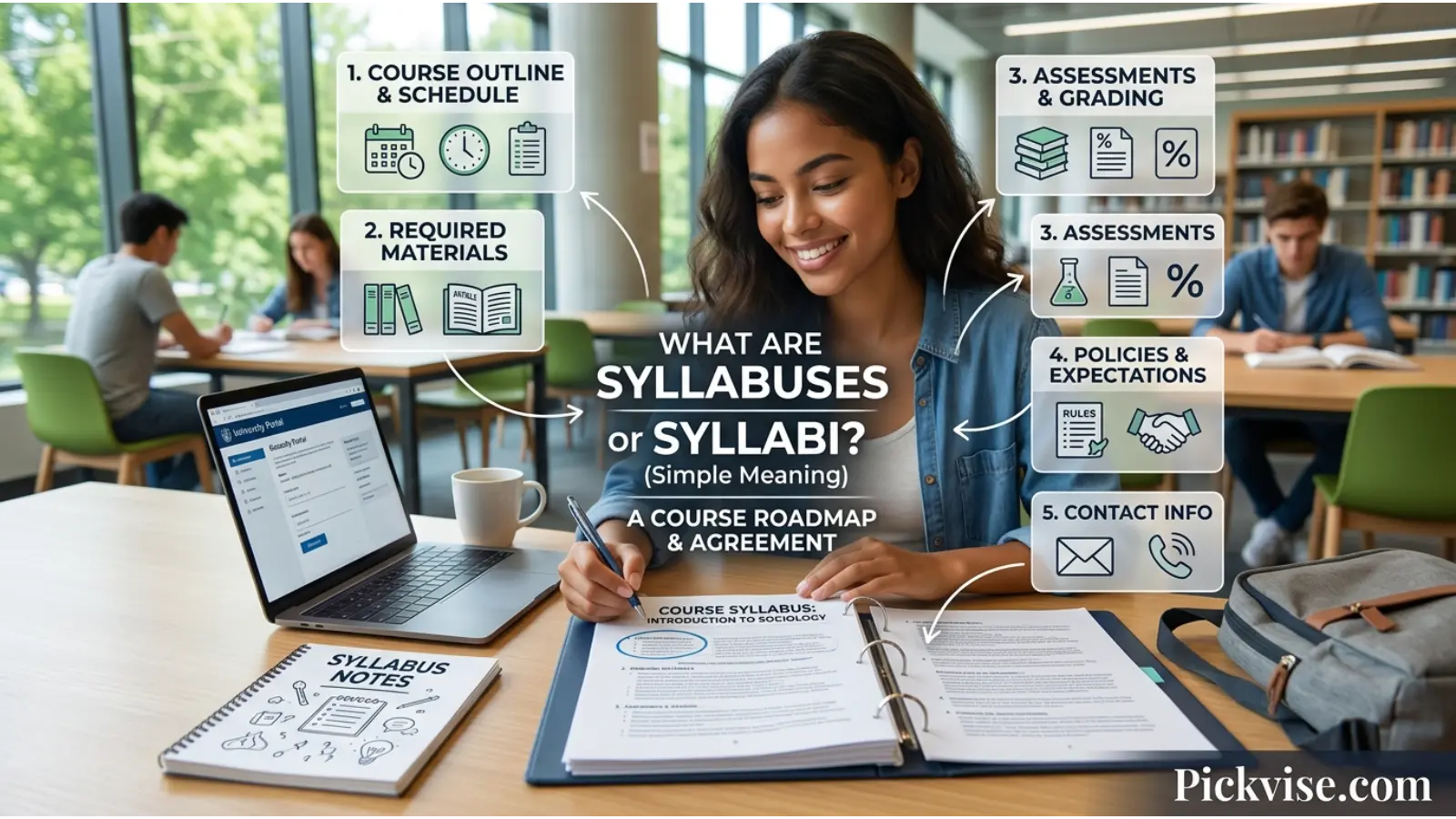
Syllabuses or syllabi mean the same thing.
They describe course plans in education.
A syllabus shows:
- Topics to learn
- Weekly schedule
- Exam structure
- Learning goals
Teachers create syllabuses before starting a course.
Students follow them during study.
Syllabus Meaning in Simple Words
A syllabus is a learning plan.
It tells what you will study in a subject.
works like a roadmap for education.
keeps learning organized and clear.
Without a syllabus, students feel confused.
It helps everyone stay on track.
Syllabuses vs Syllabi: Key Difference
Both words are correct plural forms of syllabus.
But they follow different grammar styles.
Comparison Table
| Feature | Syllabuses (Modern English) | Syllabi (Latin Form) |
|---|---|---|
| Usage | Common in schools today | Formal/academic use |
| Style | Simple English | Traditional Latin |
| Preference | Most teachers use it | Used in research |
| Correctness | Fully correct | Fully correct |
Both are acceptable in writing and speaking.
However, syllabuses is more common in daily use.
Real-Life Examples of Syllabuses or Syllabi
Here are simple examples:
- School syllabus for English class
- College syllabus for science subjects
- University syllabus for semester courses
- Exam syllabus for board exams
Example sentence:
- The teacher shared the syllabus on the first day.
- Students followed the syllabi for exam preparation.
Why Syllabuses or Syllabi Are Important
Syllabuses help in education planning.
They make learning structured and easy.
They are important because:
- They guide teachers
- They help students prepare
- They set clear goals
- They organize exams
- They save time
Without them, learning becomes random and confusing.
Common Mistakes Students Make
Many learners use syllabuses incorrectly.
Here are common mistakes:
- Using “syllabus” for plural
- Mixing syllabuses and syllabi in one sentence
- Ignoring context of usage
- Thinking one form is wrong
Remember:
Both forms are correct.
Use based on writing style.
How to Use Syllabuses or Syllabi in Sentences
Here are correct examples:
- The school updated its syllabuses this year.
- The university published new syllabi.
- Teachers follow the syllabus strictly.
- Students study according to the syllabi.
Keep sentences simple and clear.
Synonyms
These terms are related:
- Course outline
- Study plan
- Curriculum
- Learning schedule
- Academic plan
- Lesson structure
These help improve SEO and understanding.
Tips to Understand Syllabuses or Syllabi Easily
Follow these tips:
- Read your course plan carefully
- Highlight important topics
- Follow weekly schedule
- Ask teachers for clarity
- Revise syllabus before exams
These steps improve learning success.
Usage in Daily Life

Syllabuses are not only for schools.
They are used in many places.
Examples:
- Online courses
- Training programs
- Skill development classes
- Professional certifications
They help learners stay organized.
Expert Insights (EEAT Section)
Education experts say syllabuses improve learning outcomes.
They help students focus on important topics.
A clear syllabus reduces stress.
It increases exam performance.
Experts also suggest updating syllabi regularly.
This keeps education modern and relevant.
Understanding syllabuses or syllabi is important for academic success.
It builds discipline and planning skills.
FAQs About Syllabuses or Syllabi
1. What is the meaning of syllabuses or syllabi?
They are plural forms of syllabus, meaning course outlines.
2. Which is correct: syllabuses or syllabi?
Both are correct. Usage depends on style.
3. What is a syllabus used for?
It guides teaching and learning in a course.
4. Is syllabus singular or plural?
Syllabus is singular. Syllabuses and syllabi are plural.
5. Where are syllabi used?
They are used in schools, colleges, and universities.
6. Why are syllabuses important?
They help organize learning and exam preparation.
7. Can I use syllabi in modern English?
Yes, but syllabuses is more common today.
8. Do all schools follow syllabi?
Yes, most educational institutions use them.
Conclusion
Syllabuses or syllabi are important tools in education.
They explain what students will learn in a course.
Both terms are correct and widely used.
Syllabuses is common in modern English.
Syllabi is used in formal or academic writing.
A syllabus helps teachers plan lessons.
It also helps students stay focused and organized.
Understanding this topic improves learning success.
It also reduces confusion in studies.
Always check your course syllabus before starting.
It guides your learning journey step by step.
In short, syllabuses or syllabi are essential for structured education.
They make learning clear, simple, and effective for everyone.