Signed or Sign is a common English grammar confusion for learners. Many people mix these two words in daily writing and speaking.
The difference is simple but very important for correct English.
“Sign” is the base verb form. It means to write, mark, or show something.
“Signed” is the past tense and past participle of “sign.”
This topic matters because wrong usage can change the meaning of a sentence.
For example, “I sign the paper” and “I signed the paper” are not the same.
In this guide, you will learn the clear difference between sign and signed.
You will also see real-life examples, common mistakes, and simple rules.
By the end, you will use both words correctly in writing and speaking with confidence.
Quick Summary Box (Featured Snippet)
- Sign = present tense verb (do now)
- Signed = past tense verb (already done)
- “Sign” shows action happening now or generally
- “Signed” shows completed action in the past
- Both words relate to marking, writing, or agreement
- Context decides which word is correct
What Does “Sign” Mean? (Simple Definition)
“Sign” is a base verb in English.
It means to write your name or mark something.
It also means to show or indicate something.
Examples:
- I sign the document every day.
- Please sign here.
- This sign shows danger.
So, “sign” is used when the action is happening now or in general.
What Does “Signed” Mean?
“Signed” is the past tense of “sign.”
It shows that the action is already completed.
It is also the past participle form used in perfect tenses.
Examples:
- I signed the paper yesterday.
- She has signed the contract.
- They signed the agreement last week.
So, “signed” always talks about completed actions.
Signed or Sign: Key Difference Explained
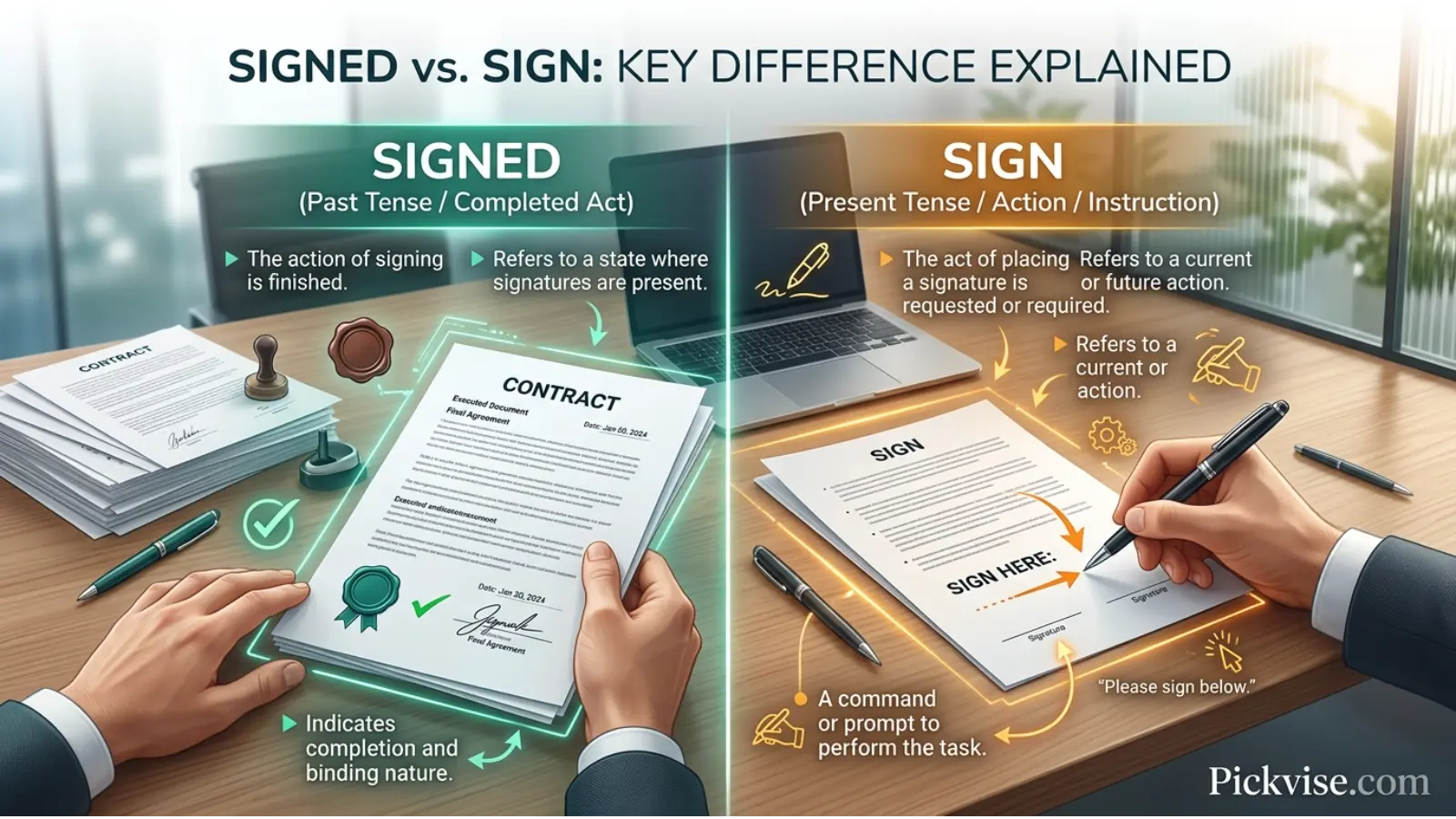
The main difference is time.
- Sign = present or general action
- Signed = past or completed action
Simple Rule:
If it already happened → use signed
If it is happening now → use sign
Comparison Table: Sign vs Signed
| Feature | Sign | Signed |
|---|---|---|
| Tense | Present | Past |
| Meaning | To write or mark now | Already wrote or marked |
| Usage | Instructions, general use | Completed actions |
| Example | Please sign here | I signed the form yesterday |
| Verb form | Base verb | Past / Past participle |
Real-Life Examples of Sign and Signed
1. Office Use
- Please sign the attendance sheet.
- I signed the attendance sheet this morning.
2. Legal Documents
- You must sign the contract.
- He signed the contract yesterday.
3. School Life
- Students sign their homework.
- The teacher signed the report card.
Common Mistakes People Make
Many learners confuse these words. Here are common errors:
1: I sign the paper yesterday.
✔ I signed the paper yesterday.
2: Please signed here.
✔ Please sign here.
3: She sign the agreement last week.
✔ She signed the agreement last week.
Why this happens:
- Confusion with English tenses
- Lack of practice
- Direct translation from native language
When to Use “Sign” in Daily Life
Use “sign” in these situations:
- Giving instructions
- Talking about habits
- Present actions
- Future polite requests
Examples:
- Sign your name here.
- I always sign documents carefully.
- Please sign the form tomorrow.
When to Use “Signed” in Daily Life
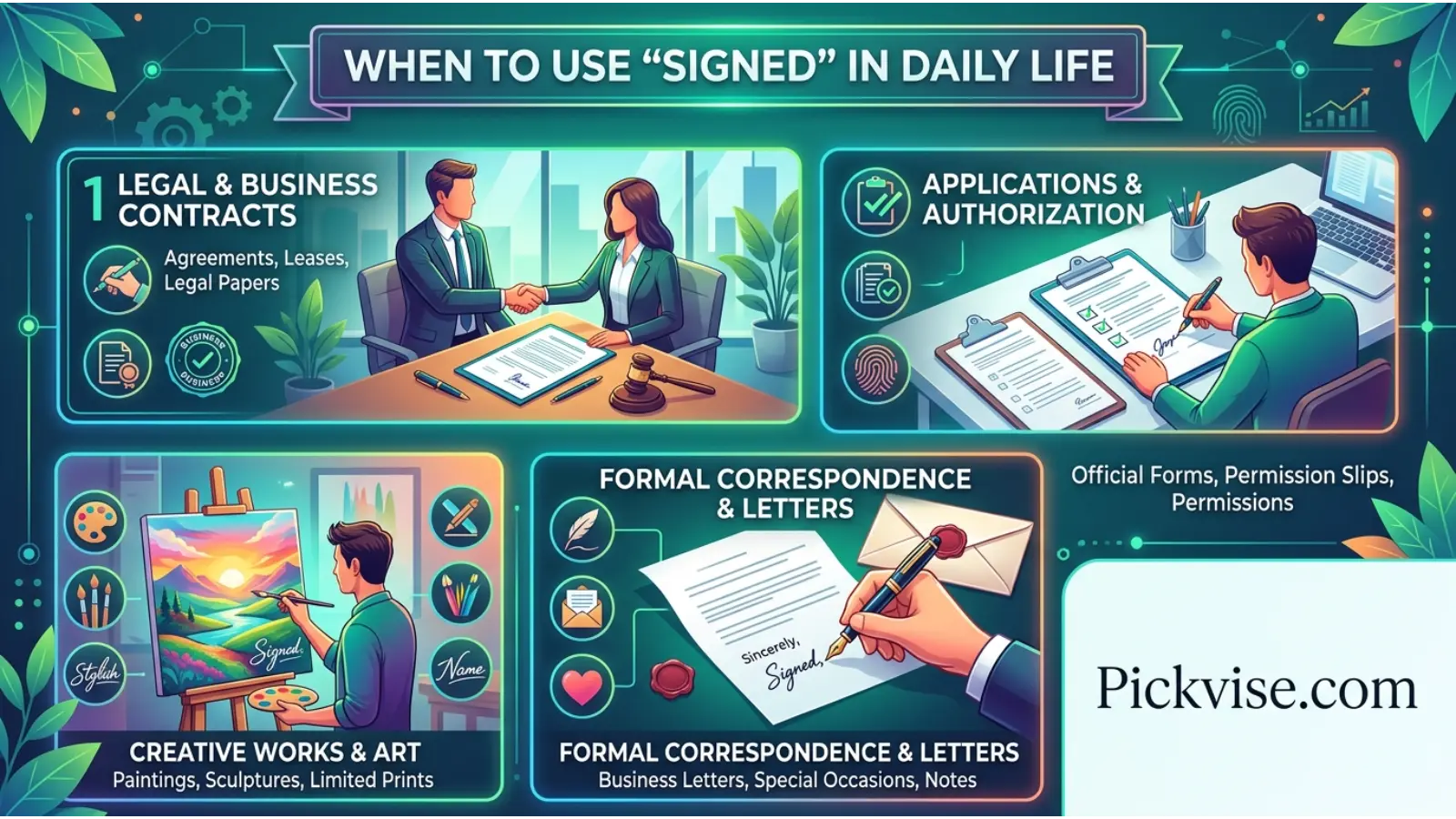
Use “signed” when:
- Talking about past actions
- Reporting completed tasks
- Describing legal agreements
Examples:
- I signed the contract last night.
- She signed the letter yesterday.
- They signed the deal in 2020.
Synonyms and Related Words (LSI Keywords)
Here are related terms to improve your vocabulary and SEO understanding:
- Autograph
- Mark
- Label
- Write
- Confirm
- Approve
- Agreement
- Signature
These words are often used with “sign” and “signed.”
Grammar Rule Explained Simply
English verbs change form based on time:
- Present → sign
- Past → signed
- Past participle → signed
Formula:
Subject + sign/signed + object
Examples:
- I sign the form.
- I signed the form.
- I have signed the form.
Expert Insight (EEAT Section)
Grammar accuracy improves trust in communication.
In business and legal writing, “sign” and “signed” are critical.
A small mistake can change meaning in contracts.
That is why professionals always double-check tense usage.
Why it matters:
- Prevents legal confusion
- Improves writing clarity
- Builds professional credibility
- Enhances SEO content quality
Correct grammar also improves readability for Google ranking.
FAQs: Signed or Sign
1. What is the difference between sign and signed?
“Sign” is present tense. “Signed” is past tense.
2. Can I use sign for past events?
No. Use “signed” for past actions.
3. Is signed a verb or adjective?
It is a verb (past form), sometimes used as adjective.
4. What is the past tense of sign?
The past tense is “signed.”
5. How do you use sign in a sentence?
Example: Please sign your name here.
6. Why do people confuse sign and signed?
Because English tense rules can be tricky for beginners.
7. Is “I sign yesterday” correct?
No, correct form is “I signed yesterday.”
8. What is a simple trick to remember?
Use “sign = now” and “signed = before.”
Conclusion
Understanding Signed or Sign is very important for clear English communication.
The difference is simple but powerful.
“Sign” is used for present actions or general instructions.
“Signed” is used for actions that already happened in the past.
When you use the correct form, your writing becomes more professional and accurate.
It also helps in exams, office work, and legal documents.
Always check the time of action before choosing the word.
If it is happening now, use “sign.” If it is finished, use “signed.”
With practice, this grammar rule becomes very easy.
Keep using real-life examples to improve your understanding.
Correct usage will make your English stronger, clearer, and more confident.