Senselessness or Silliness are words that describe actions, behavior, or ideas that may seem foolish. However, they do not mean the same thing. Many people use them as if they are equal. In reality, each word has a different purpose.
Knowing the difference helps you choose the right word when speaking or writing. It also makes your English sound more natural. This guide explains both words in simple English. You will learn their meanings, key differences, examples, and common mistakes. By the end, you will know exactly when to use senselessness and when silliness is the better choice.
Quick Summary Box
- Senselessness means a lack of reason, logic, or purpose.
- Silliness means being playful, foolish, or childish.
- Senselessness often has a serious or negative meaning.
- Silliness is usually harmless and light-hearted.
- Both describe foolish behavior, but the tone is different.
- Choosing the right word improves your writing and speaking.
What Does Senselessness Mean?

Senselessness means doing something without good reason or logic.
It often describes actions that seem pointless, harmful, or irrational.
Examples
- The senselessness of the fight shocked everyone.
- Many people questioned the senselessness of the decision.
- The accident happened because of pure senselessness.
Simple Definition
Senselessness is behavior or actions that have no reasonable purpose.
What Does Silliness Mean?
Silliness means acting in a playful, funny, or childish way.
It usually is not serious. Sometimes it is even enjoyable.
Examples
- The children’s silliness made everyone laugh.
- We enjoyed the dog’s silliness.
- Her silliness helped reduce stress.
Simple Definition
Silliness is harmless foolishness or playful behavior.
Senselessness or Silliness: Key Differences
| Feature | Senselessness | Silliness |
|---|---|---|
| Meaning | Lack of reason | Playful foolishness |
| Tone | Serious | Light-hearted |
| Purpose | No logical purpose | Fun or childish behavior |
| Emotion | Negative | Usually positive |
| Common Use | Violence, bad decisions, waste | Jokes, games, funny moments |
When Should You Use Senselessness?
Use senselessness when talking about something that lacks logic or causes harm.
Examples
- The senselessness of the crime saddened the city.
- People criticized the senselessness of the war.
- Everyone noticed the senselessness of wasting food.
These situations involve serious problems.
When Should You Use Silliness?
Use silliness for funny or childish behavior.
Examples
- Their silliness made the party fun.
- A little silliness can improve your mood.
- His silliness made the children smile.
These examples are cheerful and harmless.
Real-Life Examples
Example 1
A group of children wears funny hats and laughs.
✅ This is silliness.
Example 2
Someone damages public property without any reason.
✅ This is senselessness.
Example 3
Friends dance in the rain for fun.
✅ This is silliness.
Example 4
Someone starts an argument over nothing.
✅ This may be senselessness.
Common Mistakes
Many learners confuse these words because both involve foolish behavior.
Incorrect
- The children’s senselessness made everyone laugh.
Better
- The children’s silliness made everyone laugh.
Incorrect
- The silliness of the violent attack shocked everyone.
Better
- The senselessness of the violent attack shocked everyone.
Tips to Remember the Difference
- Think serious = senselessness.
- Think funny = silliness.
- Senselessness often causes problems.
- Silliness often creates smiles.
- Ask yourself if the action is harmful or playful.
This simple trick makes choosing the correct word much easier.
Senselessness vs Silliness in Daily Life
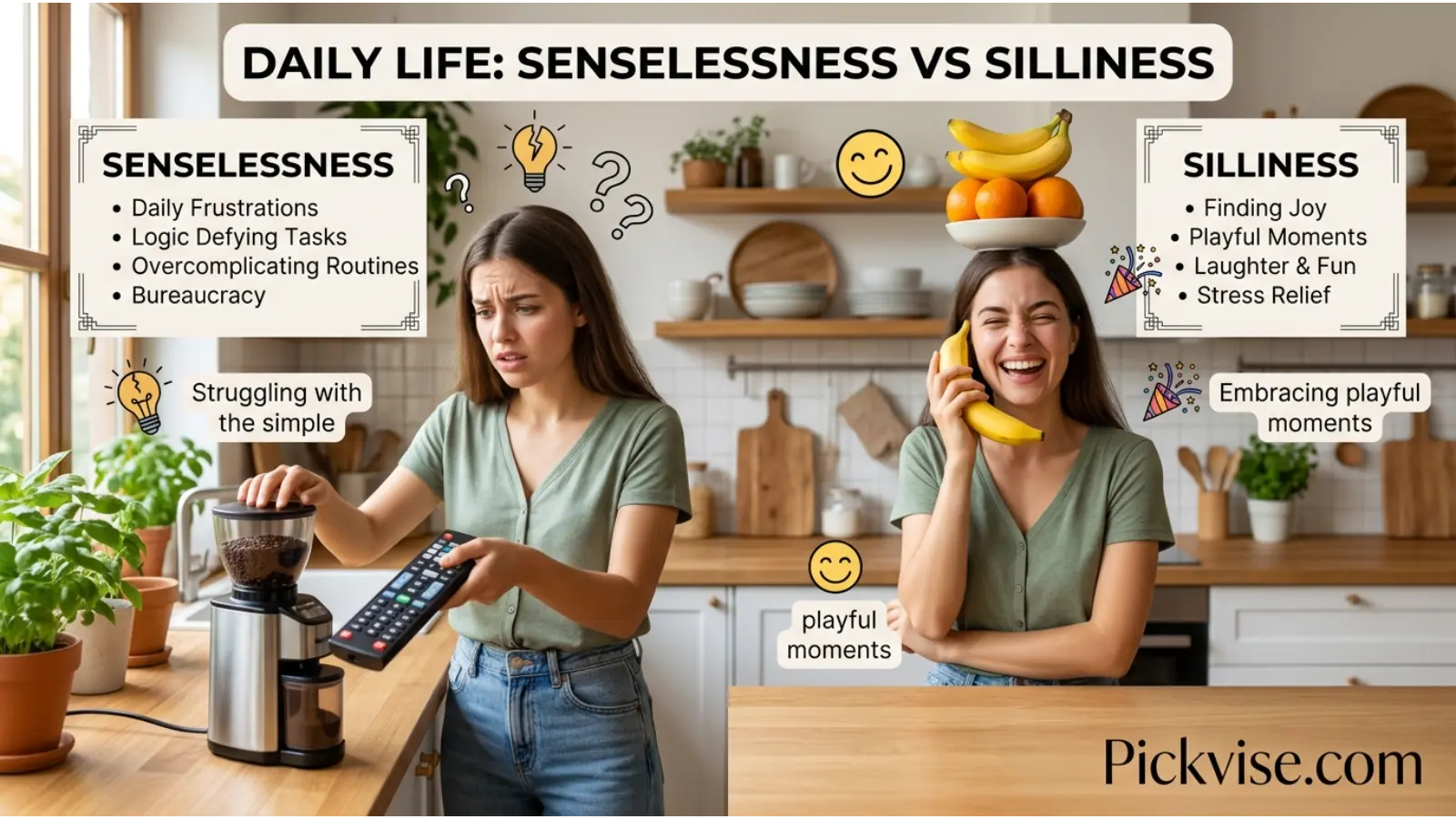
You may hear these words in many situations.
At School
Children sometimes show silliness during recess.
At Work
A manager may criticize the senselessness of wasting company resources.
At Home
Parents often enjoy a child’s silliness.
In News Reports
Journalists often describe crimes as acts of senselessness.
Synonyms of Senselessness
- Meaninglessness
- Irrationality
- Foolishness
- Absurdity
- Pointlessness
- Recklessness
- Illogical behavior
Synonyms of Silliness
- Goofiness
- Playfulness
- Childishness
- Clowning
- Foolish fun
- Lightheartedness
- Humor
Why Knowing the Difference Matters
Using the correct word makes your message clearer.
Imagine reading these sentences:
- The senselessness of the accident upset everyone.
- The silliness of the birthday party entertained the guests.
Switching the words changes the meaning completely.
Good writers choose words that match the situation.
Expert Insight
Professional writers pay close attention to tone.
Although both words relate to foolish behavior, they create different feelings.
Choose senselessness for serious topics.
Choose silliness for light and funny situations.
This small choice improves communication and makes your writing sound natural.
Frequently Asked Questions (FAQs)
Is senselessness the same as silliness?
No.
Senselessness means lacking reason.
Silliness means harmless or playful foolishness.
Is silliness always negative?
No.
It is often positive and entertaining.
Can senselessness describe crimes?
Yes.
Many crimes are described as acts of senselessness because they lack reason.
Can adults be silly?
Yes.
Adults can enjoy harmless silliness just like children.
Which word is more serious?
Senselessness is much more serious.
Is silliness good sometimes?
Yes.
A little silliness can reduce stress and improve happiness.
Can both words describe foolish behavior?
Yes.
However, the tone and purpose are different.
Common Sentences Using Both Words
- The movie showed the senselessness of war.
- We laughed at the puppy’s silliness.
- The senselessness of the decision surprised everyone.
- Her silliness made the classroom cheerful.
- Nobody understood the senselessness of the argument.
- Their silliness created happy memories.
Conclusion
Understanding Senselessness or Silliness helps you communicate with greater accuracy. Although both words describe foolish behavior, they express different ideas. Senselessness refers to actions that lack reason or purpose and often have negative consequences. Silliness, on the other hand, describes playful, harmless, or childish behavior that can bring laughter and joy. Choosing the correct word depends on the situation and the tone you want to create. With regular practice and real-life examples, using these words correctly becomes much easier. The next time you describe someone’s behavior, ask yourself whether it is serious and irrational or simply playful and fun. That simple question will help you choose the right word every time.