
Interment or Internment are two words that look almost the same. However, they have very different meanings. Many people confuse them because only one letter changes. Using the wrong word can change the meaning of your sentence completely. That is why it is important to understand the difference. In simple terms, interment relates to burying a deceased person, while internment refers to keeping people in confinement, often during war or for legal reasons. This guide explains both words in easy English. You will learn their meanings, differences, examples, common mistakes, and tips to remember the correct spelling. By the end, you will know exactly when to use each word with confidence.
Quick Summary Box
- Interment means the burial of a deceased person.
- Internment means the confinement or detention of people.
- Interment is connected with funerals and cemeteries.
- Internment is connected with prisons, camps, or wartime detention.
- The words sound similar but have completely different meanings.
- Remember: Interment = Burial, Internment = Confinement.
What Does Interment Mean?
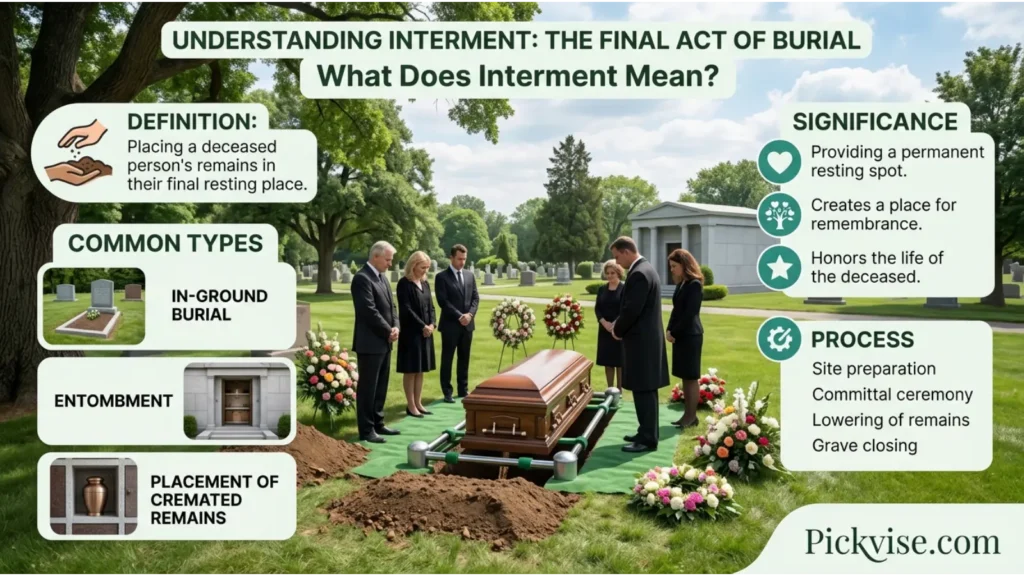
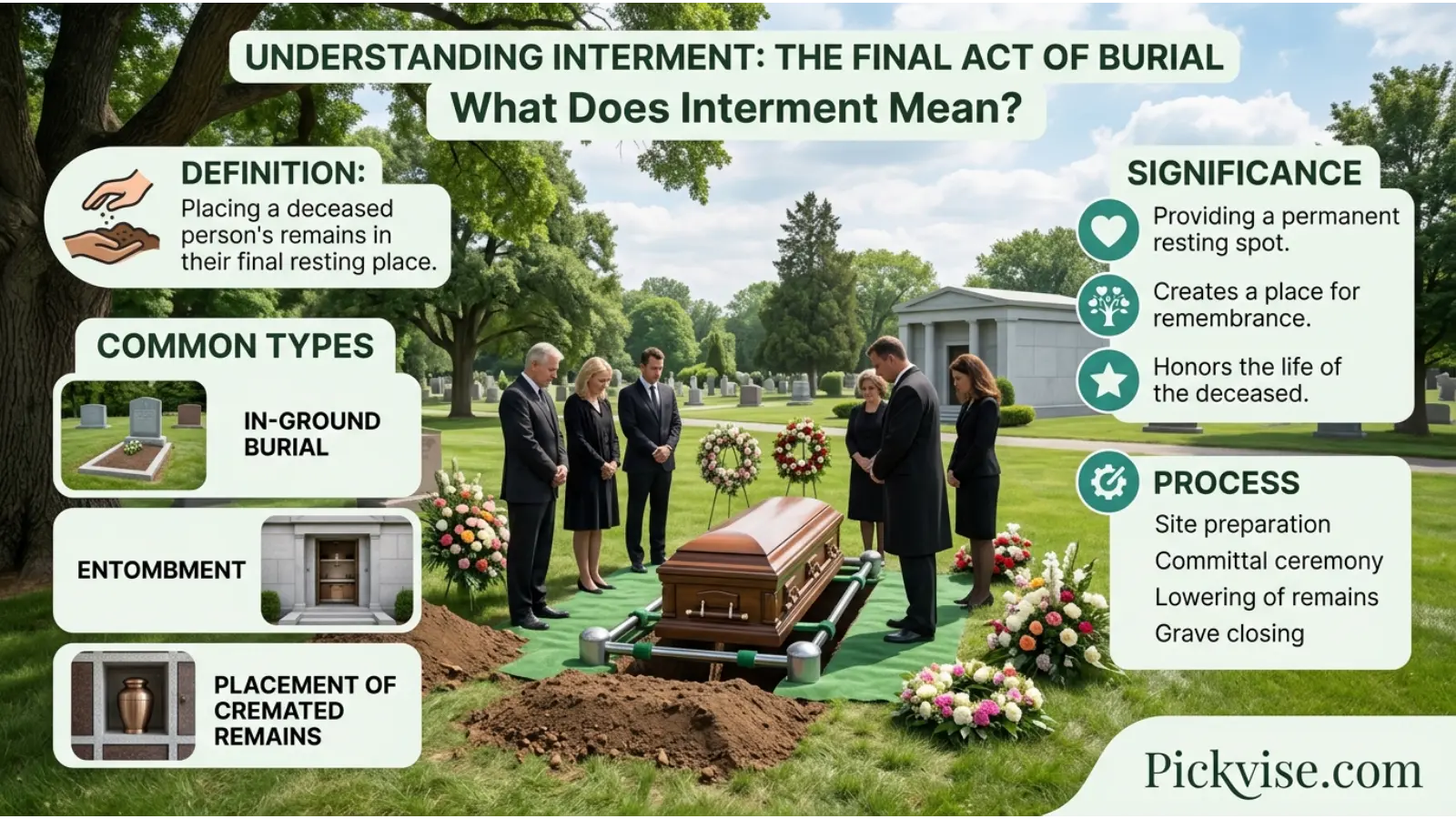
Interment is the act of placing a deceased person’s body or ashes into a grave, tomb, or burial site.
It is a respectful word often used in funeral services and legal documents.
Examples
- The family attended the interment after the funeral.
- The interment took place in the local cemetery.
- His ashes were placed during a private interment ceremony.
What Does Internment Mean?
Internment means keeping people in a prison, camp, or restricted area. Governments often use this term during wars or national emergencies.
It does not mean burial.
Examples
- Thousands experienced internment during the war.
- The government ordered the internment of enemy nationals.
- Historians study wartime internment camps.
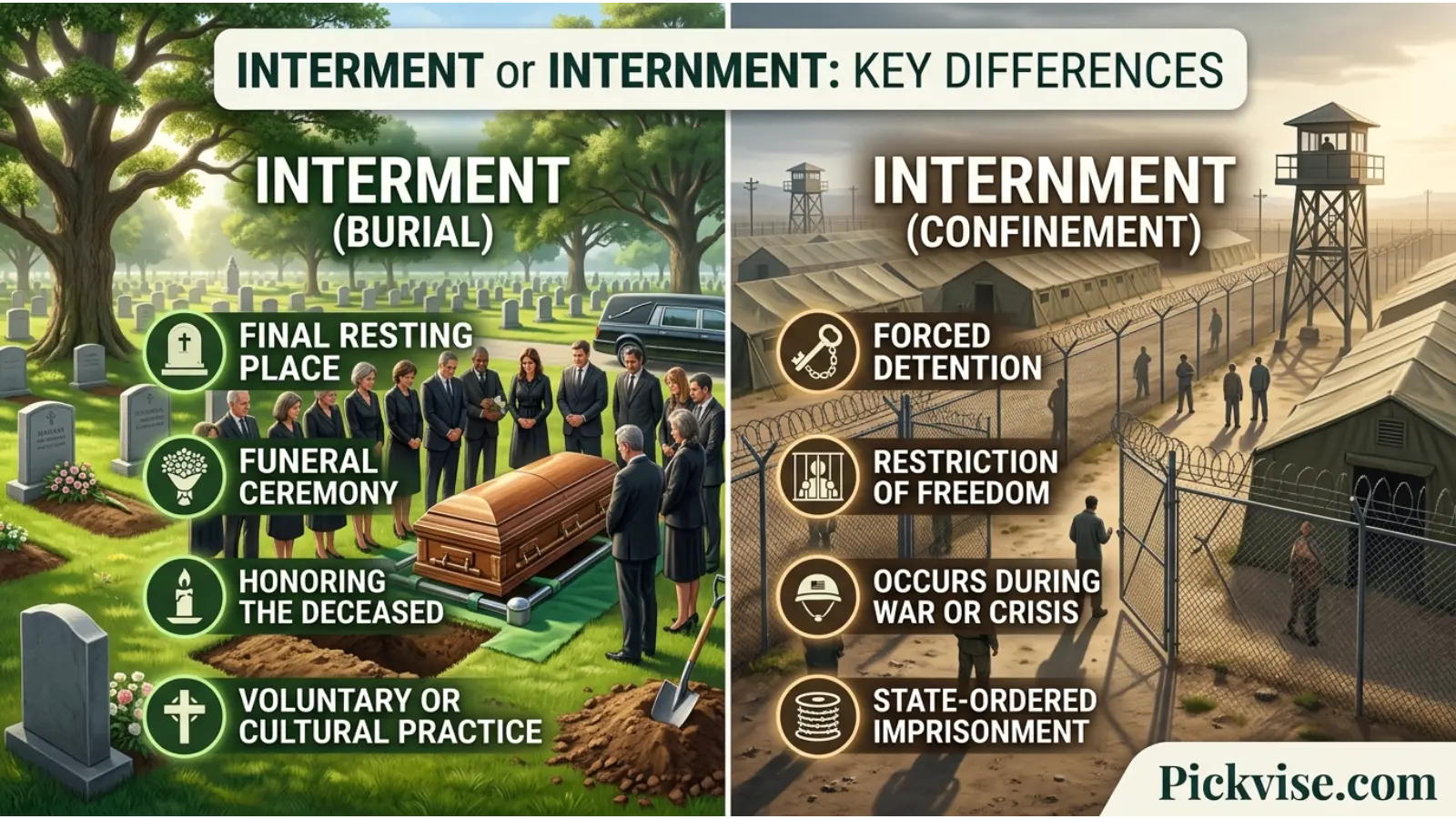
Interment or Internment: Key Differences
| Feature | Interment | Internment |
|---|---|---|
| Meaning | Burial of a deceased person | Confinement of living people |
| Used For | Funerals | War, detention, legal custody |
| Related To | Cemetery, grave, ashes | Camp, prison, detention |
| Refers To | Dead people | Living people |
| Common Context | Funeral services | Wartime history |
Why Do People Confuse Interment and Internment?
The two words differ by only one letter.
They also sound very similar.
Because of this, many writers accidentally use one instead of the other.
The meanings, however, are completely unrelated.
- Interment = burial
- Internment = detention
Knowing the context makes choosing the correct word much easier.
Real-Life Examples
Interment
- A church held the interment after the memorial service.
- The soldier received military interment with honors.
- The cemetery arranged the interment ceremony.
Internment
- History books discuss Japanese American internment during World War II.
- The country established internment camps during the conflict.
- Many families suffered because of forced internment.
Common Mistakes
Mistake 1
❌ The soldier’s internment was held at the cemetery.
✅ The soldier’s interment was held at the cemetery.
Mistake 2
❌ Many civilians faced interment during the war.
✅ Many civilians faced internment during the war.
Mistake 3
❌ The interment camp housed prisoners.
✅ The internment camp housed prisoners.
Easy Trick to Remember
Think about the extra “N” in Internment.
N = National detention
This helps remind you that internment involves keeping living people in confinement.
For Interment, remember the word grave or burial.
Simple memory trick:
- Interment = Into the earth
- Internment = Inside a camp
Usage in Everyday English
Most people rarely use these words in daily conversations.
You are more likely to see them in:
Interment
- Funeral notices
- Cemetery records
- Obituaries
- Legal documents
Internment
- History books
- News articles
- Government records
- War documentaries
Synonyms of Interment
- Burial
- Inhumation
- Entombment
- Funeral burial
- Graveside burial
Synonyms of Internment
- Detention
- Confinement
- Imprisonment
- Custody
- Incarceration
- Detainment
When Should You Use Interment?
Use interment whenever you talk about:
- Burial
- Funeral ceremonies
- Graves
- Ashes
- Cemeteries
- Tombs
Example
“The interment will follow the memorial service.”
When Should You Use Internment?
Use internment when discussing:
- War history
- Government detention
- Prison camps
- Security confinement
- Legal custody
Example
“The documentary explained wartime internment policies.”
Expert Insight
Although the words differ by only one letter, choosing the wrong one creates a completely different meaning.
Professional writers, journalists, students, and businesses should always double-check these spellings.
Understanding the difference improves grammar, writing accuracy, and credibility.
Many spelling mistakes happen because writers rely only on pronunciation instead of meaning.
Always think about the situation before choosing the word.
Frequently Asked Questions
Is interment the same as internment?
No. Interment means burial, while internment means confinement.
Which word relates to a funeral?
Interment relates to funerals and burials.
What does internment mean in history?
It refers to the detention of groups of people, often during wartime.
Can interment refer to living people?
No. It only refers to burying deceased people or ashes.
Is internment always related to war?
Not always. It usually involves government detention, often during conflicts or emergencies.
How can I remember the difference?
Remember:
- Interment = Burial
- Internment = Detention
Are the words pronounced the same?
They sound very similar but have different meanings and spellings.
Conclusion
Interment or Internment may look alike, but they describe two completely different ideas. Interment refers to the respectful burial of a deceased person. Internment means the confinement or detention of living people, often during wartime or legal situations. Understanding this distinction helps you write more clearly and avoid embarrassing mistakes. Whenever you see these words, think about the context. If it involves a funeral or cemetery, use interment. If it involves camps, prisons, or wartime detention, use internment. With this simple rule, you can confidently choose the correct word every time.