
Pitty or Pity is a common spelling question that confuses many English learners and writers. At first glance, both words may look correct. However, only one spelling is accepted in standard English.
Many people accidentally write pitty when they mean pity. This mistake often happens because of pronunciation and typing habits. Understanding the correct spelling can improve your writing and help you avoid common grammar errors.
In this guide, you will learn the meaning of pity, why people misspell it as pitty, and how to use it correctly. You will also see examples, common mistakes, useful tips, and answers to frequently asked questions.
By the end of this article, you will never confuse pitty and pity again.
Quick Summary Box
- Correct spelling: Pity
- Incorrect spelling: Pitty
- Meaning of pity: Feeling sympathy or sadness for someone else’s suffering
- Part of speech: Noun and verb
- Used in everyday English: Yes
- Common mistake: Adding an extra “t” and writing “pitty”
- Easy rule: Always write pity, never pitty
What Does Pity Mean?
The word pity means feeling sadness, sympathy, or compassion for someone who is suffering or facing difficulties.
Examples
- I felt pity for the injured dog.
- She showed pity to the homeless man.
- We pity people affected by natural disasters.
Pity can be used as both a noun and a verb.
Pitty or Pity: Which Spelling Is Correct?
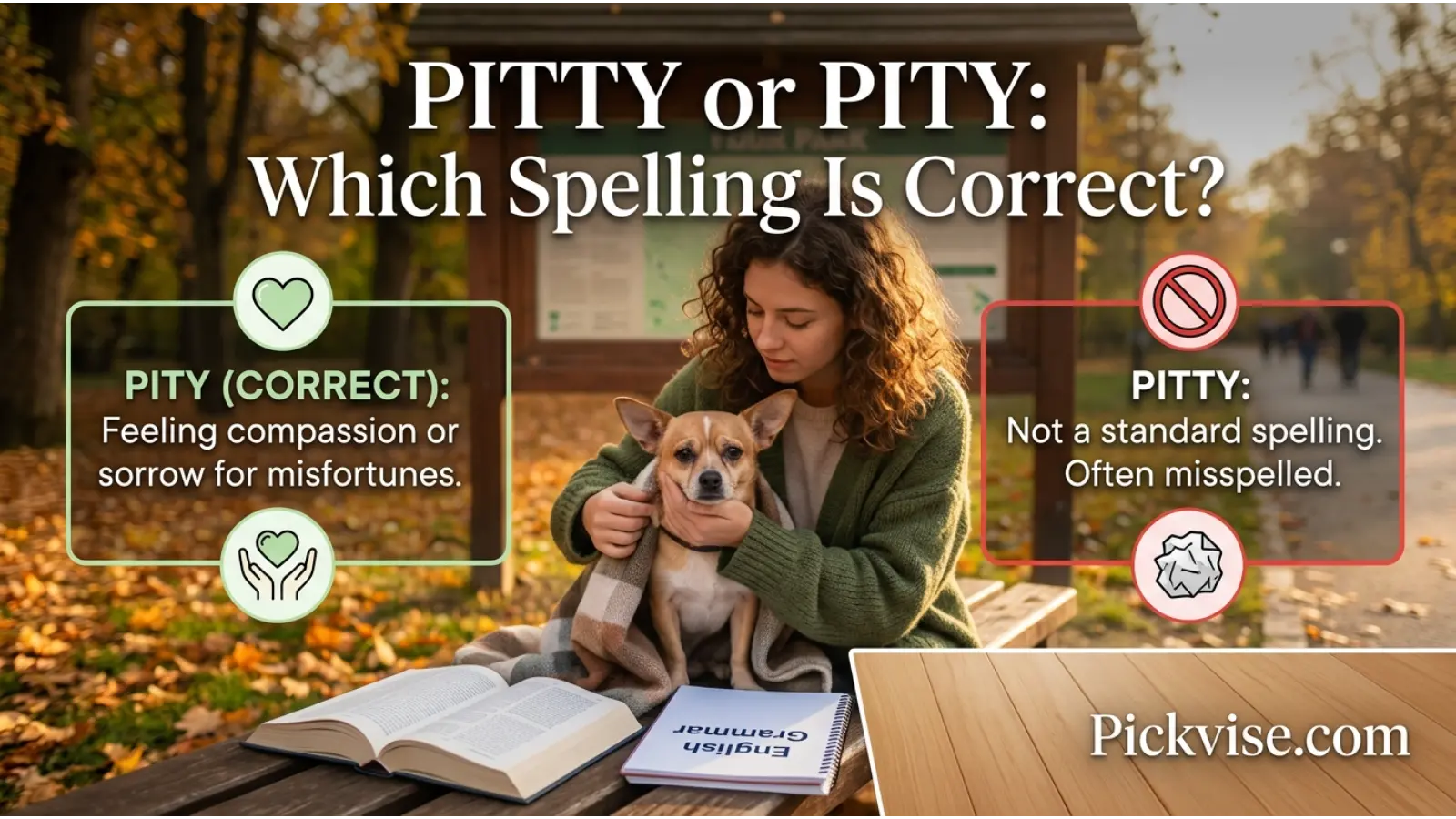
The correct spelling is pity.
The spelling pitty is incorrect and does not appear in standard English dictionaries.
Correct
- pity
- feeling pity
- to pity someone
Incorrect
- pitty
- feeling pitty
- to pitty someone
Whenever you write this word, remember that it contains only one “t.”
Comparison Table: Pitty vs Pity
| Feature | Pitty | Pity |
|---|---|---|
| Correct English spelling | ❌ No | ✅ Yes |
| Found in dictionaries | ❌ No | ✅ Yes |
| Used in formal writing | ❌ No | ✅ Yes |
| Accepted in academic work | ❌ No | ✅ Yes |
| Means sympathy or compassion | ❌ No | ✅ Yes |
Winner
Pity is always the correct spelling.
Why Do People Spell Pity as Pitty?
Many writers accidentally type pitty because English contains words with double consonants.
Examples include:
- little
- better
- letter
- kitty
As a result, some people assume that pity should also have two “t” letters.
However, English spelling rules do not require a double “t” in the word pity.
How to Use Pity in a Sentence
Learning through examples makes spelling easier.
As a Noun
- It is a pity that the event was canceled.
- We felt pity for the lost child.
- Her story filled everyone with pity.
As a Verb
- I pity those who never get opportunities.
- They pity the animals living in poor conditions.
- Do not pity yourself for every mistake.
Real-Life Examples of Pity
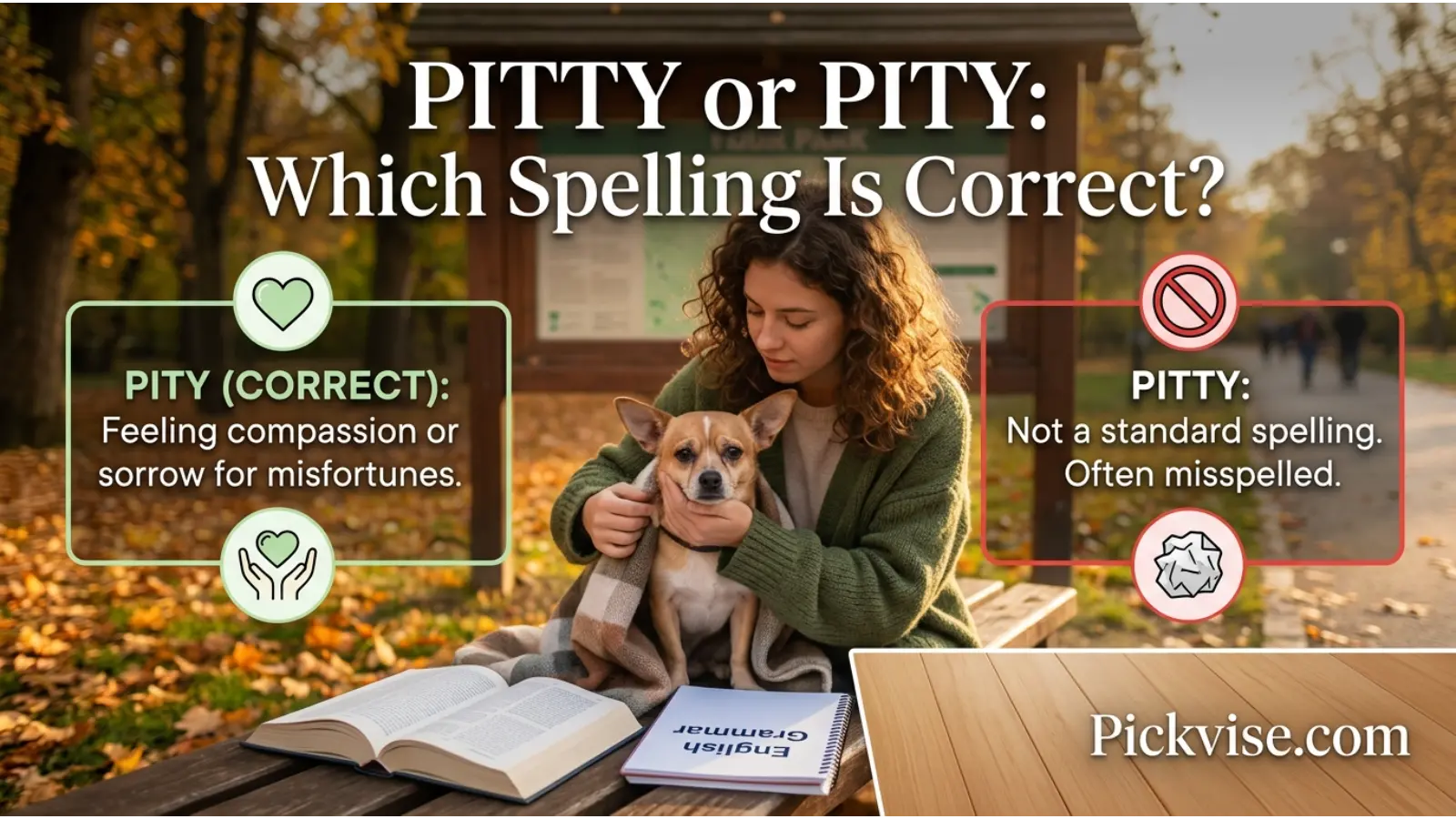
You may use the word pity in many everyday situations.
Example 1: Helping Others
You see someone struggling financially and feel sympathy. That feeling is pity.
Example 2: Watching News
People often feel pity for victims of disasters.
Example 3: Animal Rescue
Many people feel pity when they see injured animals.
Example 4: Personal Challenges
You may pity a friend who is going through a difficult time.
Common Mistakes When Writing Pity
Many writers make the same spelling errors.
Mistake 1: Writing Pitty
❌ I felt pitty for him.
✅ I felt pity for him.
Mistake 2: Using Spellings Without Checking
Always proofread important documents.
Mistake 3: Depending Only on Pronunciation
Words do not always spell the way they sound.
Easy Tricks to Remember the Correct Spelling
Simple memory tricks can help.
Trick 1: One “T” Rule
The word pity has only one “t.”
Trick 2: Think of City
- City
- Pity
Both words end with -ity.
Trick 3: Practice Common Sentences
Repeat:
- It is a pity.
- I feel pity.
- We pity them.
Regular practice improves memory.
Synonyms of Pity
Using synonyms can improve your writing.
Common Synonyms
- Sympathy
- Compassion
- Mercy
- Kindness
- Concern
- Understanding
- Empathy
- Sorrow
Example
Instead of:
- I felt pity for him.
You can write:
- I felt sympathy for him.
Related Words and Forms of Pity
Understanding related words helps build vocabulary.
| Word | Meaning |
|---|---|
| Pity | Sympathy or compassion |
| Pitiful | Deserving pity |
| Piteous | Expressing sadness |
| Pitiless | Without mercy |
| Compassion | Deep concern for suffering |
Example Sentences
- The situation was pitiful.
- He gave a piteous cry.
- The villain was pitiless.
Pity in Daily Conversations
The word appears frequently in spoken and written English.
Common Expressions
- What a pity!
- That’s a pity.
- I pity him.
- It’s a pity that you missed it.
Example Dialogue
Person A: I missed the concert.
Person B: That’s a pity.
These expressions sound natural and are widely used.
Expert Insights: Why Correct Spelling Matters
Correct spelling improves communication.
When you write pity correctly:
- Your writing looks professional.
- Readers trust your content more.
- Search engines understand your content better.
- Academic and business writing becomes stronger.
Small spelling mistakes can affect credibility. Therefore, learning common word differences like pitty or pity is important.
Commonly Confused Words Similar to Pitty or Pity
Many English words create similar confusion.
Examples
| Incorrect | Correct |
|---|---|
| Finaly | Finally |
| Posess | Possess |
| Feild | Field |
| Comming | Coming |
| Pitty | Pity |
Checking spelling before publishing helps avoid these errors.
FAQs About Pitty or Pity
Is pitty a real word?
No. Pitty is considered a misspelling of pity.
Which spelling is correct, pitty or pity?
Pity is the correct spelling.
What does pity mean?
Pity means sympathy or sadness for someone’s suffering.
Can pity be used as a verb?
Yes. Example: I pity those who suffer.
Why do people write pitty?
Many people assume the word needs a double “t,” which is incorrect.
Is pity formal or informal?
Pity works in both formal and informal writing.
How can I remember the correct spelling?
Remember the phrase: “It is a pity.” The word has only one “t.”
Is pity used in everyday English?
Yes. Native speakers use it frequently in conversations and writing.
Internal Linking Suggestions
You can internally link this article to:
- Finaly or Finally
- Feild or Field
- Posess or Possess
- Comming or Coming
- Wreckless or Reckless
These related spelling guides help improve topical authority.
Conclusion
The debate between pitty or pity has a simple answer. Pity is the only correct spelling in English. The word refers to feelings of sympathy, compassion, or sadness for someone else’s difficulties. Meanwhile, pitty is simply a spelling mistake.
Fortunately, remembering the correct version is easy. Think of words like city and pity, which share the same ending. Also, practice using the word in everyday sentences. Over time, the correct spelling will become natural.
Whenever you write, proofread carefully and choose pity with one “t.” Doing so will make your writing clearer, more professional, and grammatically correct.