Mouldy or Moldy are two spellings of the same word. Many people wonder which one they should use. The answer depends on where you write. Both words describe something covered with mold. However, one spelling is common in American English, while the other appears in British English.
This guide explains the difference in simple words. You will learn the meaning, correct usage, common mistakes, and real-life examples. You will also see a comparison table and useful tips. By the end, you will know when to use mouldy and when to use moldy with confidence.
Quick Summary Box
- Mouldy and moldy have the same meaning.
- Both describe something covered with mold.
- Moldy is the American English spelling.
- Mouldy is the British English spelling.
- The choice depends on your audience.
- Neither spelling is incorrect.
Featured Snippet: Mouldy or Moldy
Mouldy and moldy mean the same thing. They describe food, walls, clothes, or other items covered with mold. Moldy is the preferred spelling in American English, while mouldy is used in British English and many Commonwealth countries.
What Does Mouldy or Moldy Mean?
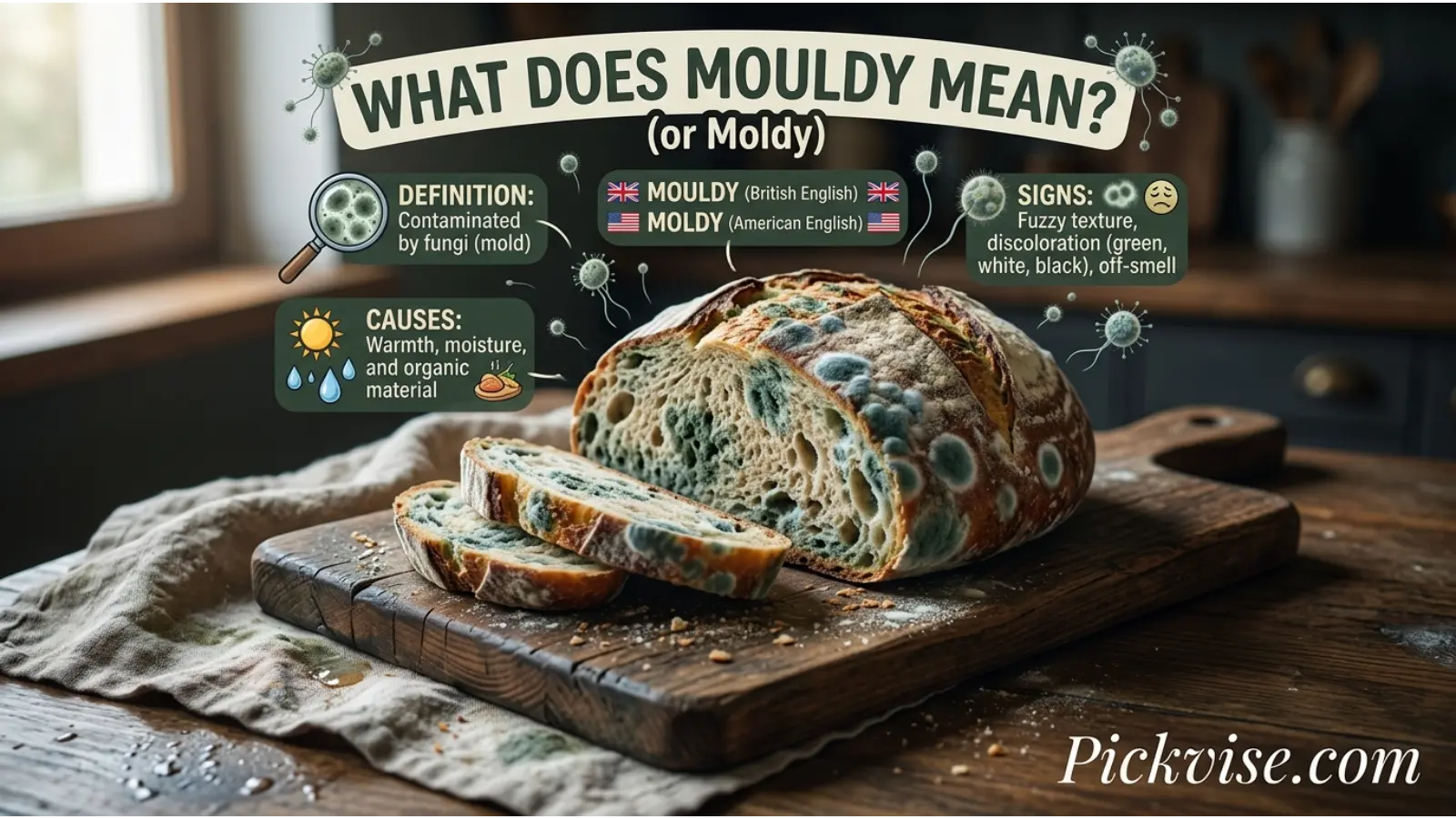
The words mouldy and moldy describe something that has mold growing on it.
Mold is a type of fungus. It often grows in warm, damp places. Food, wood, fabric, and walls can become moldy if they stay wet for too long.
Simple Definition
Mouldy/Moldy: Covered with mold or showing signs of fungal growth.
Example Sentences
- The bread became moldy after a week.
- The old cheese looked mouldy.
- We threw away the moldy fruit.
- The basement smelled mouldy after heavy rain.
Mouldy vs Moldy: Comparison Table
| Feature | Mouldy | Moldy |
|---|---|---|
| Meaning | Covered with mold | Covered with mold |
| American English | ❌ Rare | ✅ Preferred |
| British English | ✅ Preferred | ❌ Rare |
| Australian English | ✅ Common | Less common |
| Canadian English | Usually mouldy | Sometimes moldy |
| Correct? | ✅ Yes | ✅ Yes |
Key Point
The meaning never changes. Only the spelling changes.
Why Are There Two Spellings?
English has different spelling systems.
American English simplified many words over time. British English kept older spellings.
Here are similar examples:
| American English | British English |
|---|---|
| Color | Colour |
| Honor | Honour |
| Favorite | Favourite |
| Mold | Mould |
| Moldy | Mouldy |
This is why you see both moldy and mouldy today.
When Should You Use Moldy?
Use moldy if your audience reads American English.
This spelling appears in:
- The United States
- American websites
- U.S. newspapers
- American schools
- U.S. businesses
Examples
- The milk smelled moldy.
- Remove moldy food immediately.
- The house had a moldy basement.
When Should You Use Mouldy?
Use mouldy if you write for British English readers.
This spelling is common in:
- United Kingdom
- Australia
- New Zealand
- South Africa
- Many Commonwealth countries
Examples
- The old bread was mouldy.
- The room had a mouldy smell.
- The walls became mouldy during winter.
Real-Life Examples
People use these words every day.
Food
- Moldy bread
- Mouldy cheese
- Moldy fruit
- Mouldy vegetables
Home
- Moldy bathroom
- Mouldy ceiling
- Moldy basement
- Mouldy carpet
Clothing
- Moldy shoes
- Mouldy jacket
- Moldy towels
Storage
- Moldy boxes
- Mouldy books
- Moldy furniture
Common Mistakes
Many writers make these simple mistakes.
Mixing Spellings
❌ The mouldy bread was found in an American cookbook.
✔ Better:
Use moldy throughout if writing in American English.
Changing Spellings in One Article
Avoid switching between moldy and mouldy unless you compare them directly.
Stay consistent.
Confusing Mold with Dirt
Something dirty is not always moldy.
Mold grows naturally because of moisture.
Dirt comes from dust or mud.
Tips to Remember the Difference
These tricks make the spellings easy to remember.
Think About the Country
- America → Moldy
- Britain → Mouldy
Remember Similar Words
British English often keeps “ou.”
Examples include:
- Colour
- Favourite
- Honour
- Mouldy
American English usually removes the “u.”
How to Use Mouldy or Moldy in Daily Life
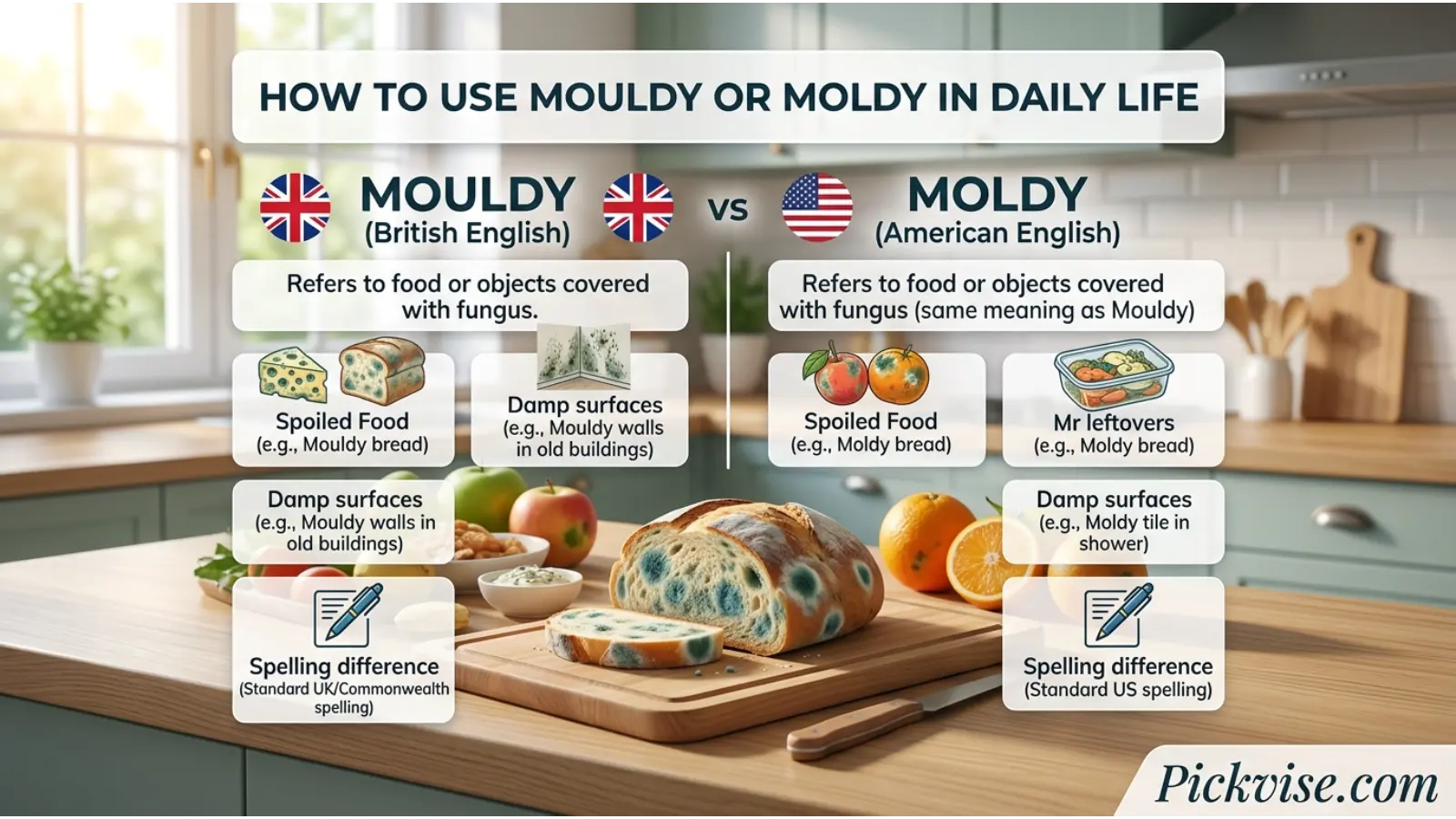
You may use these words when talking about:
- Expired food
- Damp houses
- Old clothes
- Basements
- Bathrooms
- Refrigerators
- Storage rooms
Everyday Sentences
- This bread is moldy.
- My shoes smell mouldy.
- We cleaned the moldy bathroom.
- The old books became mouldy.
Synonyms
Synonyms
- Fungus-covered
- Mildewed
- Musty
- Rotten
- Damp
- Decayed
- Spoiled
- Stale
Expert Insight
Good writing depends on consistency.
Professional editors choose one spelling style and use it throughout the article.
If your website targets American readers, write moldy.
If your audience is mainly British, Australian, or international, use mouldy.
Search engines understand both spellings. However, readers expect the spelling used in their region. Matching your audience improves trust and readability.
Common Expressions
These phrases appear often.
- Moldy bread
- Moldy cheese
- Moldy smell
- Moldy basement
- Mouldy walls
- Mouldy clothes
- Mouldy room
- Mouldy food
Frequently Asked Questions (FAQs)
Is mouldy or moldy correct?
Both are correct. The difference is regional spelling.
Which spelling is American English?
Moldy is the American English spelling.
Which spelling is British English?
Mouldy is the British English spelling.
Do mouldy and moldy have different meanings?
No. Both words have exactly the same meaning.
Should I use moldy or mouldy on my website?
Use the spelling that matches your target audience.
Is mold harmful?
Some types of mold can affect health, especially in damp indoor spaces. Remove mold safely as soon as possible.
Can food become moldy quickly?
Yes. Warm temperatures and moisture help mold grow faster.
Does Google treat moldy and mouldy differently?
Google understands both spellings. Using the version your audience expects can improve user experience.
Conclusion
Understanding mouldy or moldy is simple once you know the difference. Both words describe something covered with mold. The only real difference is regional spelling. Moldy is the standard form in American English, while mouldy is preferred in British English and many Commonwealth countries. Neither spelling is wrong when used for the right audience. For clear and professional writing, choose one spelling and stay consistent throughout your content. Doing this improves readability, builds trust with readers, and helps create polished, high-quality writing.