Mean or Meant is a common grammar confusion in English. Many learners mix both words in daily writing. “Mean” is used for present situations, while “meant” shows past meaning. Understanding this difference improves your English skills quickly.
In simple terms, both words come from the same verb “to mean.” However, they change based on time. This guide explains Mean or Meant in easy words. You will learn definitions, examples, rules, and mistakes. Each sentence is short and clear.
By the end, you will confidently use mean and meant in speaking and writing. This topic is important for students, writers, and English learners. It helps improve grammar accuracy and communication clarity.
Quick Summary Box (Featured Snippet)
- “Mean” = present tense form
- “Meant” = past tense form
- Both come from the verb “to mean”
- “Mean” shows current or future intent
- “Meant” shows past intention or message
- Used in communication, explanation, and interpretation
- Helps express thoughts clearly in English
Meaning of “Mean”
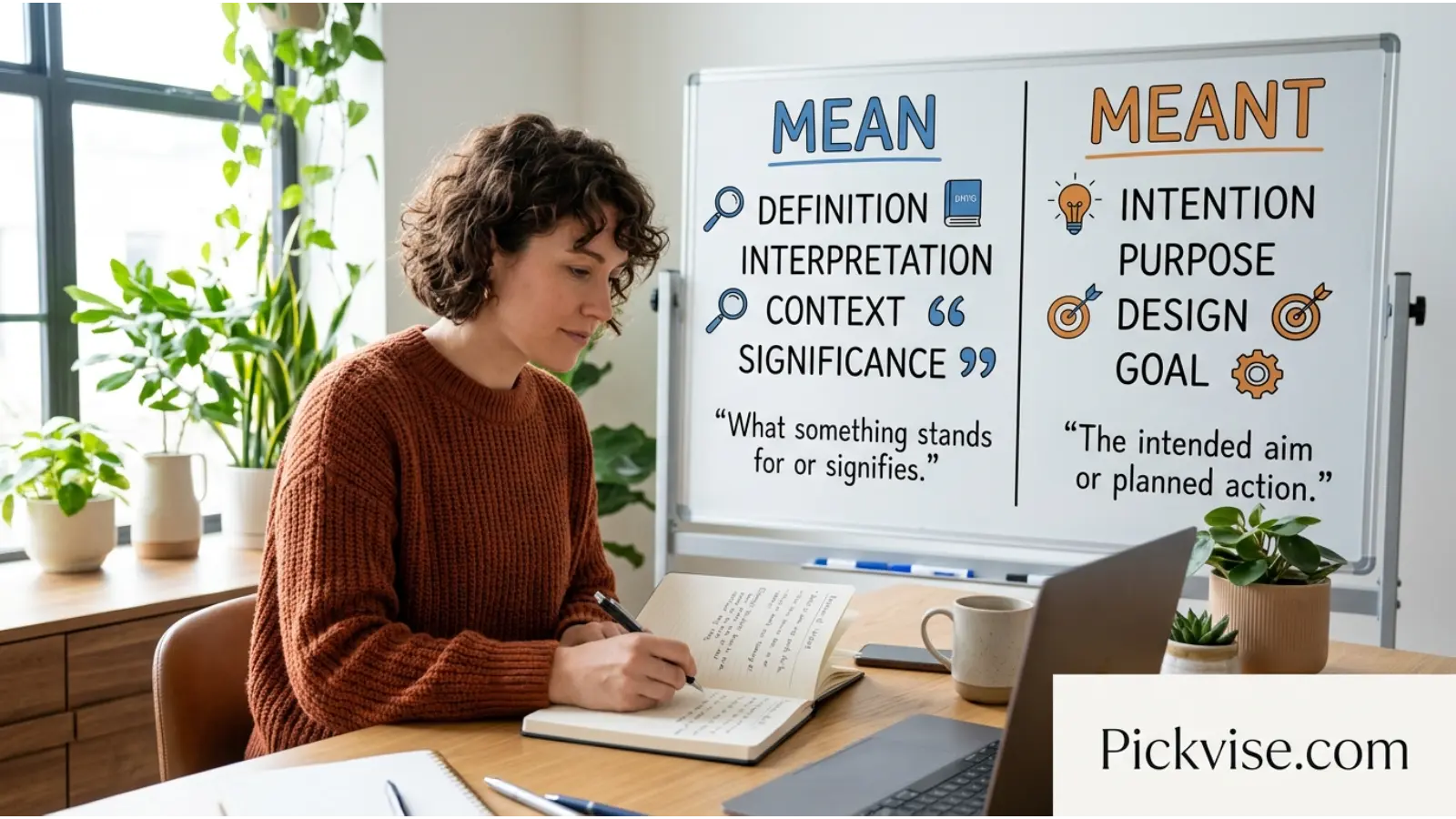
“Mean” is a base verb in English grammar. It shows present or general action. It explains intention, definition, or purpose.
We use “mean” when talking about now or future. It is also used in questions and explanations.
Examples:
- What do you mean by this word?
- I mean what I say.
- Does this sign mean danger?
In simple words, “mean” tells us what something expresses today.
Meaning of “Meant”
“Meant” is the past form of “mean.” It describes something that already happened. It shows past intention or meaning.
We use “meant” when talking about earlier situations. It often explains past communication or purpose.
Examples:
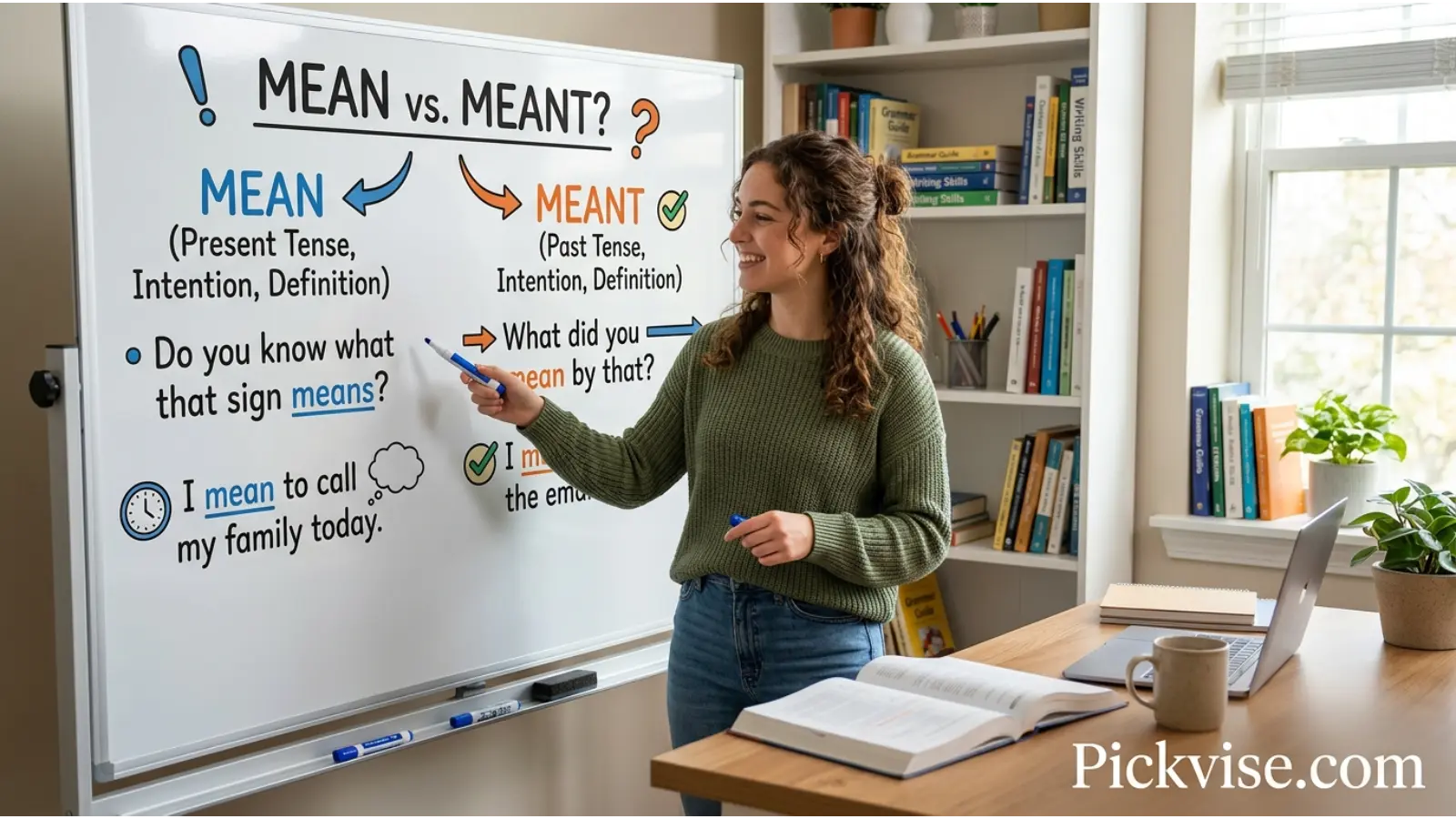
- I meant to call you yesterday.
- She meant no harm.
- That word meant something different before.
Simply put, “meant” tells us what something meant in the past.
Simple Explanation of the Difference
The difference between mean and meant is time.
“Mean” is present tense.
“Meant” is past tense.
If something is happening now, use “mean.”
If something happened before, use “meant.”
Example:
- What do you mean? (now)
- What did you mean? (past)
This small difference helps avoid grammar mistakes.
Grammar Rules for Mean or Meant
English grammar follows tense rules. “Mean” is irregular because its past form is “meant.”
Rules:
- Use “mean” in present tense sentences
- Use “meant” in past tense sentences
- Do not use “meaned” (it is incorrect)
Correct:
- I mean it.
- I meant it.
Incorrect:
- I meaned it.
Learning this rule improves writing accuracy.
Usage in Daily Life
We use mean and meant in everyday English. These words appear in conversations, messages, and writing.
Common uses:
- Asking meaning of words
- Explaining intentions
- Clarifying misunderstandings
Examples:
- Do you mean this answer?
- I didn’t mean to hurt you.
- What did you mean by that text?
These phrases are very common in real communication.
Real-Life Examples

Here are simple real-life situations:
At school:
- Teacher: What do you mean by this sentence?
At home:
- I meant to clean my room yesterday.
With friends:
- Did you mean what you said?
In messages:
- Sorry, I meant something else.
These examples show how both words are used naturally.
Comparison Table: Mean vs Meant
| Feature | Mean (Present) | Meant (Past) |
|---|---|---|
| Tense | Present / Future | Past |
| Usage | Current meaning | Past meaning |
| Form | Base verb | Past participle |
| Example | What do you mean? | What did you mean? |
| Action Time | Now or general truth | Completed action |
Common Mistakes People Make
Many learners confuse mean and meant.
Mistakes:
- Using “meaned” instead of “meant”
- Mixing tenses in one sentence
- Forgetting past form in storytelling
Wrong:
- I meaned to help you.
Correct:
- I meant to help you.
Avoiding these mistakes improves fluency.
Synonyms
Related words help improve and understanding.
Synonyms for “mean”:
- intend
- signify
- express
- indicate
These help expand vocabulary naturally.
Tips and Tricks to Remember
Here are easy memory tricks:
- “Mean = Now”
- “Meant = Yesterday”
- Think “t” in meant = time past
- Practice daily sentences
- Read and repeat examples
These tricks make learning faster and easier.
Expert Insights (EEAT Section)
Understanding mean or meant is important for strong grammar foundation. Many English learners make mistakes here.
Correct usage improves:
- Writing clarity
- Speaking confidence
- Academic performance
- Professional communication
Experts suggest practicing with real sentences daily. Repetition builds memory. Learning verb tenses also strengthens overall English skills.
This topic matters because it is used in almost every conversation. Mastering it helps you sound natural and fluent.
FAQs (People Also Ask)
1. What is the difference between mean and meant?
“Mean” is present tense, while “meant” is past tense.
2. Is “meaned” correct English?
No, “meaned” is incorrect. The correct form is “meant.”
3. When should I use meant?
Use “meant” when talking about past actions or intentions.
4. Can mean and meant be used in the same sentence?
Yes, but they must match correct tense usage.
5. What is the verb form of mean?
Mean is the base form, and meant is the past form.
6. Why do people confuse mean and meant?
Because both come from the same verb but different tenses.
7. Is mean only used for questions?
No, it is used in statements, questions, and explanations.
8. How can I learn mean and meant easily?
Practice daily sentences and remember present vs past rule.
Conclusion
Mean or Meant is a simple grammar concept, but very important in English. “Mean” is used for present meaning or intention. “Meant” is used for past meaning or intention. The key difference is time.
Understanding this difference helps you avoid common mistakes. It also improves your communication skills in writing and speaking.
Always remember: “mean” is now, and “meant” is before. With practice, you can easily master both words. This small grammar rule makes a big difference in fluency and confidence.