Seam or Seem are two English words that sound the same but mean very different things.
Many learners confuse them in writing and speaking.
“Seam” means a line where two things join together, like cloth or metal.
“Seem” means to appear or look like something.
These words are called homophones. They can easily confuse beginners.
But once you understand the meaning, they become very simple to use.
In daily English, both words are very common.
You will see “seam” in tailoring, construction, and design.
You will see “seem” in opinions, thoughts, and descriptions.
This guide will help you understand both words clearly.
You will also learn examples, mistakes, tips, and usage rules.
After reading, you will never confuse seam or seem again.
Quick Summary Box (Featured Snippet Ready)
- Seam = A line where two parts join together
- Seem = To appear or look like something
- They sound the same but have different meanings
- “Seam” is used in fabric, metal, and construction
- “Seem” is used for opinions and impressions
- Example: The shirt seam is strong
- Example: You seem happy today
Meaning of Seam or Seem (Simple Definition)
Seam means a joining line between two materials.
It is often seen in clothes, bags, or metal sheets.
Seem means something looks or appears a certain way.
It shows opinion, not fact.
Both words are easy once you remember this rule:
- Seam = Physical joining line
- Seem = Feeling or appearance
Stich Meaning in Simple Words
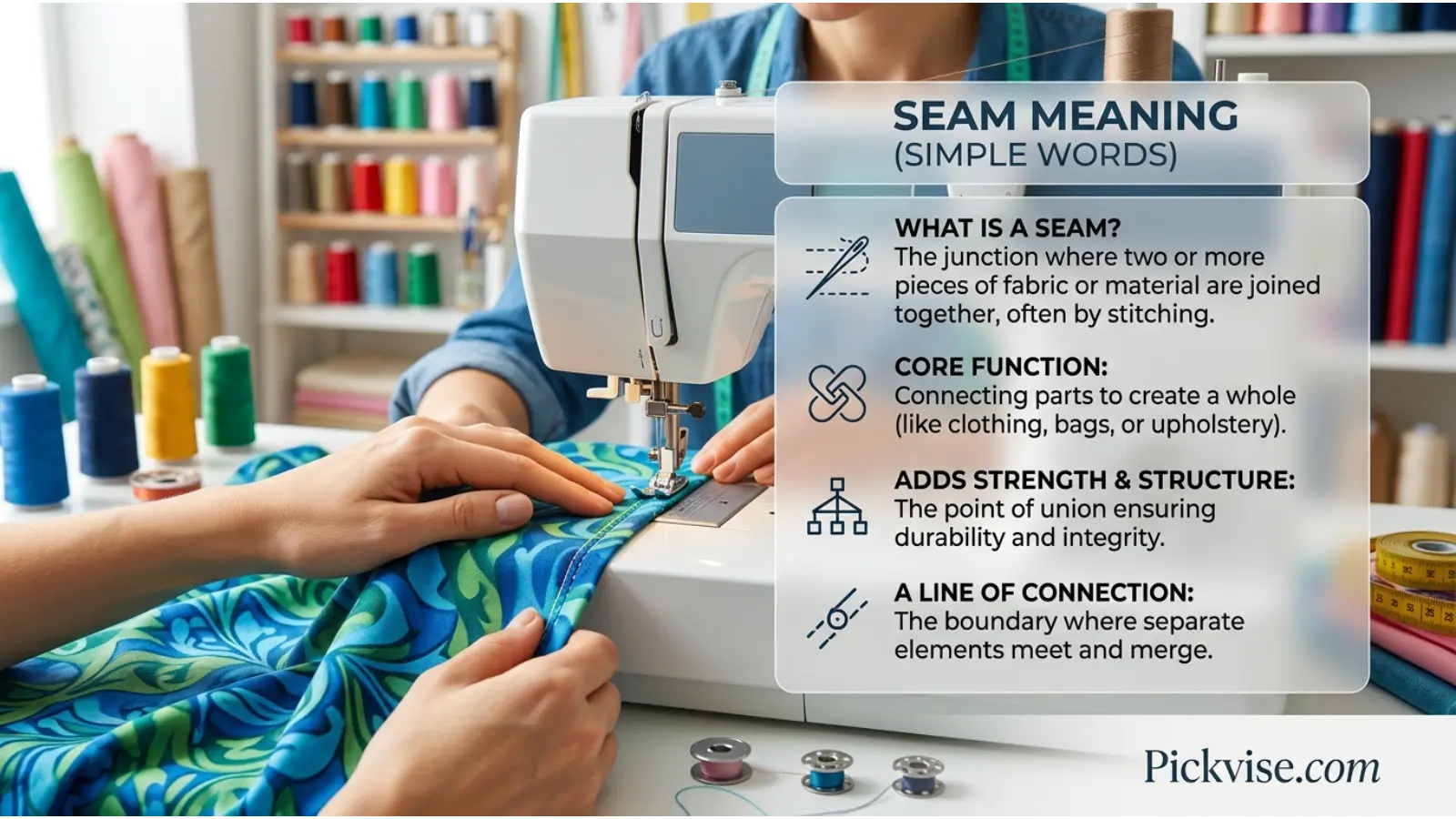
A stich is where two edges are stitched or joined.
It is a physical connection point.
You can find seams in:
- Clothes
- Shoes
- Bags
- Metal sheets
- Fabric items
Example:
- The stich of the shirt is neat.
- The bag stich is strong.
Seem Meaning in Simple Words
Seem is used when something looks or feels true.
It is based on appearance, not reality.
Example:
- You seem tired today.
- This task seems easy.
It is often used to describe opinions or guesses.
Seam vs Seem – Key Differences Table
| Feature | Seam | Seem |
|---|---|---|
| Meaning | Joining line | Appearance or impression |
| Type | Noun | Verb |
| Usage | Physical objects | Opinions or feelings |
| Example | Shirt seam | You seem happy |
| Field | Tailoring, design | Daily communication |
Real-Life Examples of Seam

Stich is used in physical objects.
Examples:
- The dress has a smooth seam.
- The shoe stich is weak.
- Workers fixed the metal seam.
- The bag seam tore open.
In real life, stich shows quality and strength.
Real-Life Examples of Seem
Seem describes how something looks or feels.
Examples:
- You seem confused.
- The sky seems dark today.
- This idea seems useful.
- She seems very kind.
It is often used in daily conversation.
Common Mistakes with Seam or Seem
Many learners mix these words.
Common mistakes:
- Wrong: You stich happy
- Correct: You seem happy
- Wrong: The shirt seem broken
- Correct: The shirt stich is broken
Tip:
If you can touch it, use “stich.”
If you feel it, use “seem.”
Easy Tips to Remember Seam or Seem
Here are simple tricks:
- “Seam” has “a” like “fabric”
- “Seem” has double “e” like “feel”
- stich= stitching line
- Seem = mental impression
Quick memory trick:
Seam = Sewing
Seem = Sense
Usage in Daily Life
Both words are very common in English.
Daily use of stich:
- Tailoring clothes
- Designing bags
- Manufacturing products
Daily use of seem:
- Talking to friends
- Giving opinions
- Expressing feelings
Example:
- The dress seam is perfect.
- You seem very happy today.
Synonyms and LSI Keywords
Synonyms of Seam:
- Joint
- Stitch line
- Connection line
- Binding edge
of Seem:
- Appear
- Look
- Feel
- Sound
Related keywords:
- English homophones
- Grammar difference
- Word confusion
- English vocabulary tips
Grammar Rules for Seam or Seem
- stich is a noun only
- Seem is a verb only
- stich is not used for feelings
- Seem is not used for objects
Correct usage:
- The stich is strong.
- You seem tired.
Incorrect usage:
- You stich tired (wrong)
- The dress seem is strong (wrong)
Expert Insights (EEAT Section)
Language experts say homophones cause most spelling mistakes.
“stich” and “seem” are classic examples.
To master them:
- Practice reading sentences daily
- Write your own examples
- Use visual memory techniques
Why it matters:
Clear grammar improves communication.
It also improves writing quality for SEO and exams.
Strong vocabulary builds confidence in English speaking.
FAQs about Seam or Seem
1. What is the main difference between seam and seem?
stich is a joining line. Seem means appear or look like.
2. Is seam a verb or noun?
stich is a noun.
3. Is seem a verb?
Yes, seem is a verb.
4. Can seam describe feelings?
No,stich only describes physical joins.
5. Can seem describe objects?
No, seem describes impressions, not objects.
6. Why are seam and seem confusing?
They sound the same but have different meanings.
7. How can I remember them easily?
Seam = sewing, Seem = feeling.
8. Are seam and seem homophones?
Yes, they are homophones in English.
Conclusion
Understanding seam or seem is very important for English learners.
These two words sound similar but mean different things.
Seam is always related to physical joining lines.
You see it in clothes, bags, and materials.
Seem is related to feelings, thoughts, and appearance.
Once you remember the difference, it becomes very easy.
Use simple memory tricks like “seam = sewing” and “seem = sense.”
Practice daily examples to improve your understanding.
This will help you avoid grammar mistakes in writing and speaking.
In short, seam is about things you can touch.
Seem is about things you can feel or think.
Mastering this small difference will improve your English skills a lot.