Perogative or Prerogative is a common spelling question that confuses many English learners and native speakers. The two words look very similar. However, only one spelling is correct in standard English.
Many people write perogative by mistake because it sounds similar when spoken. Yet dictionaries and grammar experts recognize only prerogative as the correct spelling.
Understanding the difference helps you write more clearly and professionally. It also prevents spelling errors in emails, essays, business documents, and online content.
In this guide, you will learn the meaning of prerogative, why people misspell it as perogative, how to use it correctly, and examples from daily life. By the end, you will never confuse these two spellings again.
Quick Summary Box
- Prerogative is the correct spelling.
- Perogative is a misspelling.
- Prerogative means a special right, privilege, or authority.
- It often refers to a choice someone has the power to make.
- Use prerogative in formal and informal writing.
- Avoid using perogative in any professional document.
What Does Prerogative Mean?
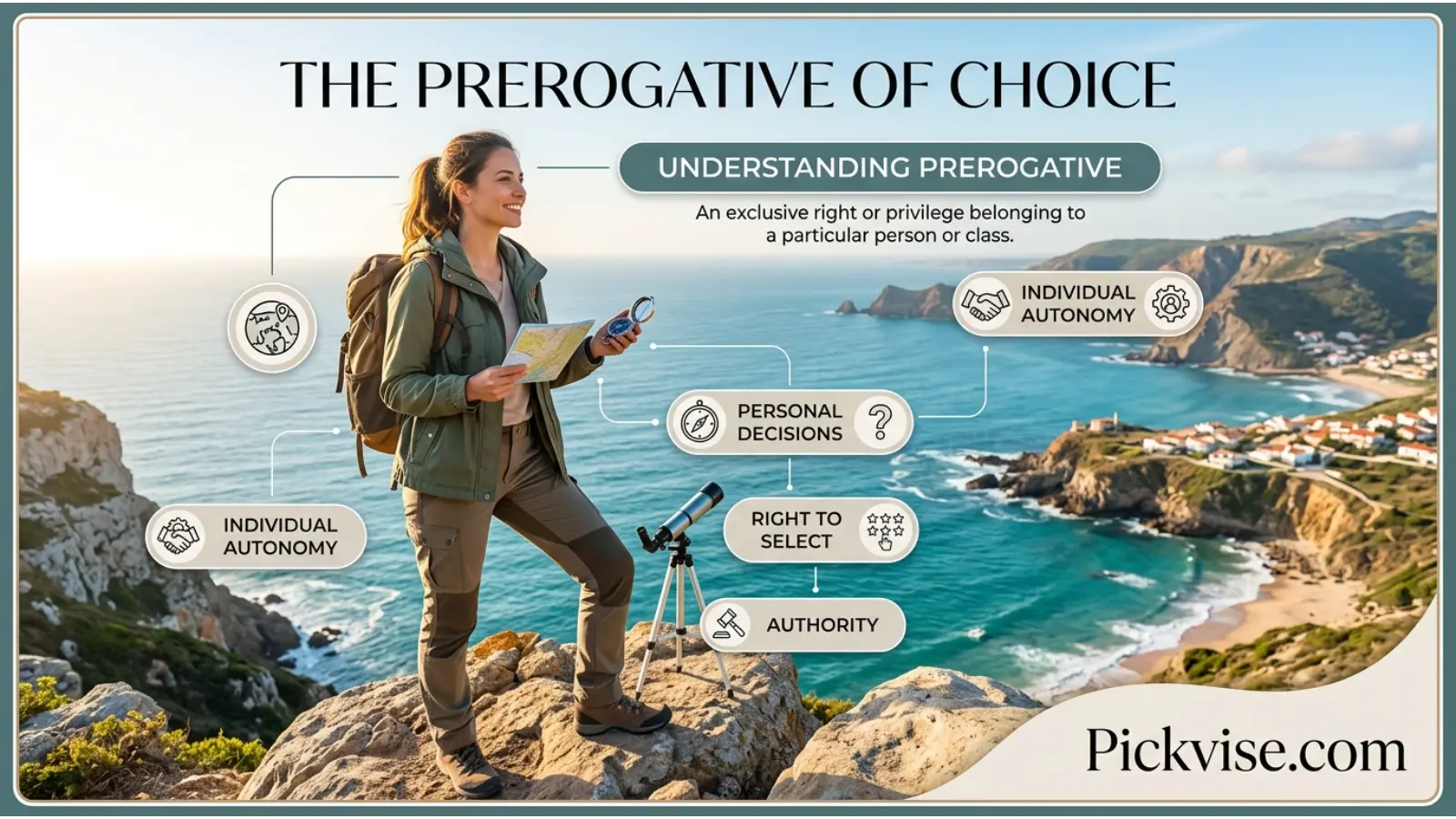
Prerogative means a special right, privilege, or power that belongs to a person or group.
It can also mean the freedom to make a decision based on one’s authority.
Simple Definition
Prerogative: A special right or authority to decide or act in a certain way.
Example
“It is the manager’s prerogative to approve vacation requests.”
In this sentence, the manager has the authority to make the decision.
Perogative or Prerogative: Which Is Correct?

The correct spelling is prerogative.
The spelling perogative is incorrect.
Correct
✅ Prerogative
Incorrect
❌ Perogative
Many people accidentally remove the first “r” when writing the word. As a result, they create the misspelled version perogative.
Always use prerogative in writing.
Comparison Table: Perogative vs Prerogative
| Feature | Perogative | Prerogative |
|---|---|---|
| Correct spelling | ❌ No | ✅ Yes |
| Found in dictionaries | ❌ No | ✅ Yes |
| Accepted in formal writing | ❌ No | ✅ Yes |
| Meaning | None | Special right or authority |
| Professional usage | ❌ Avoid | ✅ Recommended |
Why Do People Spell Prerogative as Perogative?
Several factors cause this spelling mistake.
1. Pronunciation Confusion
Many speakers pronounce the word quickly. Therefore, the first “r” becomes difficult to hear.
2. Memory Errors
Long words often cause spelling mistakes. People may forget one letter while typing.
3. Lack of Familiarity
Some writers rarely use the word. As a result, they guess the spelling incorrectly.
4. Autocorrect Dependence
Many people rely on spell check tools instead of learning the correct spelling.
How to Pronounce Prerogative
The standard pronunciation is:
pri-ROG-uh-tiv
Phonetic form:
/prɪˈrɒɡətɪv/
Breaking the word into parts makes it easier to remember:
- Pre
- Rog
- A
- Tive
Notice the extra r after “pre.” That letter helps distinguish the correct spelling from the misspelled version.
Real-Life Examples of Prerogative

Here are common situations where people use the word.
Workplace
“It is the CEO’s prerogative to make final decisions.”
Education
“The teacher has the prerogative to change classroom rules.”
Parenting
“Parents have the prerogative to set bedtime schedules.”
Government
“The president may have certain prerogatives under the law.”
Personal Choice
“It is your prerogative to accept or decline the offer.”
How to Use Prerogative in Sentences
Using the word correctly becomes easy with practice.
Examples
- It is your prerogative to leave the meeting early.
- The director exercised her prerogative to approve the budget.
- Every customer has the prerogative to ask questions.
- The judge used his prerogative in the case.
- Employees have the prerogative to report concerns.
These examples show that the word often relates to authority, choice, or privilege.
Common Mistakes People Make
Many writers make the following errors.
Mistake 1: Writing Perogative
❌ It is her perogative to decide.
✅ It is her prerogative to decide.
Mistake 2: Confusing It With Preference
A prerogative is a right or authority.
A preference is something you like.
Mistake 3: Using It Without Authority
The word usually implies power, privilege, or decision-making authority.
Easy Trick to Remember the Correct Spelling
A simple memory trick can help.
Think of:
PRE + ROGATIVE
The word starts with PRE and immediately follows with another R.
Memory Formula
PRE + ROGATIVE = PREROGATIVE
Remember:
“The extra R makes it right.”
This trick helps prevent the common misspelling.
Synonyms of Prerogative
Using related words improves your vocabulary.
Common Synonyms
- Right
- Privilege
- Authority
- Power
- Freedom
- Entitlement
- Choice
- Control
- Discretion
- Advantage
Example
“It is her prerogative to decide.”
Can also become:
“It is her right to decide.”
Related Keywords and LSI Terms
Search engines often connect these terms with prerogative.
LSI Keywords
- prerogative meaning
- prerogative definition
- special right
- authority and privilege
- right to decide
- decision-making authority
- spelling mistakes in English
- correct English spelling
- common grammar errors
- perogative meaning
These terms help readers understand the topic more deeply.
Why Correct Spelling Matters
Correct spelling improves communication.
Better Professional Image
People trust well-written content more.
Improved Clarity
Correct words prevent confusion.
Stronger Academic Writing
Teachers and professors expect accurate spelling.
Better SEO Content
Correct spelling helps search engines understand content properly.
Therefore, learning the correct form benefits both writers and readers.
Expert Insight: Why This Word Is Often Misunderstood
Language experts note that pronunciation often influences spelling mistakes.
The word prerogative contains a silent complexity. Although speakers may hear “perogative,” dictionaries consistently list prerogative as the only accepted spelling.
Professional writers, editors, and educators recommend checking uncommon words before publishing content.
A single spelling mistake can reduce credibility in business documents, resumes, academic papers, and blog posts.
For that reason, mastering frequently misspelled words remains an important writing skill.
Frequently Asked Questions
Is perogative a real word?
No. Perogative is a misspelling of prerogative.
What is the correct spelling: perogative or prerogative?
Prerogative is the correct spelling.
What does prerogative mean?
It means a special right, privilege, authority, or freedom to make decisions.
Why do people write perogative?
Many people misspell it because of pronunciation and memory errors.
Can I use perogative in formal writing?
No. Always use prerogative.
Is prerogative a noun?
Yes. Prerogative is a noun.
What is an example of prerogative?
“It is the manager’s prerogative to approve requests.”
Are prerogative and privilege the same?
They are similar. However, prerogative often emphasizes authority or decision-making power.
Internal Linking Suggestions
You can internally link this article to:
- Commonly Misspelled English Words
- Their vs There vs They’re
- Affect vs Effect
- Principal vs Principle
- Lose vs Loose
- Everyday vs Every Day
- Grammar Mistakes to Avoid
- English Spelling Rules
Conclusion
The debate over perogative or prerogative has a simple answer. Prerogative is the correct spelling, while perogative is a common misspelling. The word refers to a special right, authority, privilege, or freedom to make decisions. Although many people omit the second “r,” dictionaries and grammar experts accept only prerogative.
Learning the correct spelling improves your writing and helps you communicate more effectively. It also strengthens your professional and academic credibility. Whenever you feel unsure, remember the simple trick: PRE + ROGATIVE = PREROGATIVE. With regular practice, you can avoid this mistake and use the word confidently in everyday writing.