
Niece or Nephew are family words that many people use every day. However, some people confuse their meanings. Knowing the difference helps you speak and write correctly. A niece is the daughter of your brother or sister. A nephew is the son of your brother or sister. These words also apply to the children of your spouse’s siblings in many families. Learning the correct term improves communication. It also prevents mistakes in conversations, emails, and family documents. This guide explains Niece or Nephew in simple English. You will learn their meanings, differences, examples, and common mistakes. By the end, you will know exactly when to use each word.
Quick Summary Box
- Niece = Your brother’s or sister’s daughter.
- Nephew = Your brother’s or sister’s son.
- Both describe family relationships.
- Gender is the main difference.
- Easy way to remember:
- Niece = Girl
- Nephew = Boy
What Does Niece Mean?
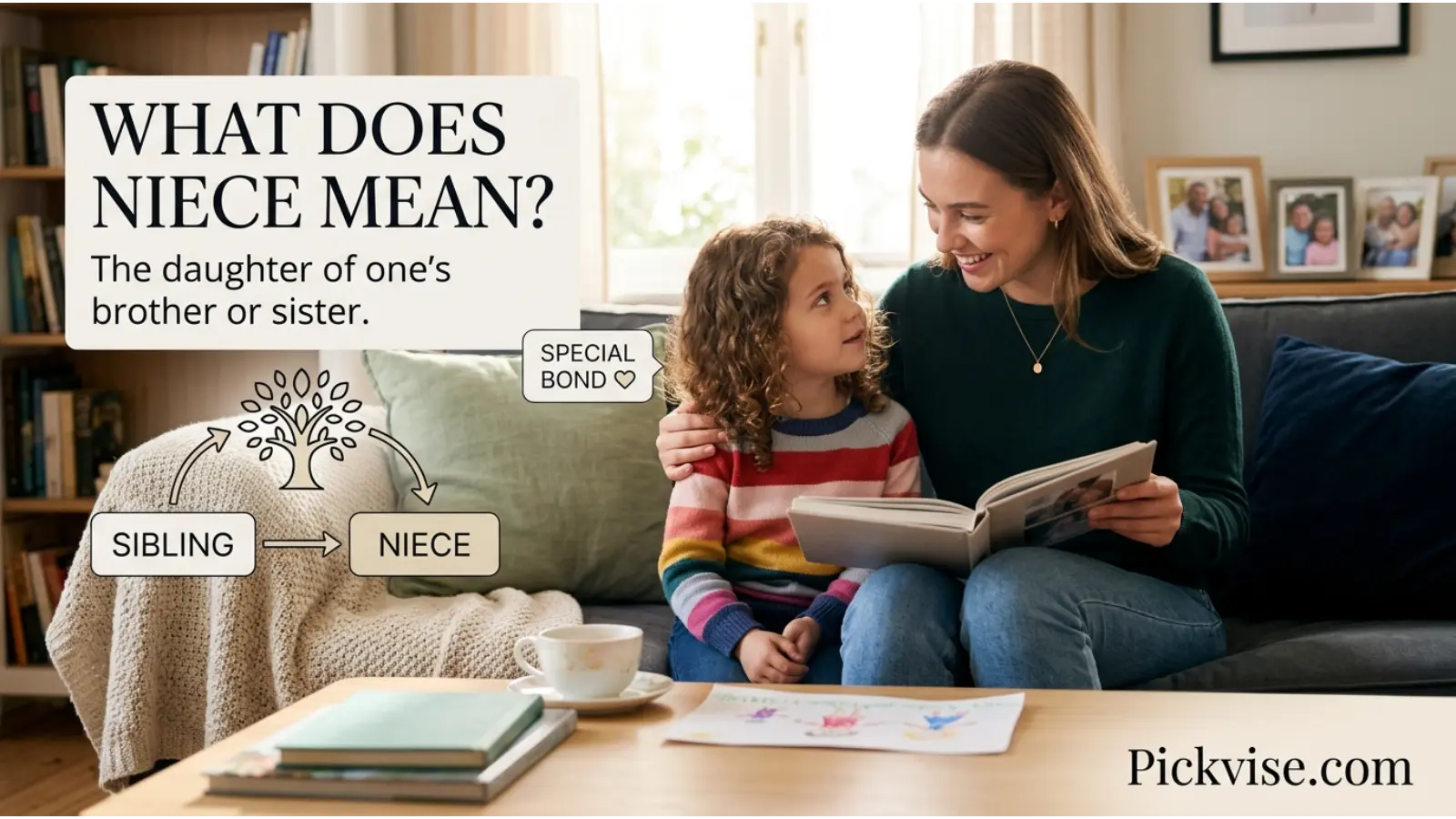
A niece is the daughter of your brother or sister.
She is part of your extended family.
Examples
- My niece starts school next week.
- We bought a birthday gift for our niece.
- My niece loves drawing animals.
What Does Nephew Mean?
A nephew is the son of your brother or sister.
He is also part of your extended family.
Examples
- My nephew plays football every weekend.
- Our nephew graduated from college.
- My nephew enjoys reading books.
Niece or Nephew: Key Difference
The only real difference is gender.
| Feature | Niece | Nephew |
|---|---|---|
| Gender | Female | Male |
| Relationship | Brother’s or sister’s daughter | Brother’s or sister’s son |
| Family member | Yes | Yes |
| Common use | Talking about girls in the family | Talking about boys in the family |
How to Remember the Difference
Use this simple trick.
- Niece = Nice Girl
- Nephew = Boy in the family
Another memory tip:
- If the child is female, say niece.
- If the child is male, say nephew.
Real-Life Examples of Niece and Nephew
Here are common situations.
Family Gathering
“My niece helped decorate the house.”
“My nephew played games with everyone.”
Birthday Party
“We bought our niece a doll.”
“We gave our nephew a bicycle.”
School Event
“My niece won a spelling contest.”
“My nephew received a science award.”
Wedding
“My niece was the flower girl.”
“My nephew carried the wedding rings.”
Niece vs Nephew in Sentences
Niece
- My niece loves painting.
- Our niece lives in Canada.
- I called my niece yesterday.
- Her niece is very polite.
- Their niece visits every summer.
Nephew
- My nephew enjoys swimming.
- Our nephew studies engineering.
- His nephew plays the piano.
- Their nephew moved to Australia.
- I met my nephew after many years.
Common Mistakes People Make
Many learners confuse these words.
Mistake 1
❌ My nephew is my sister’s daughter.
✅ My niece is my sister’s daughter.
Mistake 2
❌ My niece is my brother’s son.
✅ My nephew is my brother’s son.
Mistake 3
Using both words for every child.
Always check whether the child is a boy or a girl.
When Should You Use Niece or Nephew?
Use these words when talking about family.
Examples include:
- Family conversations
- Birthday cards
- Wedding invitations
- Family trees
- School essays
- Legal documents
- Social media posts
Niece and Nephew in Different Family Relationships

These words usually refer to:
- Your brother’s children
- Your sister’s children
- Your spouse’s brother’s children
- Your spouse’s sister’s children
In some cultures, they may also refer to close relatives or adopted family members.
Synonyms
Although there are no perfect synonyms, these related words help.
LSI Keywords
- niece meaning
- nephew meaning
- niece vs nephew
- family relationship terms
- family vocabulary
- English family words
- daughter of sibling
- son of sibling
- extended family
- family tree terms
Why Knowing the Difference Matters
Using the correct word shows respect.
It also improves your English.
Correct family terms help in:
- Everyday conversations
- Writing emails
- School assignments
- Official paperwork
- Family history records
Small vocabulary mistakes can confuse readers.
Using the right word makes your message clear.
Tips to Remember Niece or Nephew
- Think about the child’s gender first.
- Girl = niece.
- Boy = nephew.
- Practice with simple sentences.
- Use family photos to test yourself.
- Read family stories in English.
The more you practice, the easier it becomes.
Expert Insight
Understanding family vocabulary builds stronger communication skills. Many English learners confuse niece and nephew because both describe similar relationships. The only difference is gender. Learning these words also helps when reading books, completing legal forms, or talking about family history. Mastering common family terms makes your English sound more natural and accurate.
Frequently Asked Questions (FAQs)
Is a niece a girl?
Yes. A niece is your brother’s or sister’s daughter.
Is a nephew a boy?
Yes. A nephew is your brother’s or sister’s son.
Can someone be both my niece and nephew?
No. A child is either your niece or your nephew.
What is the opposite of niece?
The male equivalent is nephew.
What is the opposite of nephew?
The female equivalent is niece.
Are nieces and nephews immediate family?
They are usually considered part of the extended family.
Can adopted children be nieces or nephews?
Yes. Adopted family relationships are treated the same in most families.
How do I remember the difference?
Remember:
- Girl = Niece
- Boy = Nephew
Conclusion
Understanding Niece or Nephew is simple once you know the basic rule. A niece is the daughter of your brother or sister, while a nephew is the son. The difference depends only on gender. These words appear in everyday conversations, family events, school lessons, and official documents. Using the correct term helps you communicate clearly and avoid confusion. Practice with real-life examples and remember the easy trick: girl equals niece, boy equals nephew. Once you learn this distinction, you’ll use both words confidently in any situation.