Allusion or illusion are two words that often confuse learners.
In the first sentence, both words sound similar but mean very different things.
Allusion means a hidden reference to something.
Illusion means something that looks real but is not.
This guide explains both words in very simple English.
You will learn meanings, differences, and real-life examples.
We also include comparison tables and easy tricks to remember them.
By the end, you will never mix them again.
This topic is very important for writing, exams, and daily English use.
Let’s make it simple and clear step by step.
Quick Summary Box (Featured Snippet)
- Allusion: A hidden or indirect reference to something.
- Illusion: Something that looks real but is not real.
- Allusion is about language and meaning.
- Illusion is about vision and perception.
- Allusion is used in writing and speech.
- Illusion is used in real-life experiences or magic tricks.
- Both words sound similar but have totally different meanings.
Meaning of Allusion
Allusion means an indirect reference to something.
It does not explain directly.
Instead, it hints at something famous.
For example, a writer may mention a hero without naming them clearly.
Readers must understand the hidden meaning.
Allusion is common in literature, poems, and speeches.
It makes writing more interesting and deep.
It also connects ideas quickly without long explanations.
In simple words, allusion is a hidden reference in language.
Meaning of Illusion
Illusion means something that looks real but is not real.
It tricks your eyes or mind.
You may see or believe something false.
For example, a stick in water may look bent.
But it is not actually bent.
That is an illusion.
Magicians also use illusions in shows.
They make things appear or disappear.
In simple words, illusion is a false image or trick of the mind.
Key Difference Between Allusion and Illusion
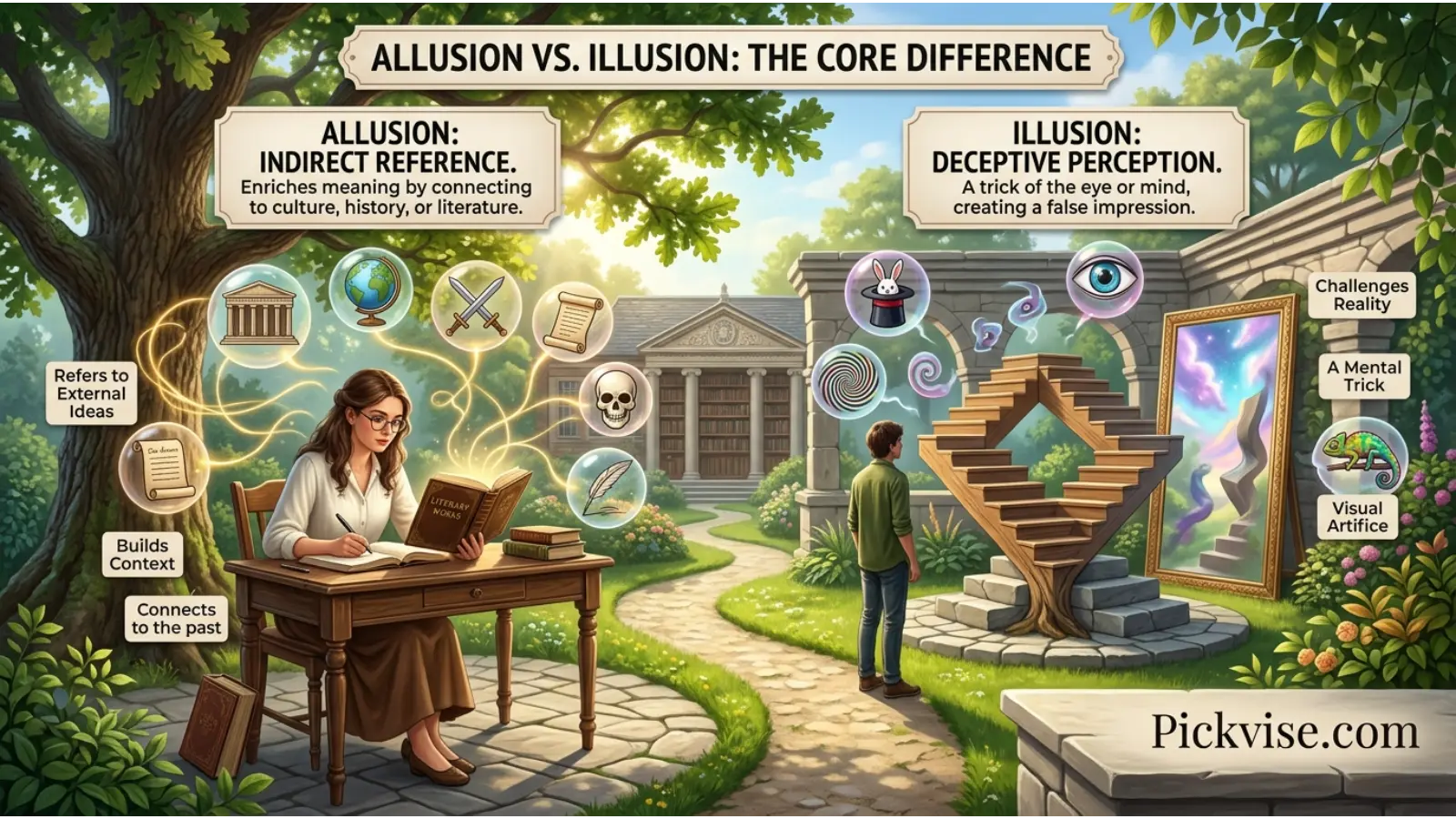
Both words sound similar but are very different.
Allusion is about language and meaning.
Illusion is about sight and perception.
Allusion is hidden in words.
Illusion is seen with eyes.
One is intellectual, and the other is visual.
This difference is very important for exams and writing.
Comparison Table: Allusion vs Illusion
| Feature | Allusion | Illusion |
|---|---|---|
| Meaning | Indirect reference | False image or perception |
| Type | Literary device | Visual or mental trick |
| Used in | Writing, speech, poetry | Life, magic, science, optics |
| Sense involved | Thinking and understanding | Seeing and perception |
| Example | “He is a real Romeo.” | Mirage in a desert |
Real-Life Examples of Allusion
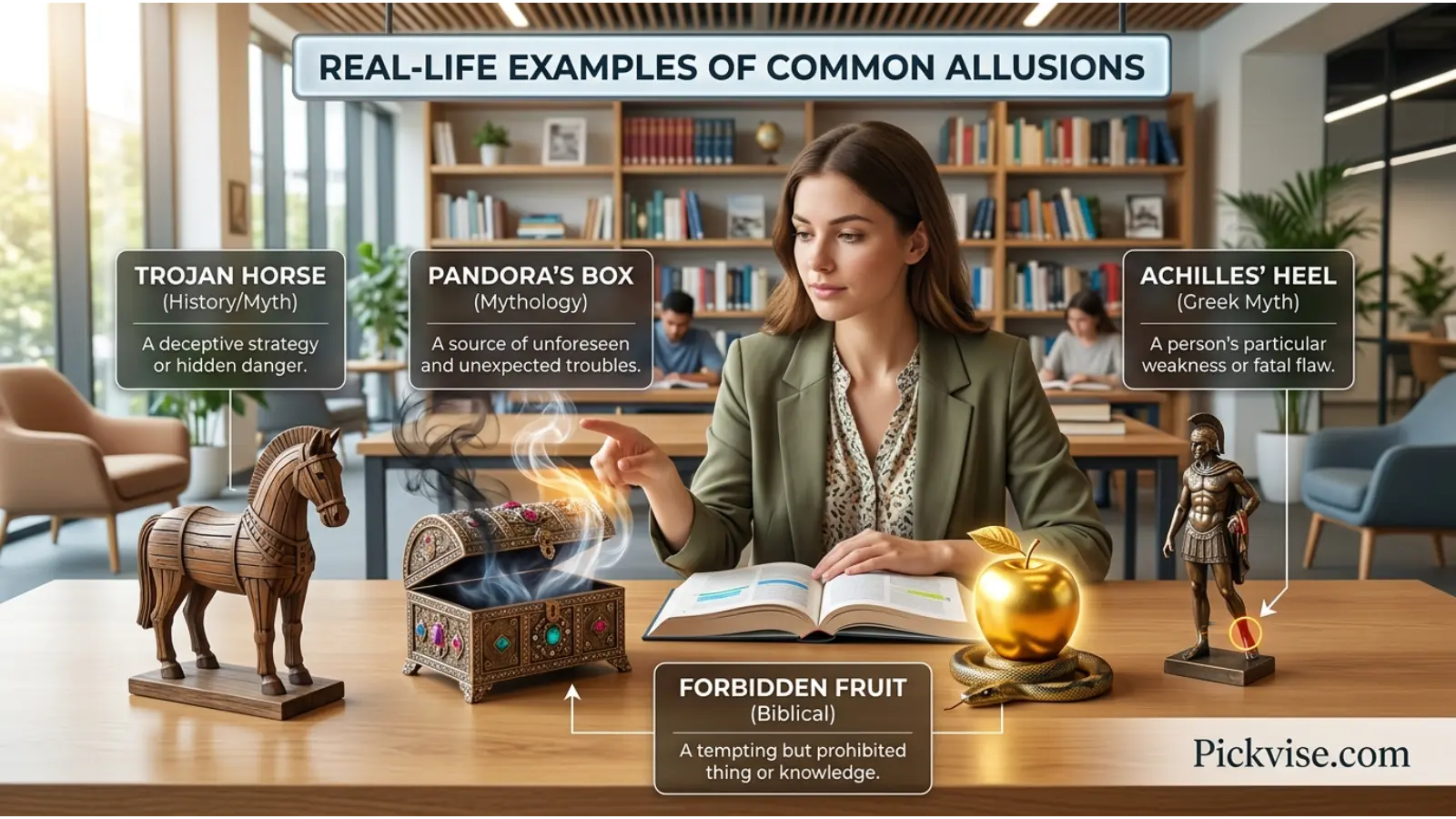
Allusion is very common in daily English.
Writers and speakers use it often.
- He is a real Einstein in math.
- She behaves like Cinderella in the house.
- That leader is a modern Caesar.
- The story reminds me of David and Goliath.
In all these examples, famous names are indirectly referenced.
They are not explained fully.
The reader understands the meaning through knowledge.
Real-Life Examples of Illusion
Illusion happens in real life and science.
- A desert mirage looks like water but is not.
- A straight stick looks bent in water.
- Magic shows create fake disappearing acts.
- Mirrors can create reflection illusions.
These examples show false images or tricked perception.
Your brain thinks it is real, but it is not.
Common Mistakes People Make
Many learners confuse these two words.
Here are common mistakes:
- Thinking allusion means illusion.
- Using illusion in writing references.
- Mixing literary meaning with visual meaning.
- Forgetting spelling differences.
To avoid mistakes, always check context.
Ask: Is it language or vision?
This simple question solves most confusion.
Easy Tips to Remember the Difference
These tricks will help you remember fast:
- Allusion = A for Alphabet (language)
- Illusion = I for Image (vision)
- Allusion has “A” like “Addressing indirectly”
- Illusion has “I” like “Imaginary image”
Another trick:
Allusion = Author’s reference
Illusion = Eye deception
Practice these tricks daily for better memory.
Usage in Daily Life
Both words are used in different situations.
Allusion is used in:
- Books
- Essays
- Speeches
- Poems
Illusion is used in:
- Magic shows
- Science experiments
- Optical effects
- Daily visual experience
Understanding usage helps improve English fluency.
It also improves writing skills and comprehension.
Synonyms and LSI Keywords
Allusion Synonyms:
- Reference
- Hint
- Mention
- Suggestion
- Indirect expression
Illusion Synonyms:
- Mirage
- Trick
- Delusion
- Hallucination
- False image
Related Keywords:
- difference between allusion and illusion
- allusion meaning in English
- illusion definition examples
- common English confusions
- literary devices list
FAQs (People Also Ask)
1. What is the simple meaning of allusion?
Allusion is an indirect reference to something without explaining it directly.
2. What is the simple meaning of illusion?
Illusion is something that looks real but is actually false.
3. Is allusion a literary device?
Yes, allusion is a literary device used in writing and speech.
4. What is the main difference between allusion and illusion?
Allusion is a reference in language, while illusion is a visual trick.
5. Can illusion be real?
No, illusion only looks real but is not actually real.
6. Where do we use allusion?
We use allusion in books, poems, essays, and speeches.
7. Where do we see illusion in real life?
We see illusions in magic tricks, mirages, and optical effects.
8. Why are allusion and illusion confusing?
They sound similar but have completely different meanings.
Expert Insights
Language experts say confusion happens due to similar spelling.
However, meaning context makes them very different.
Allusion builds deep meaning in communication.
Illusion affects perception and visual understanding.
Learning both improves vocabulary and comprehension skills.
It also helps in competitive exams and writing tests.
Understanding these words builds strong English foundation.
Conclusion
Allusion and illusion are two commonly confused English words.
But their meanings are completely different.
Allusion is a hidden reference used in language and writing.
Illusion is a false image or trick seen by the eyes.
In simple terms, allusion is about words.
Illusion is about vision.
Understanding this difference improves English clarity.
It also helps in exams, writing, and communication.
Always remember:
Allusion = indirect reference.
Illusion = false perception.
This simple rule will help you avoid confusion forever.